
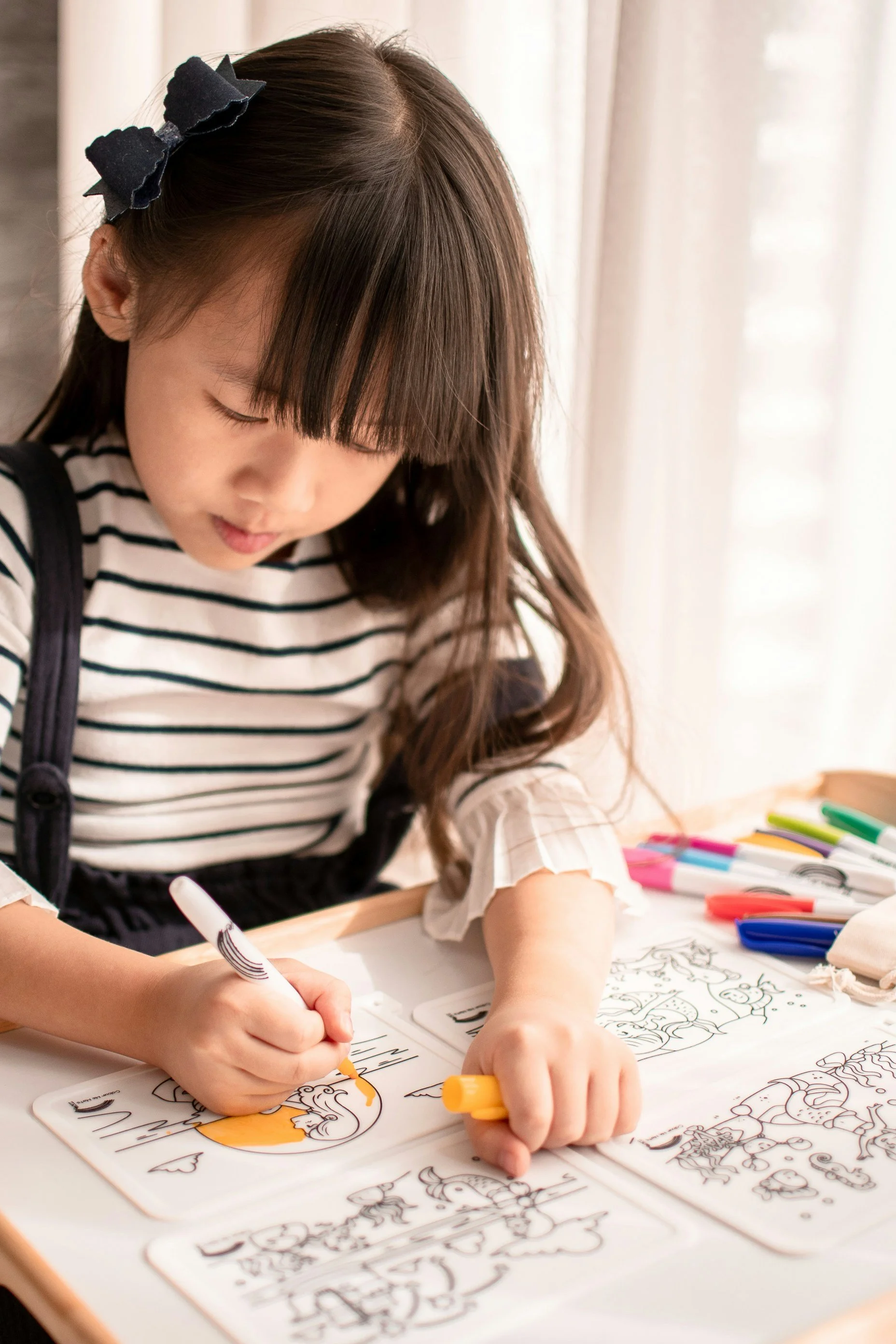
5 Things Kids Can Learn From Paint by Numbers Projects
Paint by numbers gets dismissed as a rainy-day activity, something to pull out when kids are bored. But that's a serious underestimation of what's actually happening when a child sits down with a numbered canvas and a set of small brushes.
The structured format works well: it holds enough challenge to engage young minds without overwhelming them. Here are five real skills kids develop through paint by numbers projects.
1. How to Build and Sustain Focus
Parents looking for hands-on activities often turn to kids DIY painting sets because the format demands active, sustained attention in a way that few other pastimes do. Every numbered section on the canvas has to be matched to the correct paint color before the brush even touches the surface. That matching process - scanning the number, finding the right color, loading the brush, then applying paint carefully within the lines - repeats across dozens or even hundreds of small sections. None of those steps can be skipped without the finished image falling apart. So the activity trains children to hold their focus on a single task far longer than most screen-based games or passive entertainment ever requires. Research from the American Academy of Pediatrics has noted that hands-on creative work builds sustained attention in ways that passive screen time simply doesn't replicate. And the visible payoff - watching a picture gradually take shape from what started as a blank, numbered canvas - gives kids a concrete reason to stay locked in rather than drifting toward something easier.
2. Fine Motor Skills and Brush Control
Small brushes, tiny numbered sections, and a constant need for precision make paint by numbers a genuine workout for the fine motor system. Children have to grip the brush correctly, regulate the pressure they apply, and keep their strokes within boundaries that are sometimes only a few millimeters wide. That kind of control doesn't come automatically, especially for younger kids whose hands are still developing the muscle coordination that writing, cutting, and detailed artwork all depend on. Repeatedly loading a brush with just the right amount of paint and placing it accurately trains the hand-eye coordination that teachers and occupational therapists consistently flag as a foundation for academic tasks. A child who can't stay in the lines at first will often notice measurable improvement within just a few sessions, because the numbered sections create clear, immediate feedback, you can see when the paint lands where it should and when it doesn't. That feedback loop makes the skill-building feel like progress rather than a drill.
3. Color Awareness and Visual Thinking
Most kids know their basic colors long before they start school. Paint by numbers pushes that knowledge into much deeper territory. Kits frequently include shades like ochre, burnt sienna, cerulean, and cadmium yellow, colors that exist in the natural and artistic world but rarely come up in early childhood education. Children learn to distinguish between colors that look similar at first glance, to notice how a shadow is painted with a deeper, cooler version of the surface color beside it, and to understand that realistic images aren't built from flat blocks of a single hue. That awareness transfers. Parents often report that kids who spend time on paint by numbers projects start noticing color relationships in their everyday environment, in sunsets, in the shadows on a wall, in the way different fabrics read differently in natural versus artificial light. It's a form of visual literacy that's genuinely hard to teach through instruction alone but seems to click naturally through the repetition of applying colors in a structured artistic context.
4. The Value of Following Instructions
There's a useful lesson embedded in the numbered system itself: not every creative problem needs to be reinvented from scratch. Following instructions carefully and trusting the process produces a result that a child couldn't have reached by guessing. That's a mental model worth internalizing early. Kids who work through paint by numbers projects learn that matching the correct number to the correct color - even when it looks wrong in isolation - pays off once the surrounding sections are filled in. A patch of pale gray in the middle of a canvas looks odd until the darks around it get painted in, and suddenly it reads as light on water or the gleam on a metal surface. This teaches delayed judgment: carrying out a step correctly without needing to understand how it fits the final picture yet. That patience with process shows up later in math, in science experiments, and in any multi-step task where kids have to trust that doing each step right will eventually produce a result.
5. Confidence Through Finishing Something Real
A finished paint by numbers canvas is tangible, displayable proof that a child did something. That might sound simple, but the psychological weight of it matters more than most parents realize. Many creative activities for children produce work that's too open-ended to feel like an achievement - a smeared watercolor page or a half-finished clay project that never quite became anything. Paint by numbers removes that ambiguity. You start with a blank canvas, you follow the system, and you end with a recognizable, often genuinely beautiful piece of art that looks like something. The sense of accomplishment that comes from holding up a completed canvas - one that required real patience, steady hands, and sustained effort over several hours or multiple sessions - builds what psychologists call self-efficacy: the belief that effort produces results. Kids who experience that feeling repeatedly become more willing to take on challenging tasks, because they've seen direct evidence that persistence works. That's a lesson no worksheet can deliver with the same clarity.
Conclusion
Paint by numbers does more than produce a pretty canvas. It builds focus, fine motor control, color literacy, and process thinking, and it delivers the kind of confidence that comes from genuinely finishing something difficult. If you're looking for a structured creative activity that grows with your child's abilities, this one's worth taking seriously. The numbered sections are a framework, not a shortcut; and what kids build inside that framework goes well beyond the painting itself.