
A farm called SOETMELKSVLEI
Word by Leoni Smit
“If I know a song of Africa… does Africa know a song of me?”
Isak Dinesen
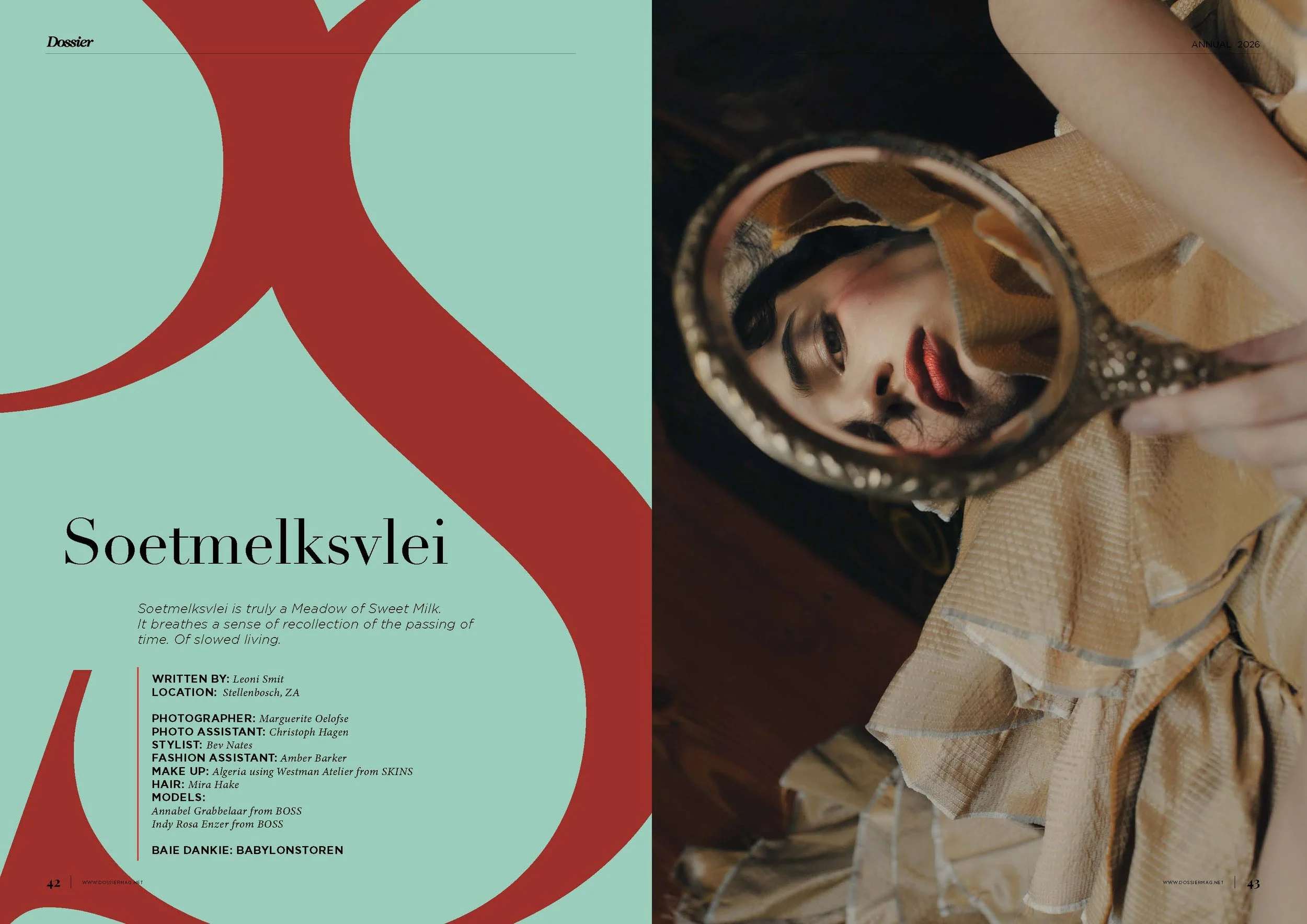
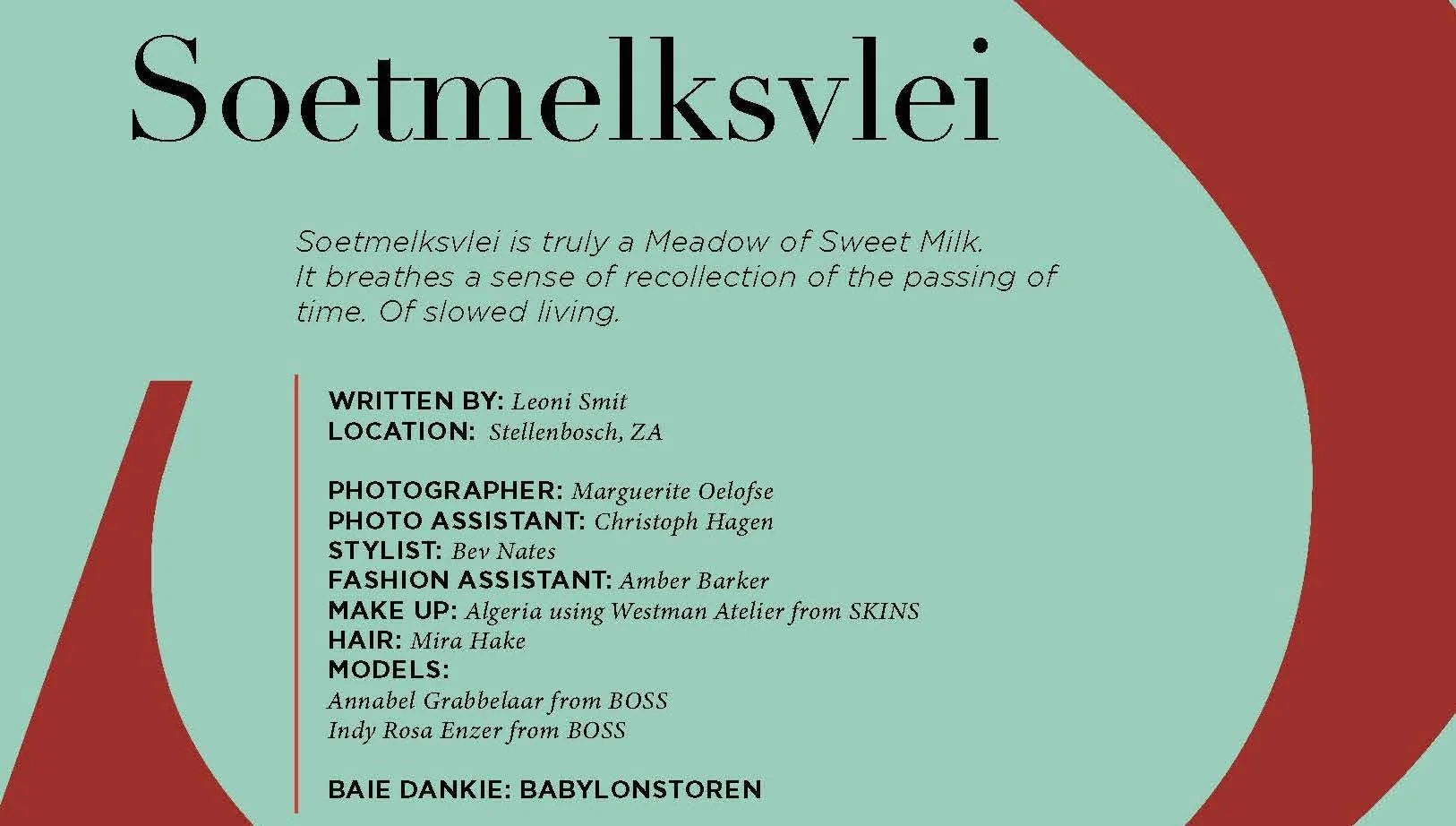
Soetmelksvlei is truly a Meadow of Sweet Milk.
It breathes a sense of recollection of the passing of time. Of slowed living.
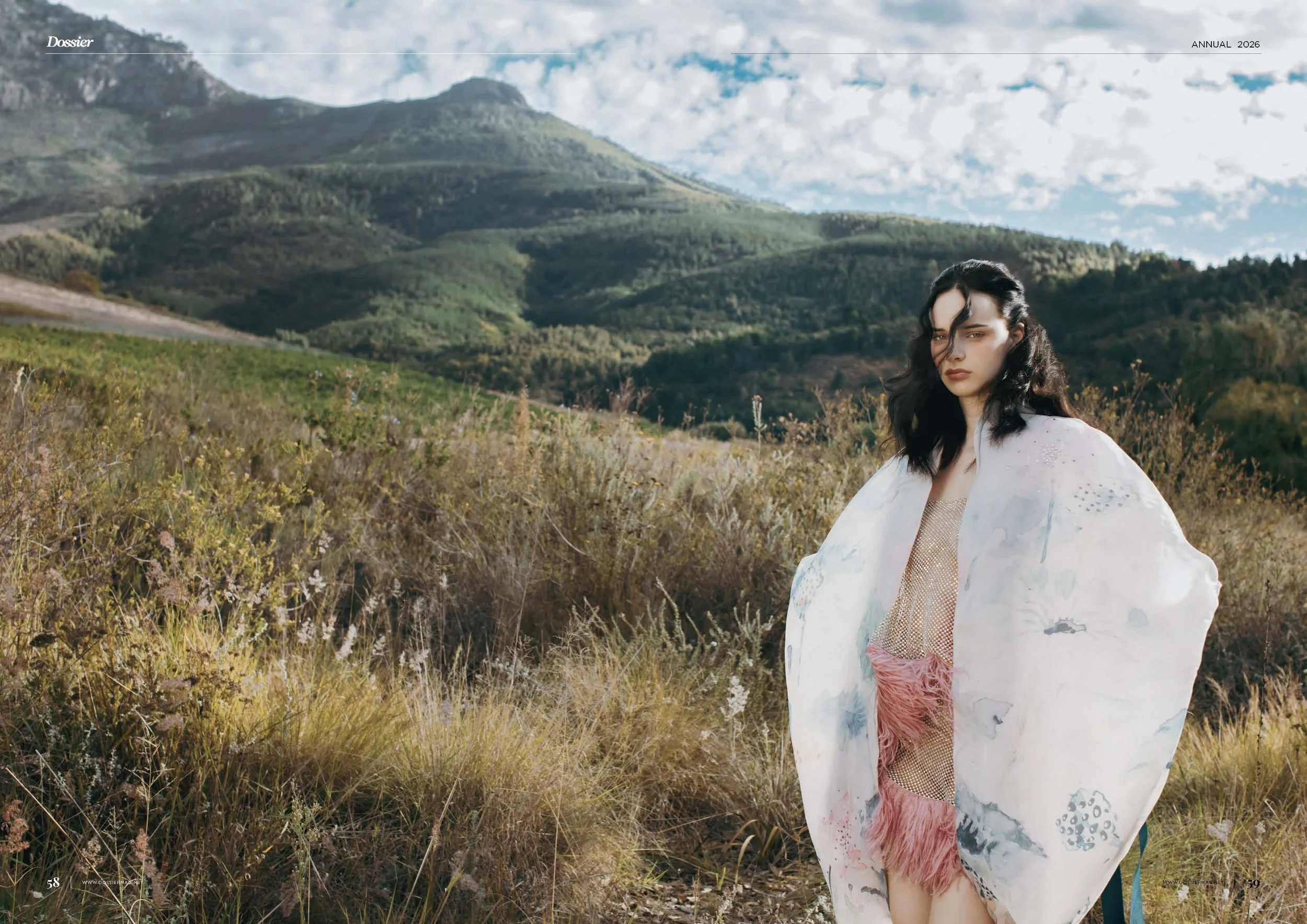
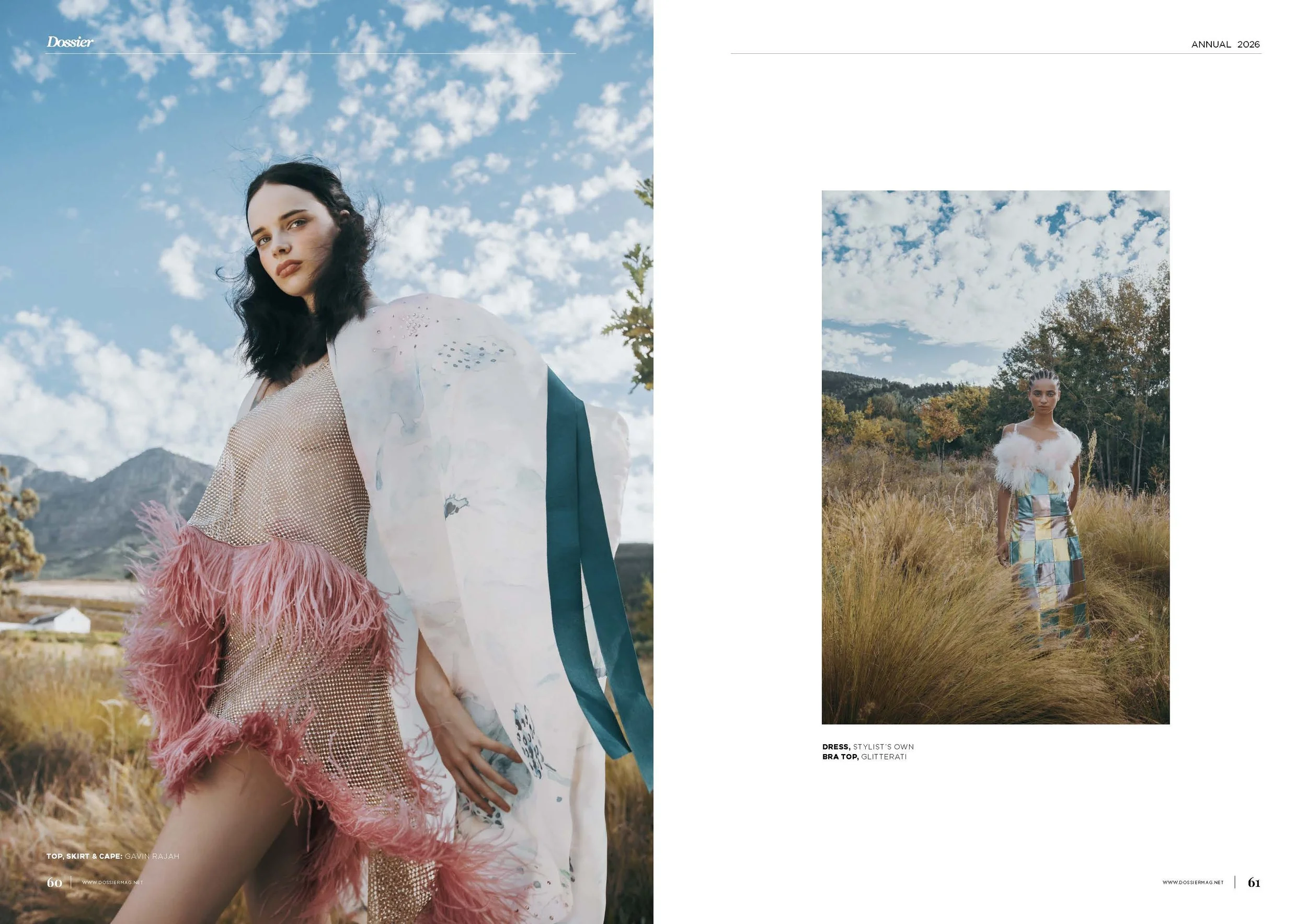
The land here in the Franschhoek Valley of the Western Cape does not arrange itself according to the expectation of dramatic theatre. It remains true to the simplicity of an African landscape. It remains shaped by use rather than design, seamed with loosely arranged high trees and sparse veld on entry.
One experiences a sense of homecoming whilst driving down the brown pebbled road: an artery leading through spaced vegetation and the parchment of veld after the season’s dry spell: open land leading up to the heart and the dense pulse of the homestead. The road settles into a body of farm life where the greenery is an explosive arena of fertility: milk, grain, fruit, wood and handcraft.
The yard gathers itself not as a single structure, but as a constellation of fine and simple architecture. Whitewashed buildings appear. Low and deliberate walls, as if the werf is held by a hand, arranged in a U-shaped homecoming.
At its centre is the Farmhouse, its gable dating from 1851. Around it, the Old Cellar and the Old Stables, among the oldest surviving structures on the property, their histories reaching back to the mid-eighteenth century. The kraal rests on earlier foundations. Other buildings, once cottages, later dwellings, hold their place within the same arrangement. Nothing stands apart from this logic. Each structure remains tied to use. The working farm carries a long continuity. First granted in 1694 to two Huguenots under the name Bergen Henegouwen, it passed through different hands before becoming Donkerhoek in 1896. The rhythms of farming shifted with time. Vineyards once dominated, alongside wheat and meat production. After the phylloxera crisis of the 1880s, the vines were replaced with orchards. Stone fruit took root where wine had once been cultivated. Later, Bluegum wood was cut and traded. What remains is not a single history, but the accumulation of labour across generations. Soetmelksvlei is the brainchild of the enigmatic Koos Bekker and Karen Roos - singular thinkers, natives of the African continent, blessed with a sense of poetry and the visual prose of the land. As was Blixen and Paton.
Enter Soetmelksvlei and the light dissolves into softer verses. Surfaces are authentic and worn from toil. Walls, doors, textiles and floors carry traces consistent with the late nineteenth century. Here, the year is 1897. The work continues without display. Cream is separated by hand. Fruit is preserved. Grain is milled into flour. The processes remain visible, carried out in repetition rather than performance. Surfaces hold the same logic - peach pips laid into the ground, candles shaped by hand, herbs tied and left to dry. Nothing is introduced for effect. Each action, each object, remains tied to use.
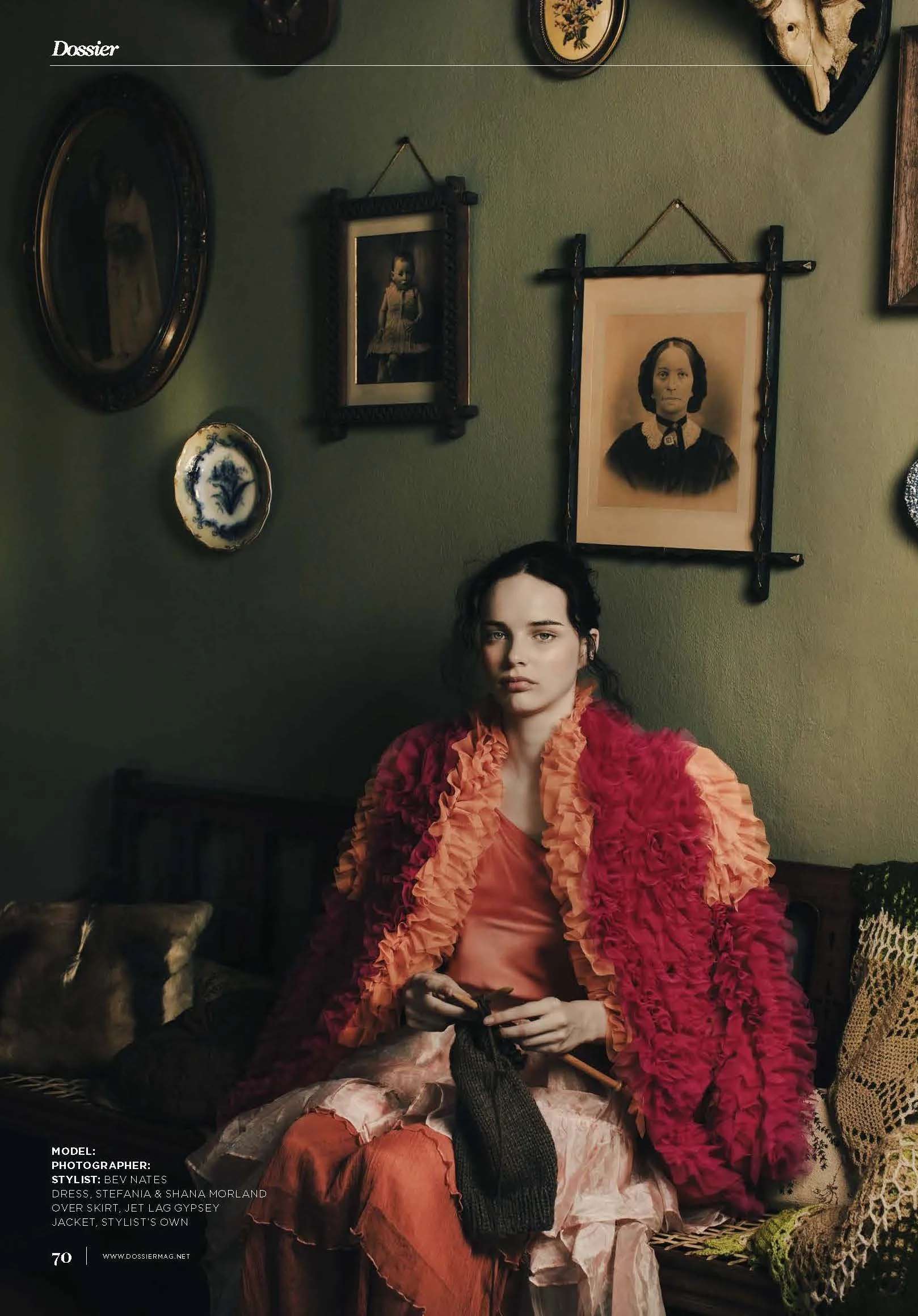
Animal hides appear, shaped and worked into irregular forms. Nothing asserts itself as recent. Nostalgia and sweetness dissolve to a slight salt in the throat of the observer. Library green, Eau de Nil, reduced Aqua, and wallpapers from the pages of history and of patterned palette. Books and intervals of artefacts line the floor-to-ceiling shelves of the library. A replica of a now-extinct blue buck and other specimens in taxidermy tradition, preserved insects, a collection of dioramas and dried seeds stand in the play of shadow and light.
In the Farmhouse kitchen, objects remain within reach. A water barrel fitted with a tap stands among tools designed for use: a cast-iron fruit peeler, a coffee grinder, wooden butter moulds. These are not displayed. They remain part of a working environment. Elsewhere, the house is furnished with antiques and carefully recreated objects made according to period specifications. The upholstered chair at the sewing table in the main bedroom dates from the late nineteenth century. Textiles are scarce and carefully sourced, their fragility a reminder of time. Embroidered cushions, inspired by fynbos and herbs, and hand-crocheted blankets appear throughout the rooms. But one could imagine a woman wrapped in fine thread leaning against a doorway - for simplicity is never without the depth of intellectual gravitas. And here is ample backdrop to tell a story of refined sense of the restrained grandeur of yesteryear.
Firearms form part of the domestic structure. Two Lee Enfield MK 1 rifles from 1890 and 1899 are present, alongside a muzzle loader manufactured between 1830 and the 1850s. These objects reflect the practical conditions of farm life at the time.
Beyond the house, the Old Cellar holds a different density. Its original yellowwood ceiling spans a space that now functions as a place of knowledge and collection. At its centre stands an ox wagon, loaded with the necessary provisions for travel, suggesting the slow movement between farm and coast.
The workshop carries the sound of making. A blacksmith, carpenters and leather workers use nineteenth-century tools and techniques to produce and repair implements. Iron is forged, wood is shaped, leather is worked by hand. The processes remain visible. Nothing is concealed.
Beyond, the watermill turns. Built as a replica of a nineteenth-century mill, it operates as a Vitruvian overshot wheel, powered by water falling from above. Grain is milled daily into flour for use on the farm. The movement is continuous, measured, unhurried.
Animals move through the yard as part of this system. Ayrshire cows are milked at set intervals. Oxen resemble the strength required for ploughing and transport. Percheron horses stand in relation to earlier forms of labour. Sheep, donkeys, chickens, ducks and turkeys occupy the same space.
Bees are kept in traditional skep hives and Langstroth hives beneath eucalyptus trees, producing fynbos honey from the surrounding vegetation.
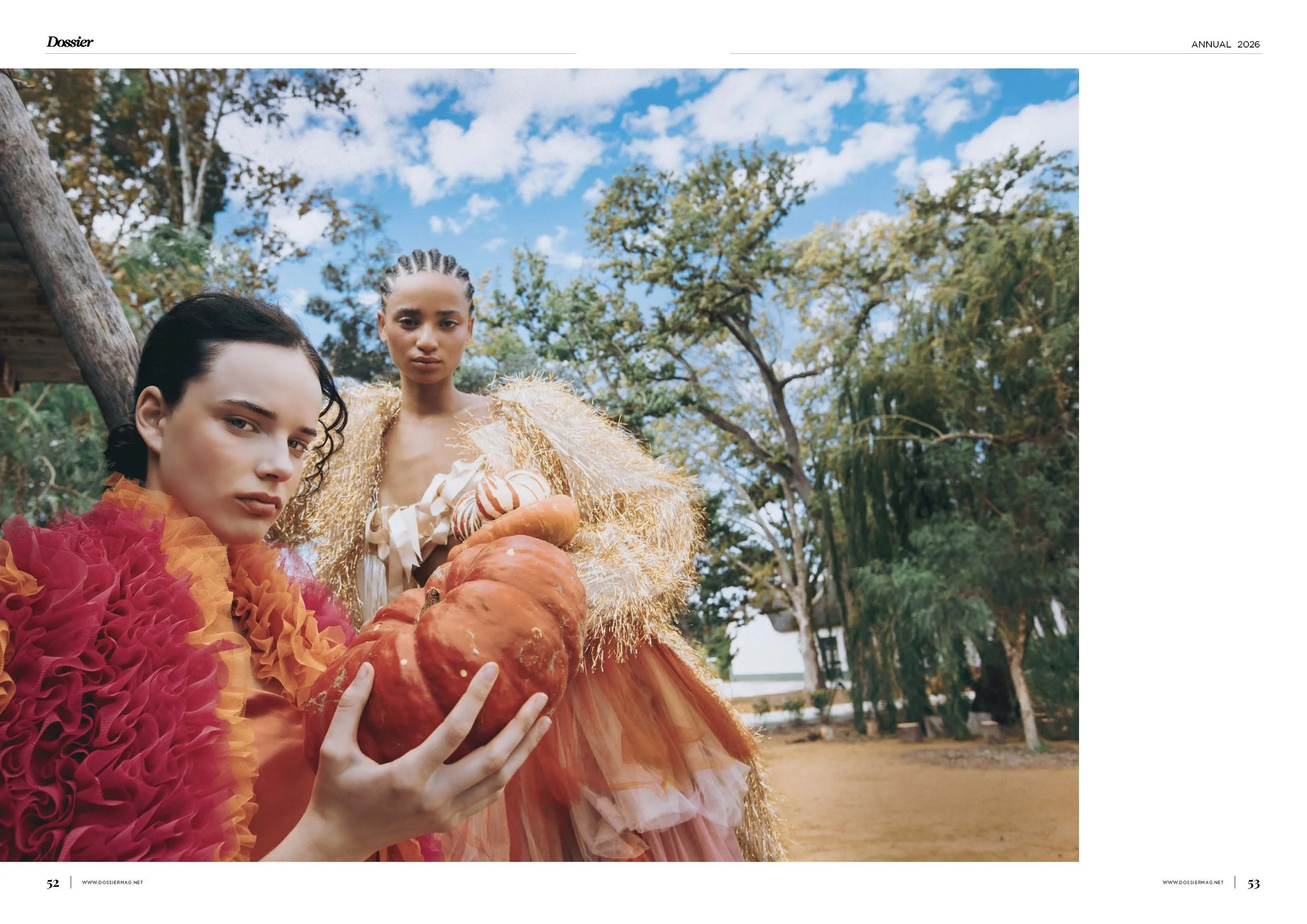
Beyond the werf, planting continues the historical pattern. The orchard is made up of heirloom trees grown from cuttings taken from some of the oldest specimens in the Boland. Lemons and apricots bear forward this lineage. The vegetable garden reflects what would have been cultivated in the nineteenth century, in the overgrown abundance of greenery. At the distillery, the rare Kristal grape grows again, once common, now largely absent elsewhere.
The farm does not separate past from present. It reconstructs a way of living through repetition, through making, through use. Visitors move through it not as observers alone, but as participants, encouraged to handle, to try, to learn through doing.
What holds the land is not representation, but continuity.
The persistence of material, of process, of authenticity.
And within that persistence, beauty remains.






Read full issue here: calameo.com/read/0052346309843029fb5b6