

Cartier LE CLASH : Bold Evolution
Cartier's Bold Evolution: Movement, Sound, and Color Redefine Modern Luxury
Cartier is pushing boundaries with two distinct approaches to contemporary jewelry design—one centered on fluid motion and tactile experience, the other on architectural color and volume.
Yellow Gold Takes Center Stage
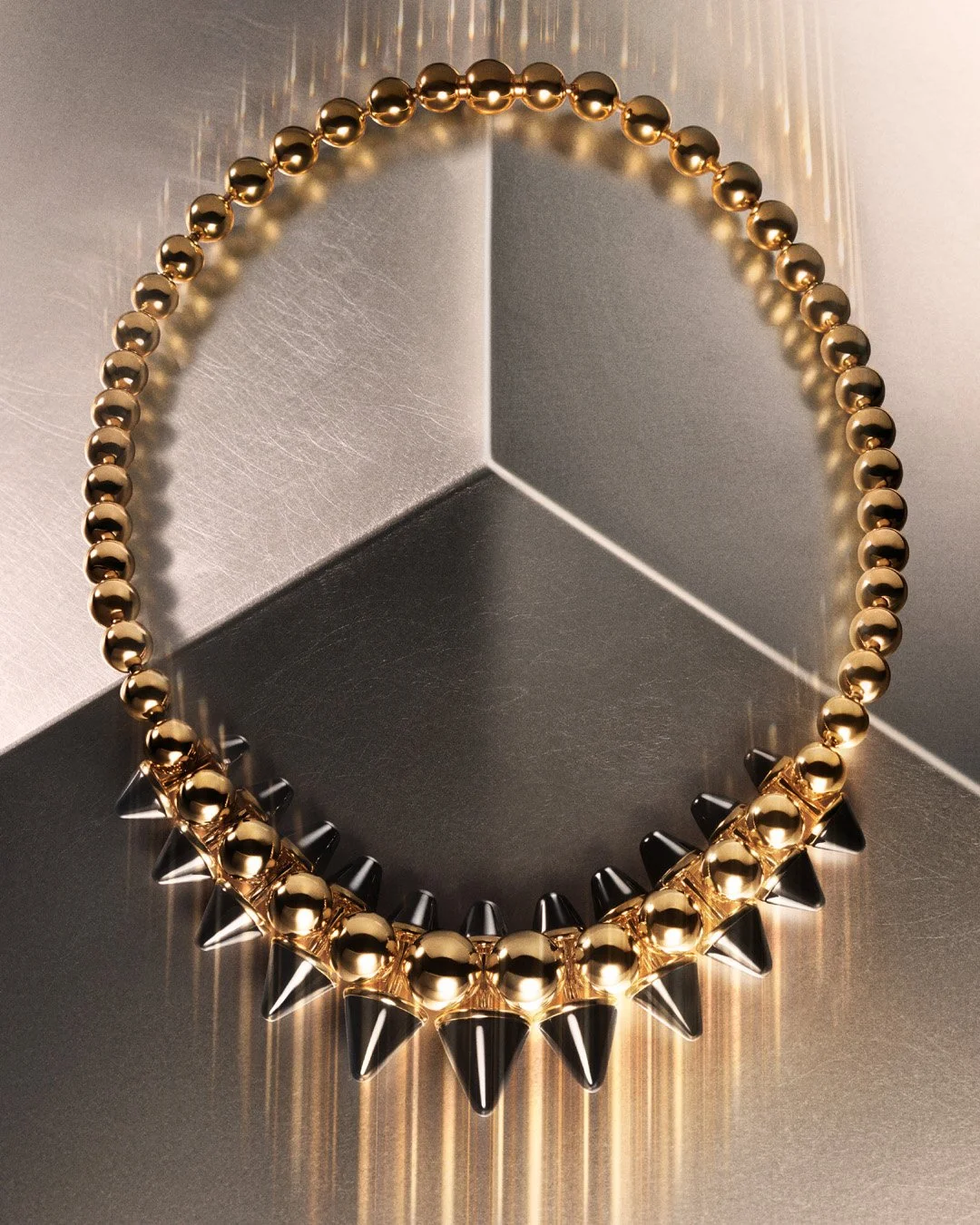
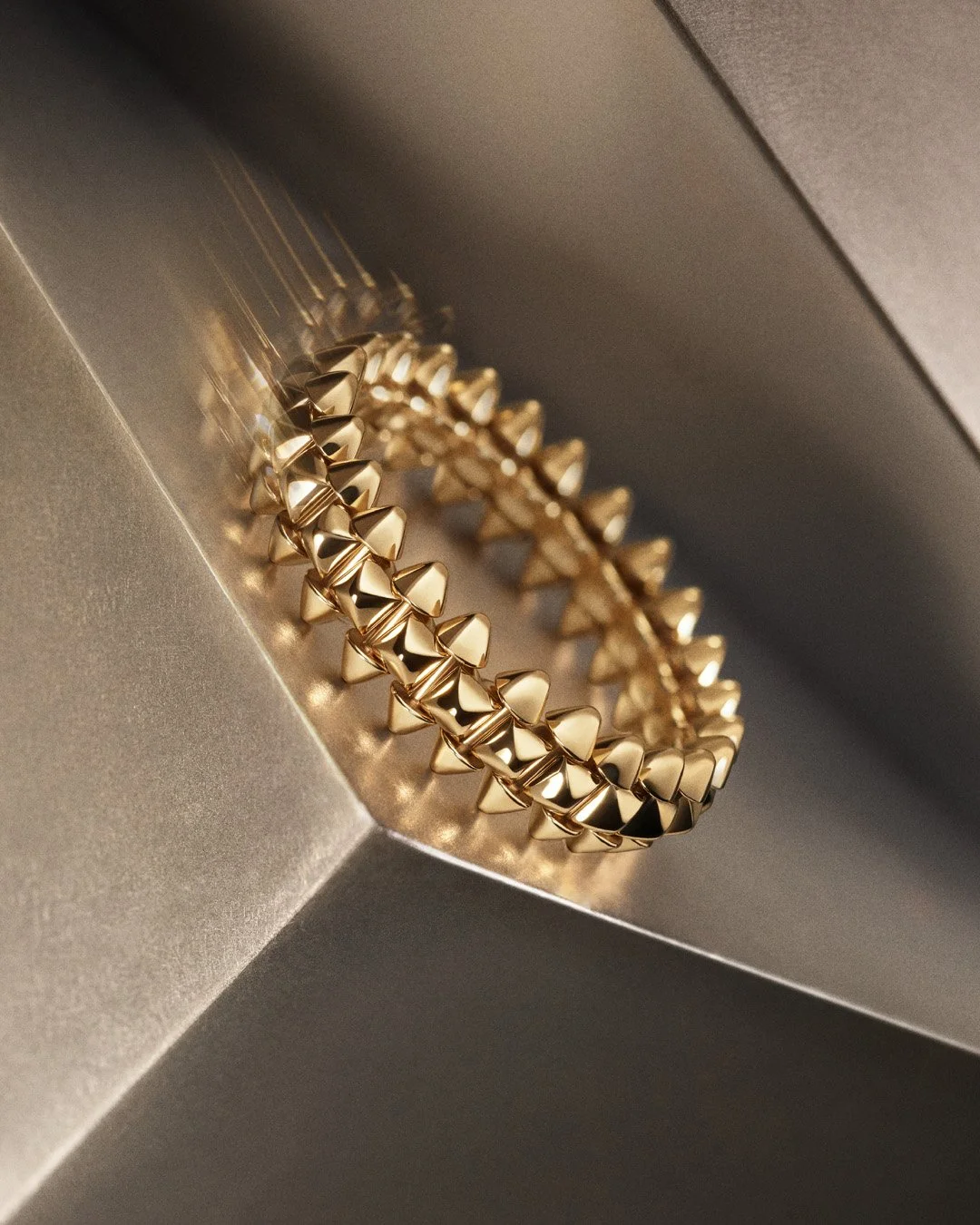
The latest development introduces yellow gold into designs previously exclusive to rose gold, marking a significant material expansion. These aren't subtle pieces—they're substantial constructions built for both visual impact and physical sensation.
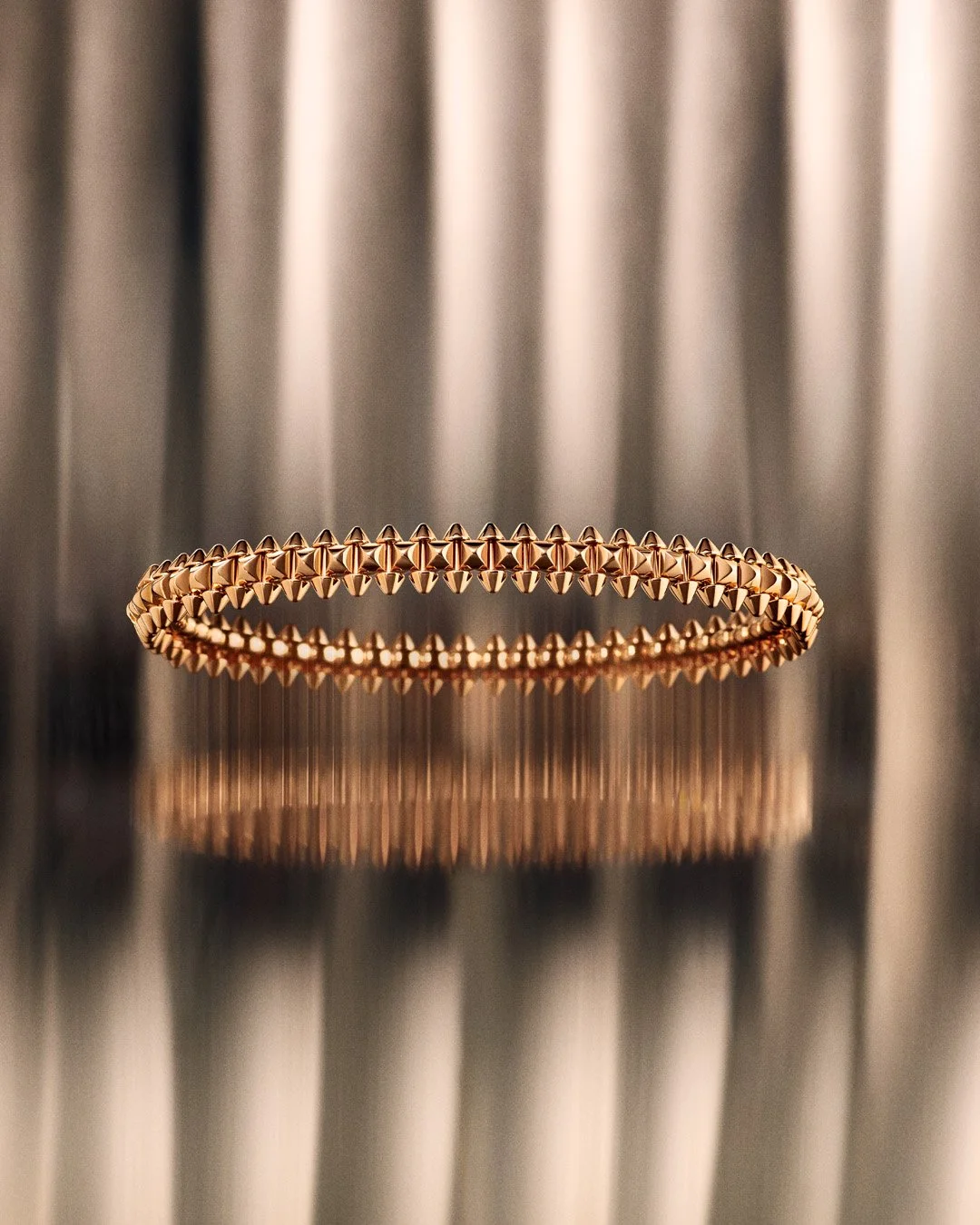
The technical achievement lies in dual manufacturing approaches. Lost-wax casting, rooted in traditional jewelry craft, combines with high-precision machining to assemble up to 600 individual components. Each element must meet exacting tolerances to ensure comfort during wear. The result: articulated, hand-polished pieces where every component connects while maintaining independent movement.
That mobility isn't just visual. Engineers specifically developed and optimized a subtle vibration—an audible sound signature that occurs when the pieces move. This audio component was intentionally refined during development, adding a sensory dimension beyond sight and touch.





Clash de Cartier: Industrial Heritage Meets Contemporary Design
The Clash de Cartier collection draws directly from the Maison's early 20th-century experimentation with industrial aesthetics. In the 1920s and 1930s, Cartier incorporated studs, clous carrés (square nails), and stacked beads into watches and accessories—elements borrowed from mechanical and industrial design that challenged conventional jewelry codes of the era.
The current collection reinterprets these historical motifs into a distinctive mesh pattern that merges precious metal craftsmanship with mechanical construction principles. It's a deliberate tension between luxury and utility, refinement and industry.
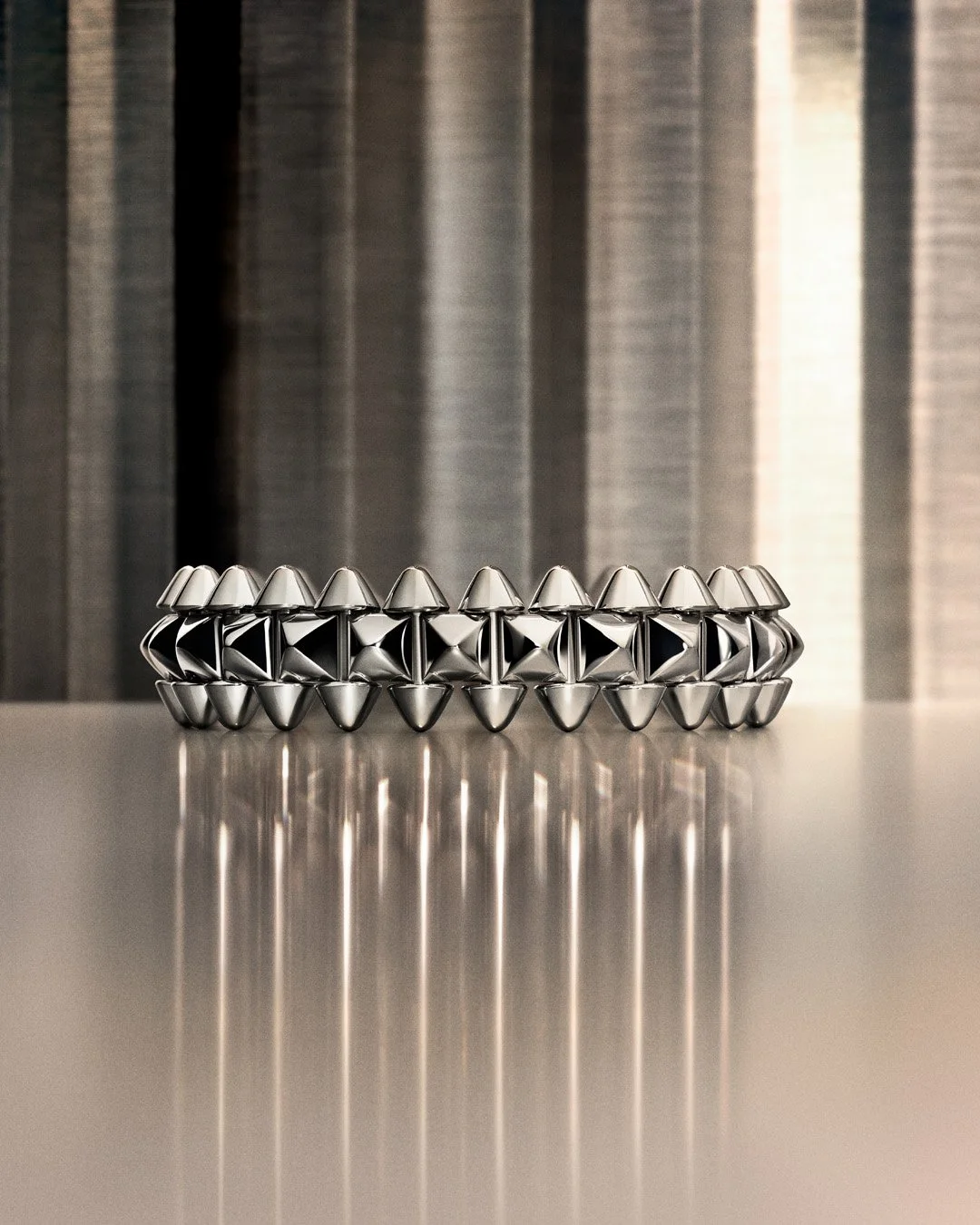
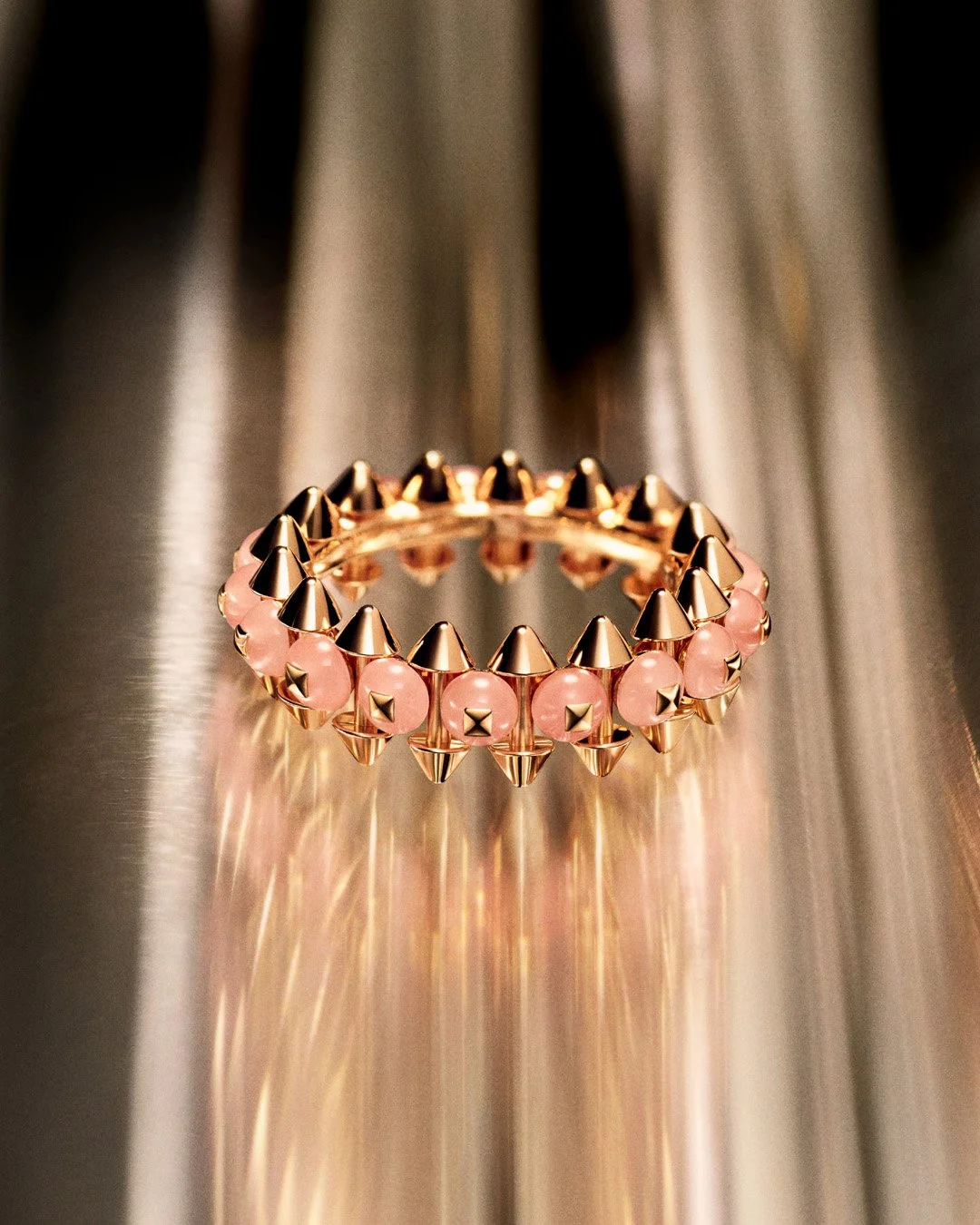
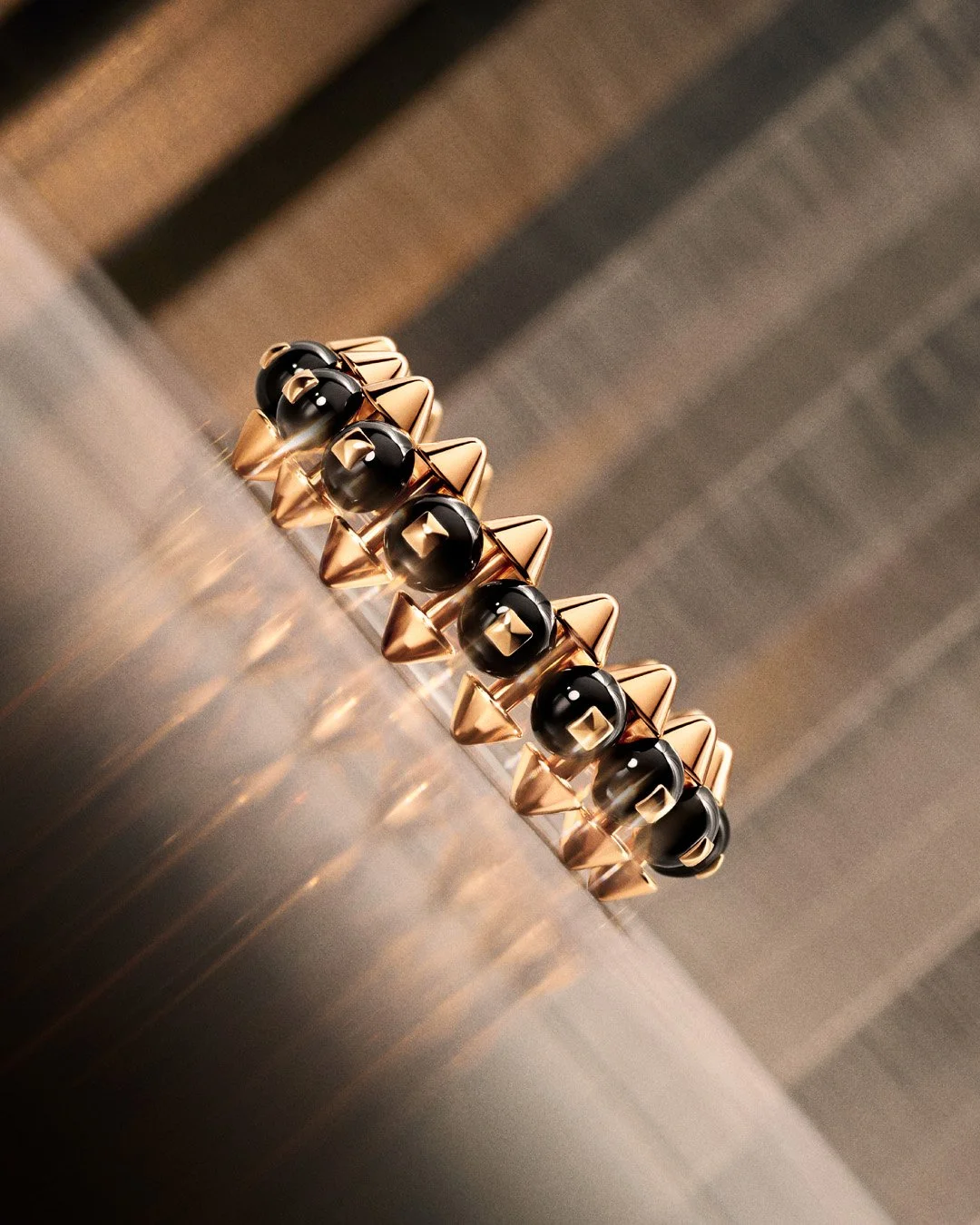
Color, Scale, and Adaptability
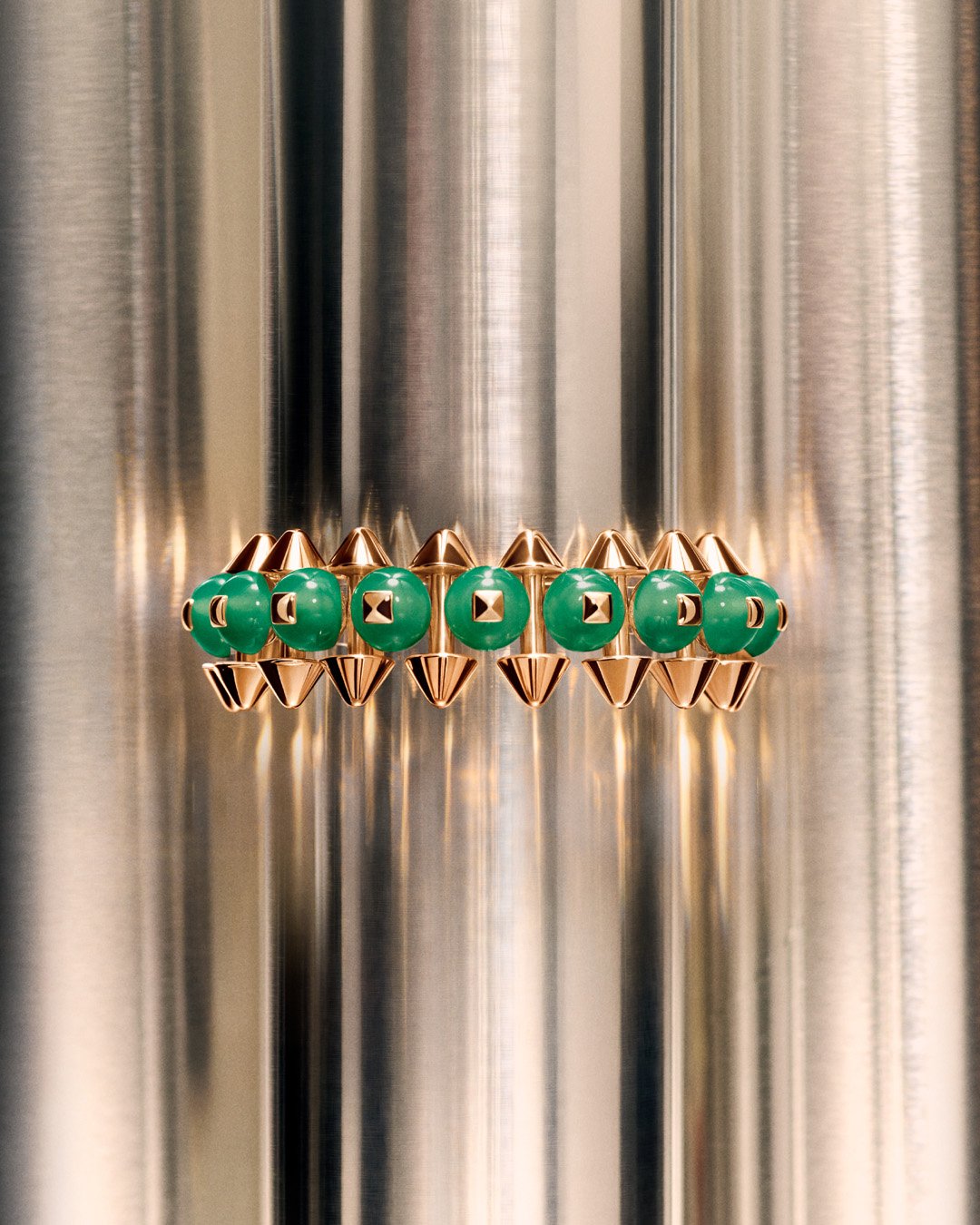
Colored stones—red-dyed agate, green-dyed agate, pink chalcedony, and onyx—now expand the collection's visual range. Hard stone beads are aligned to the millimeter and color-matched according to strict grading standards, then pierced and secured with clou de Paris nails through a process combining mechanical precision and hand adjustment.
Extra-large versions increase width and upgrade onyx studs across fully flexible yellow gold bracelets, necklaces, and three-finger rings. New adjustable earrings in rose or white gold feature two flexible lines that can be configured either front-to-back or entirely on the front of the ear, offering wearers multiple styling options.
The combination creates architectural volume through contrasting materials while maintaining the mechanical aesthetic that defines the collection's identity—a calculated collision of preciousness and industrial design DNA.