Coming Home For The First Time: Victoria Falls Safari Lodge
A Child of Africa “Returns” to Mosi-oa-Tunya
I've tried to leave this continent several times. Each attempt ended the same way—a magnetic pull I couldn't explain, drawing me back. This weekend at Victoria Falls, standing on the edge of the world's largest sheet of falling water, I understood.
The journey itself was effortless. FastJet flies into Victoria Falls International Airport, and flight in under two hours. The transfer to Victoria Falls Safari Lodge took less than twenty minutes—close enough to feel the anticipation building, far enough to leave the airport behind.
The three day weekend began at The Lodge, drinks and chats with hotel staff to learn more about the intrepid owners who had a vision almost three decades ago. A Logde that could host different types of travellers, and benefit the area greatly. Indeed, you can stay in the quiet and more luxurious section, in family units, the property is large enough for all needs.
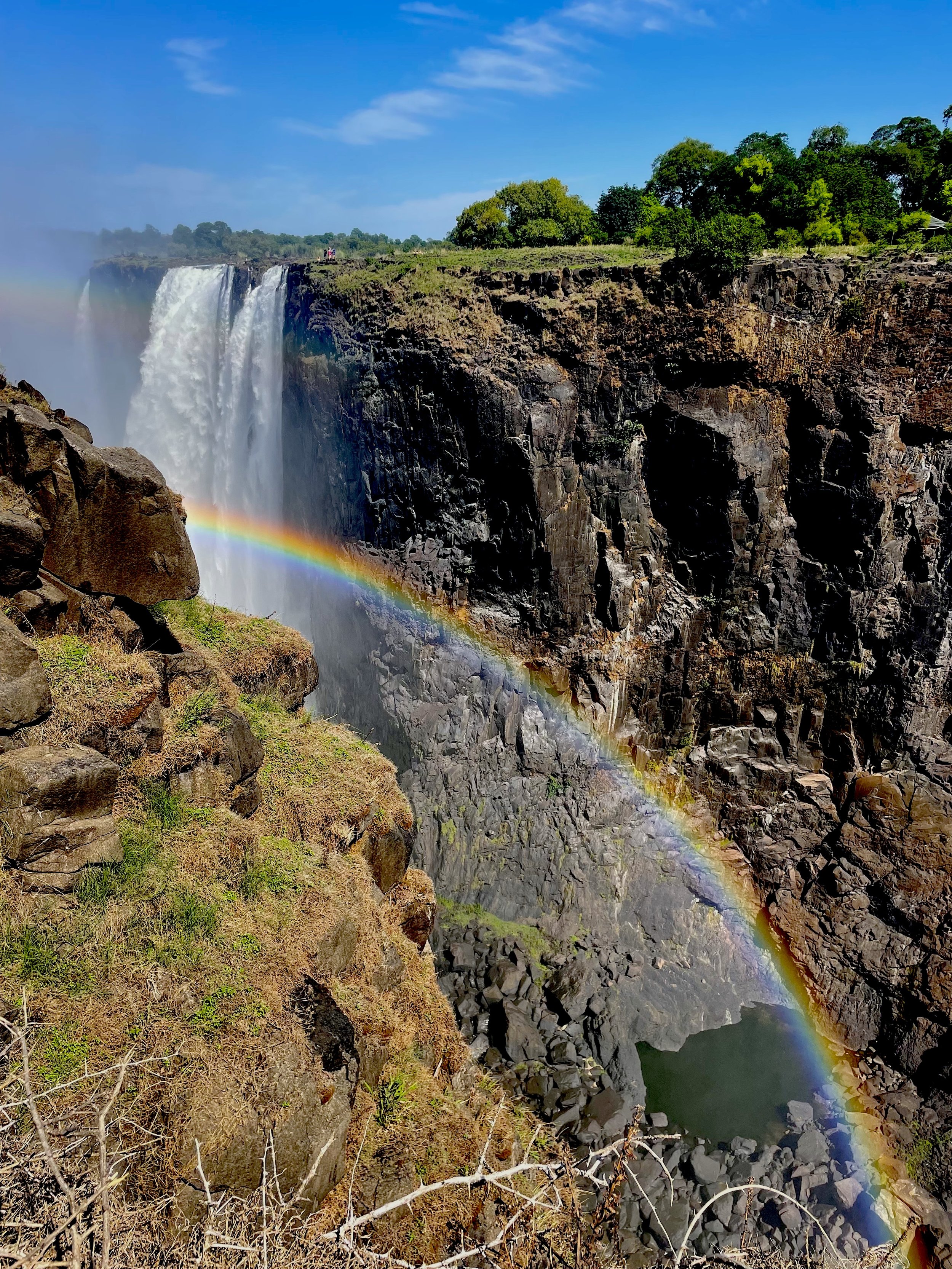
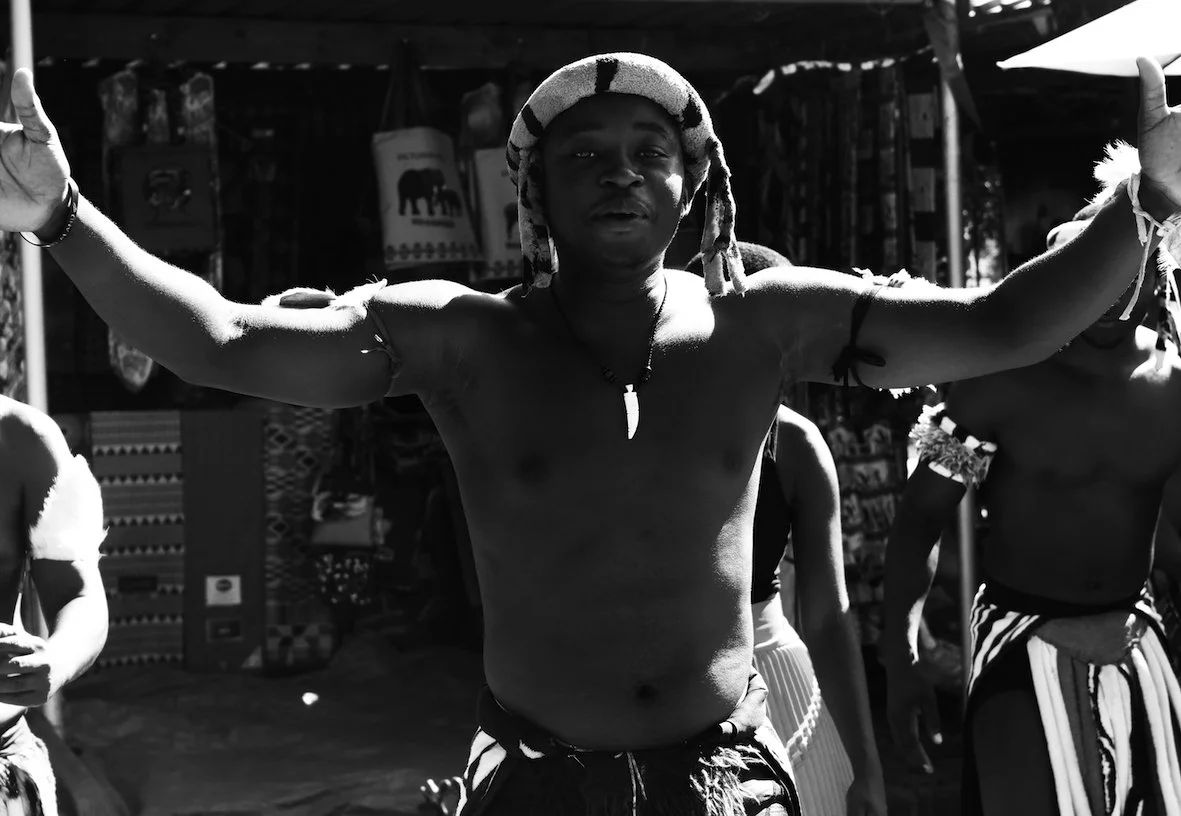
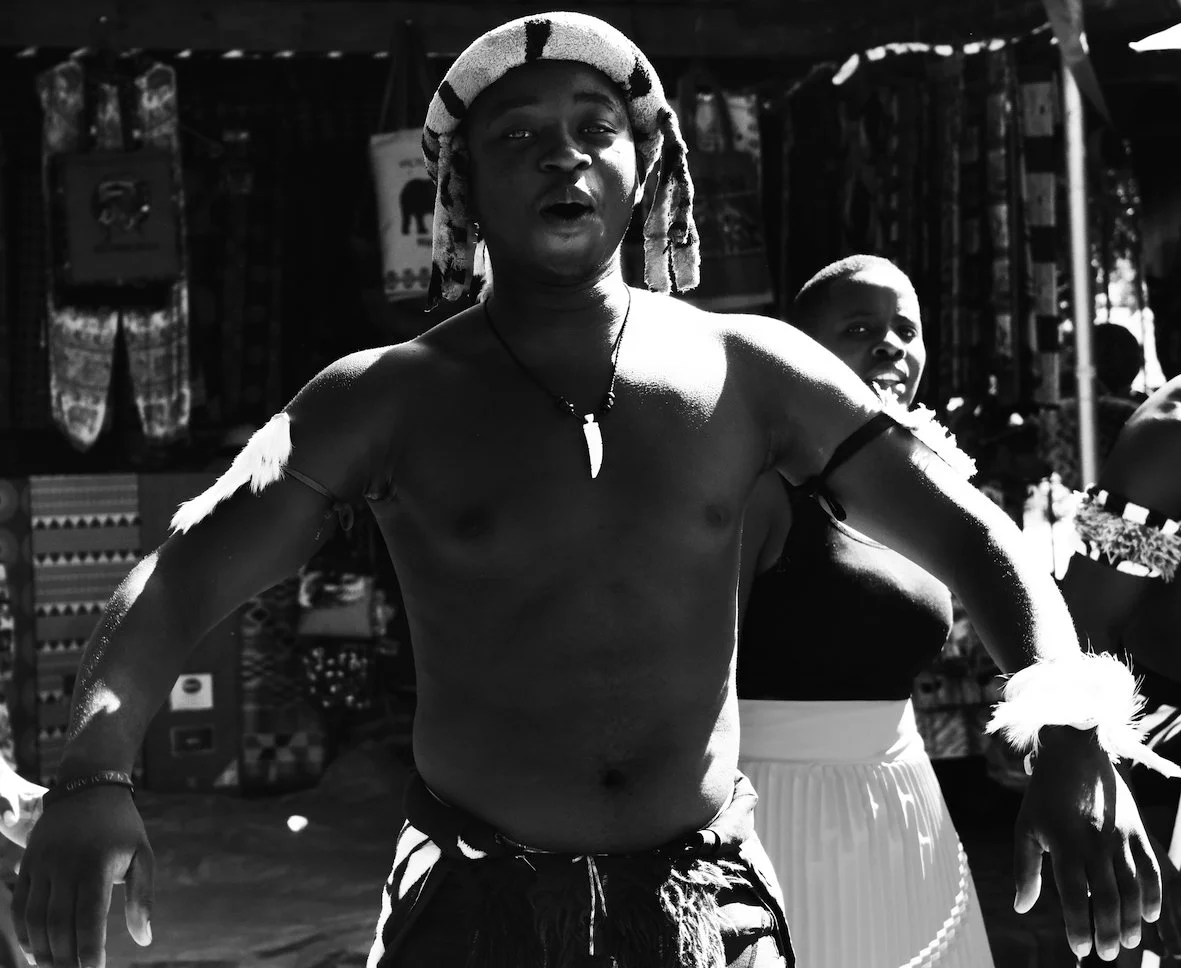
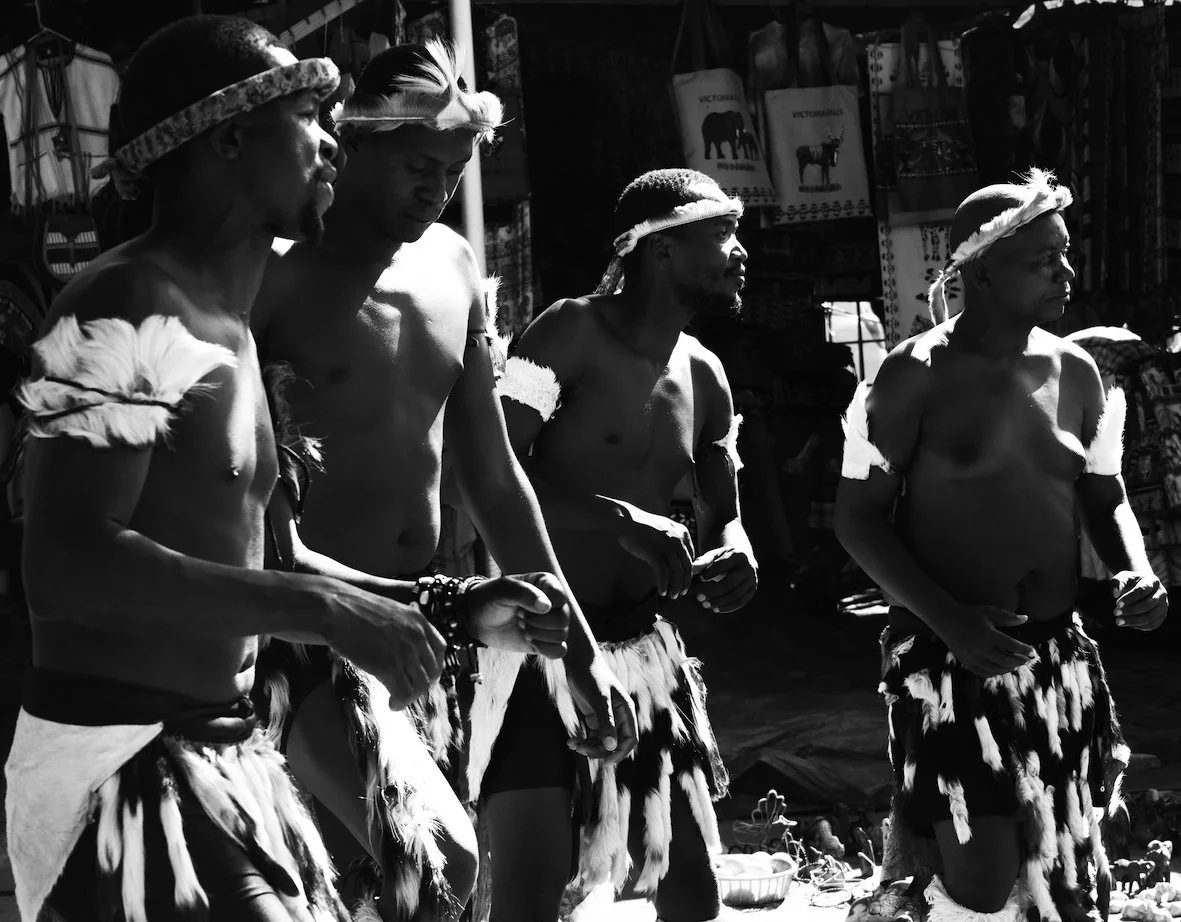
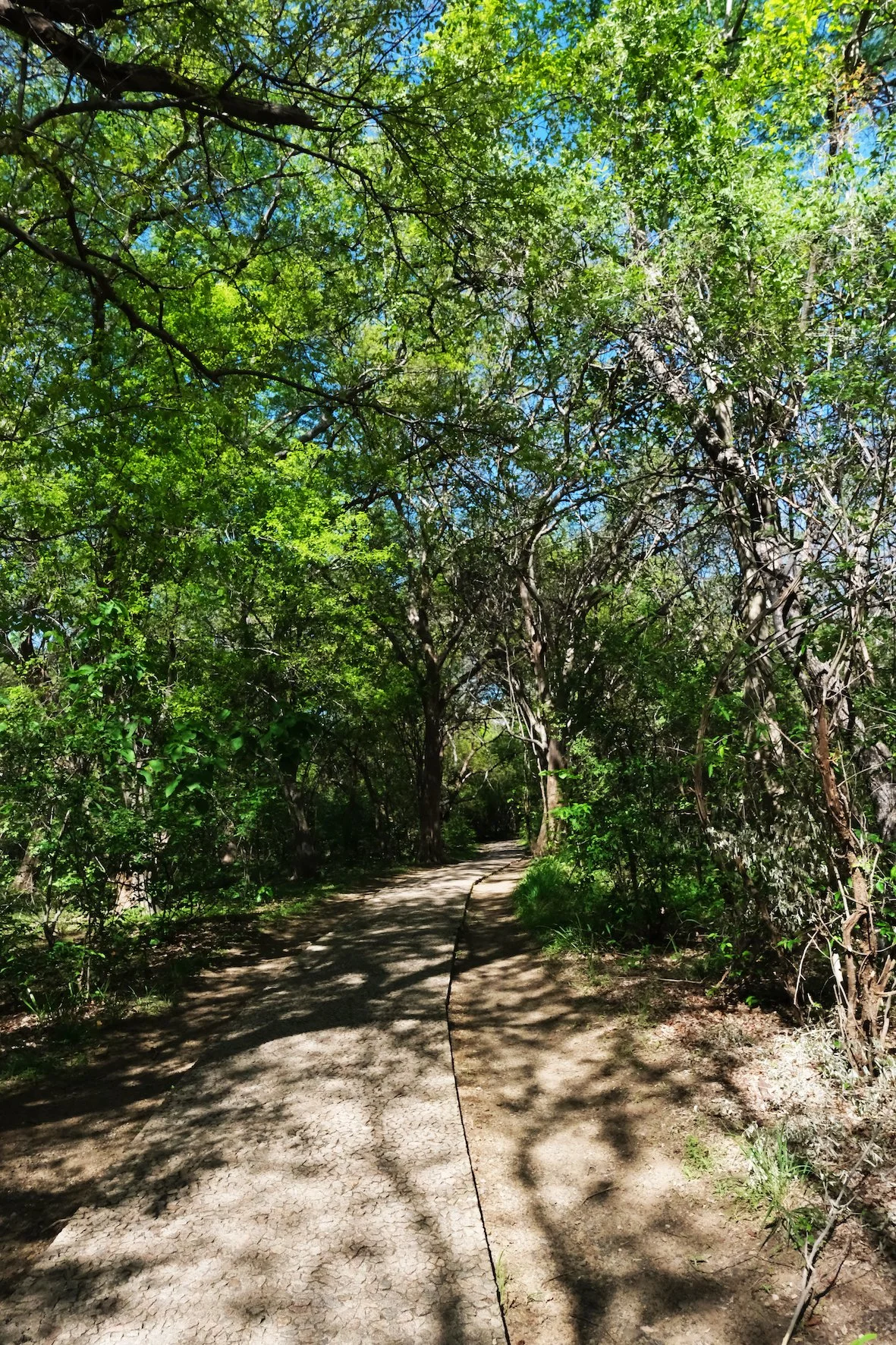
The first morning we spent three hours walking the trails that trace the rim of the gorge. At the gate, some dancers set the mood, but I wanted the element of surprise, so I did not over-research as one would. So silly me, I was blown away by the rainforest right next to the Falls, the ferns and swaying trees, Um yes, the spray of water will mean lush surroundings. But having flown over Zimbabwe the previous day, and seeing the land, I was surprised by the beautiful ferns on the walkways to the water. It also takes a while before you hear the crushing thunderous water. When you do, it is thrilling.
The Falls demand your attention first—stretching 1,708 meters across the Zambezi River with a drop of 108 meters, they aren't just impressive by African standards, they're unmatched globally. The mean flow is almost 33,000 cubic feet per second, and during peak season, up to 500 million liters of water thunder over the precipice every minute. African scale.
The local Kalolo-Lozi people named it Mosi-oa-Tunya—"The Smoke That Thunders"—and standing before it, you understand the poetry in that description. The mist rises like smoke from ancient fires, the roar a constant conversation between earth and water. For three hours, I walked between viewpoints, each offering a different perspective on the same impossible fact: all this water, falling and falling, has been falling for thousands of years and will continue long after I'm gone. You find yourself thinking about the vastness of creation, about time and permanence and your own small place in it all. In other words, its is a good time to talk to the Creator.
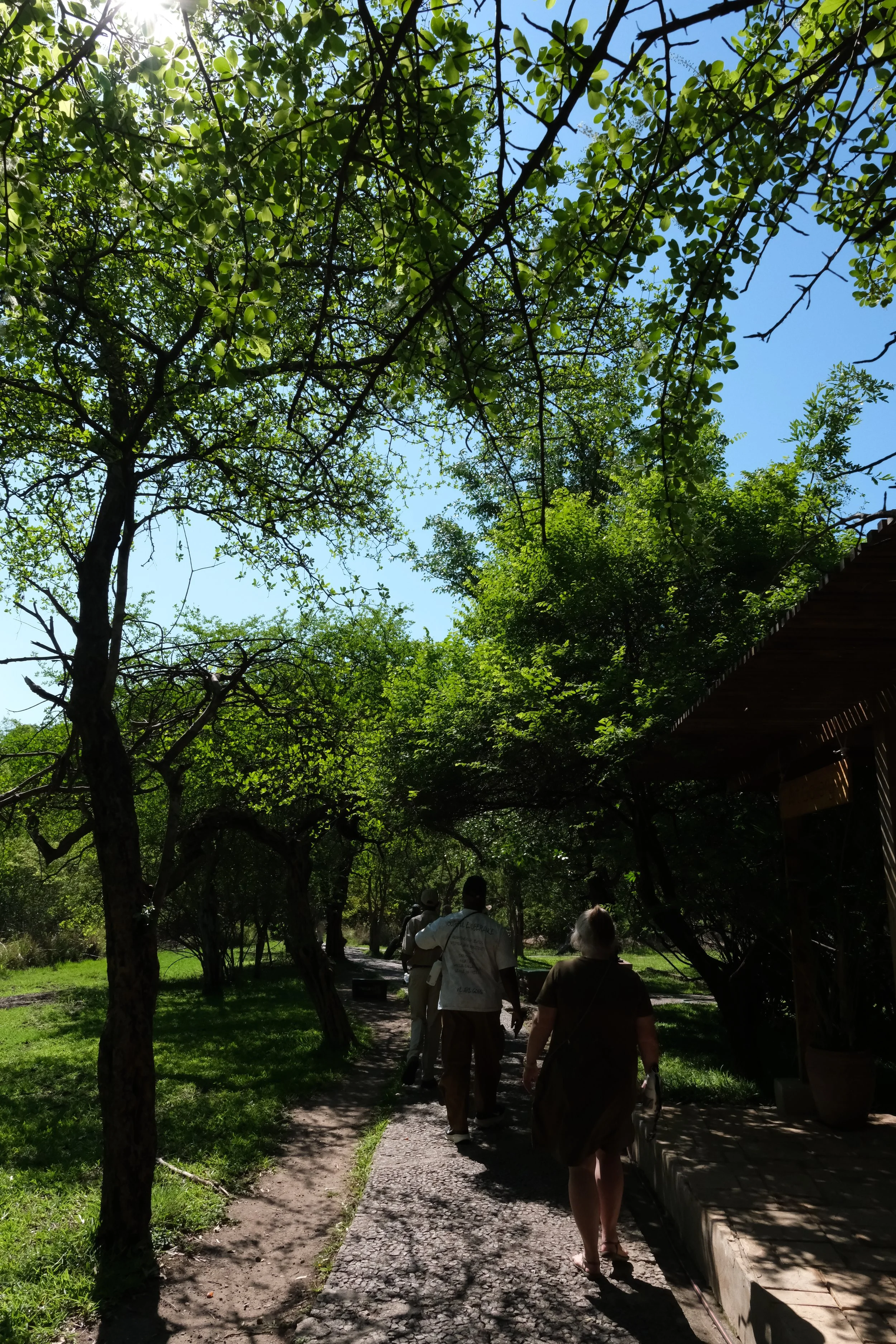
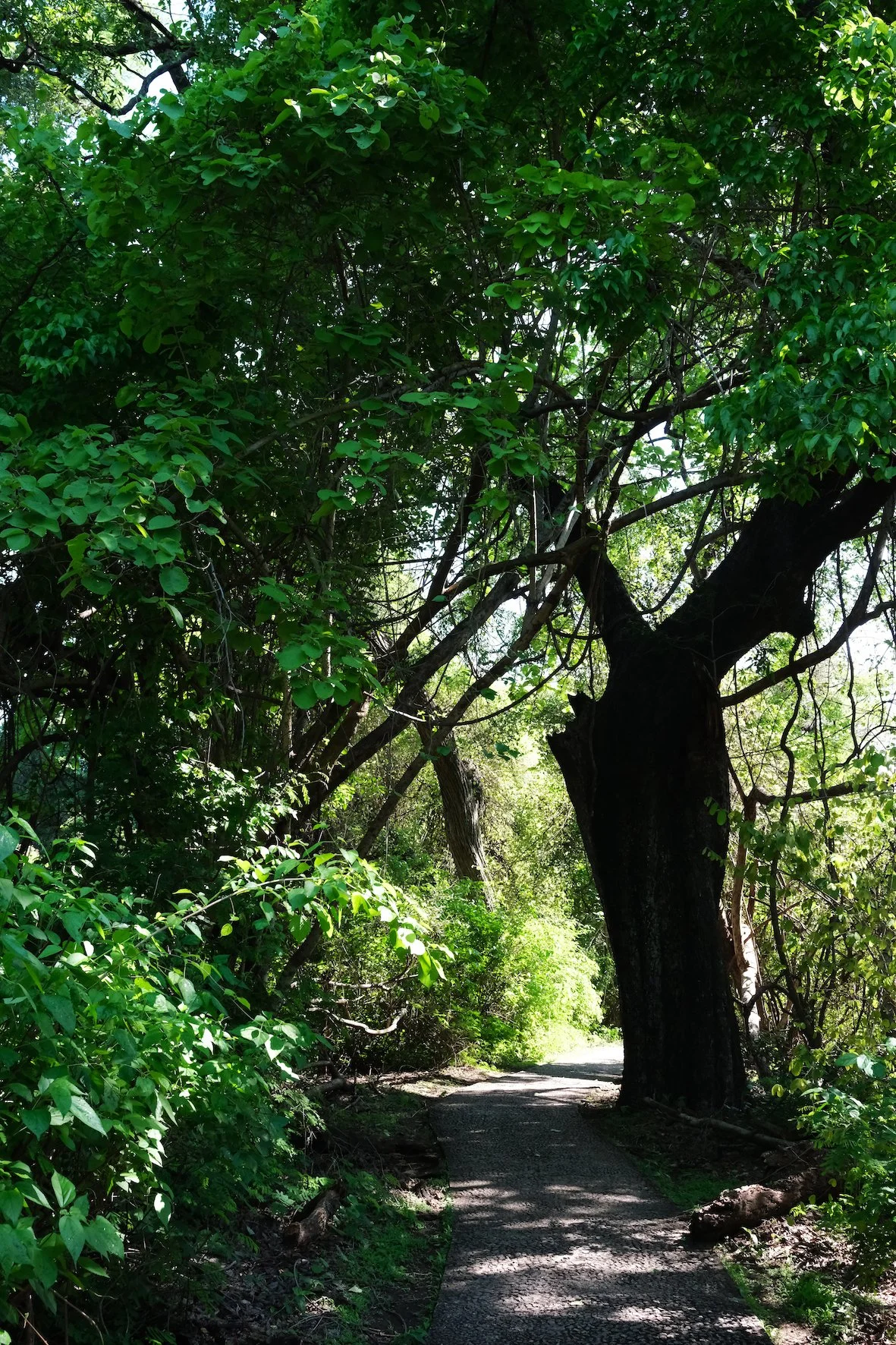
The falls span the entire breadth of the Zambezi at one of its widest points, forming the world's largest sheet of falling water. During the rainy season between February and May, the spray is so dense you can barely see the water itself—just the towering white cloud that announces the Falls' presence from kilometers away. By September, when the Zambezi drops to its lowest flow, parts of the rock face emerge, revealing the basalt foundations that have channeled this river for 200 million years. In November, you can see everything without having to be drenched.
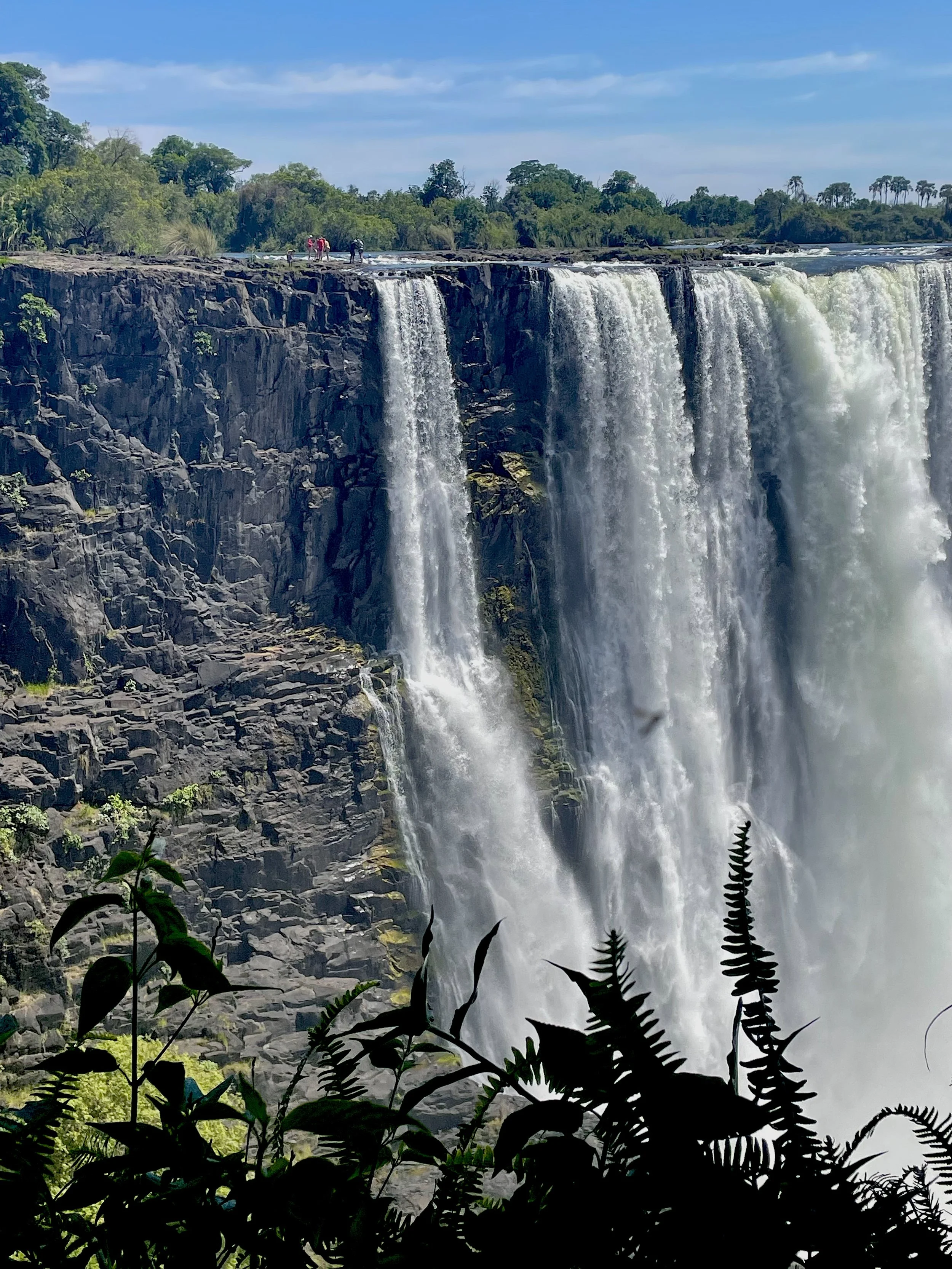
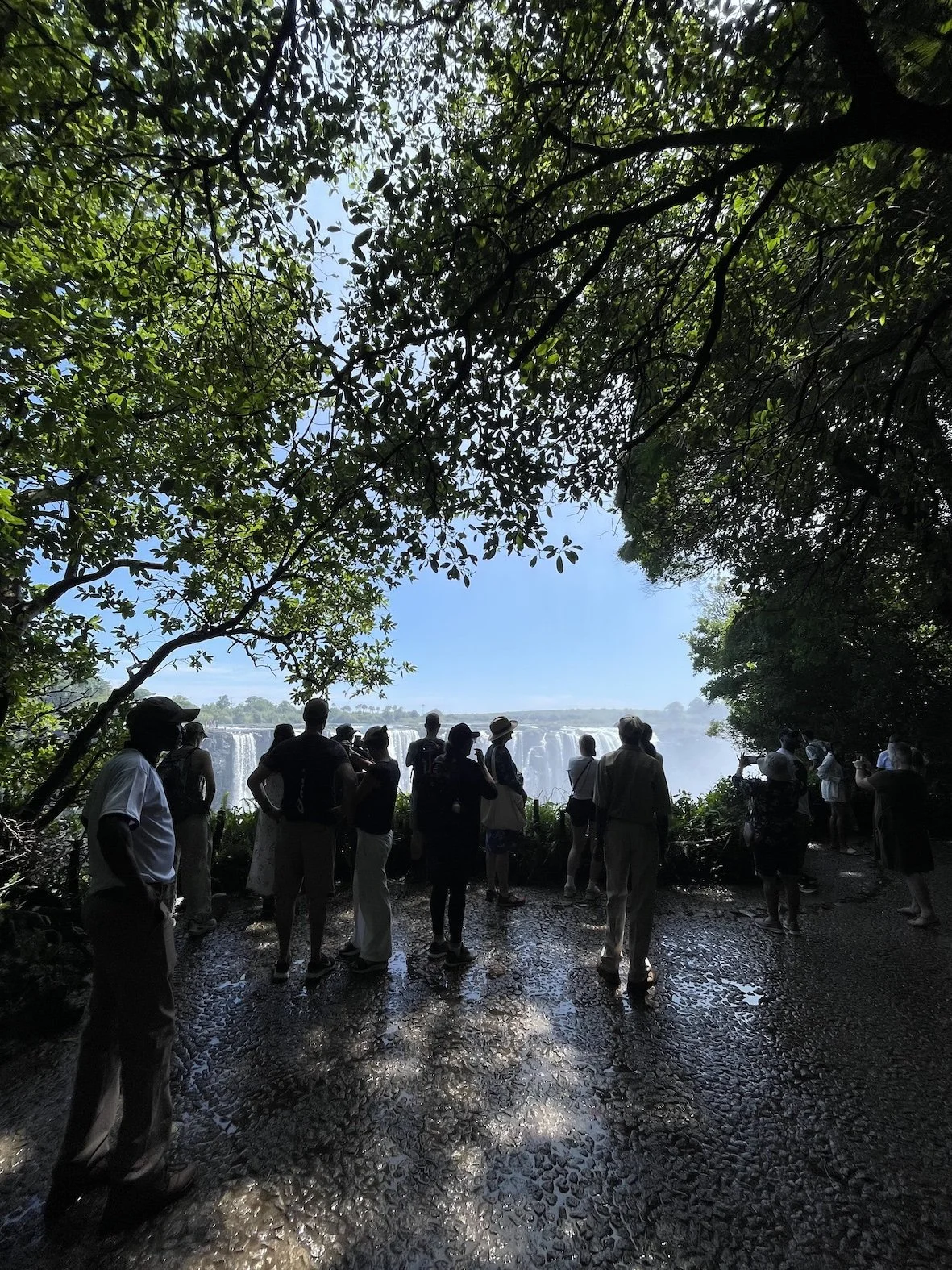
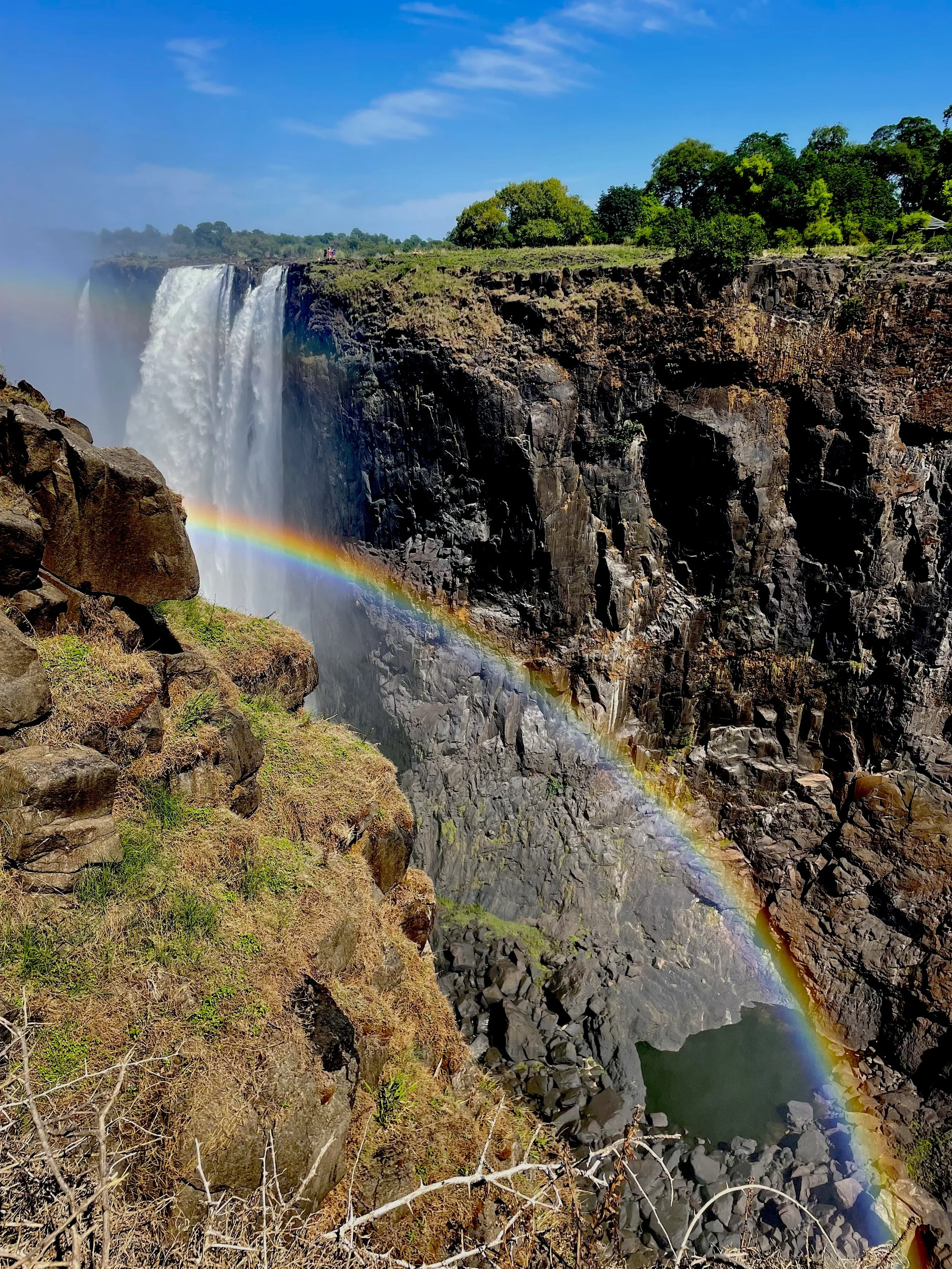
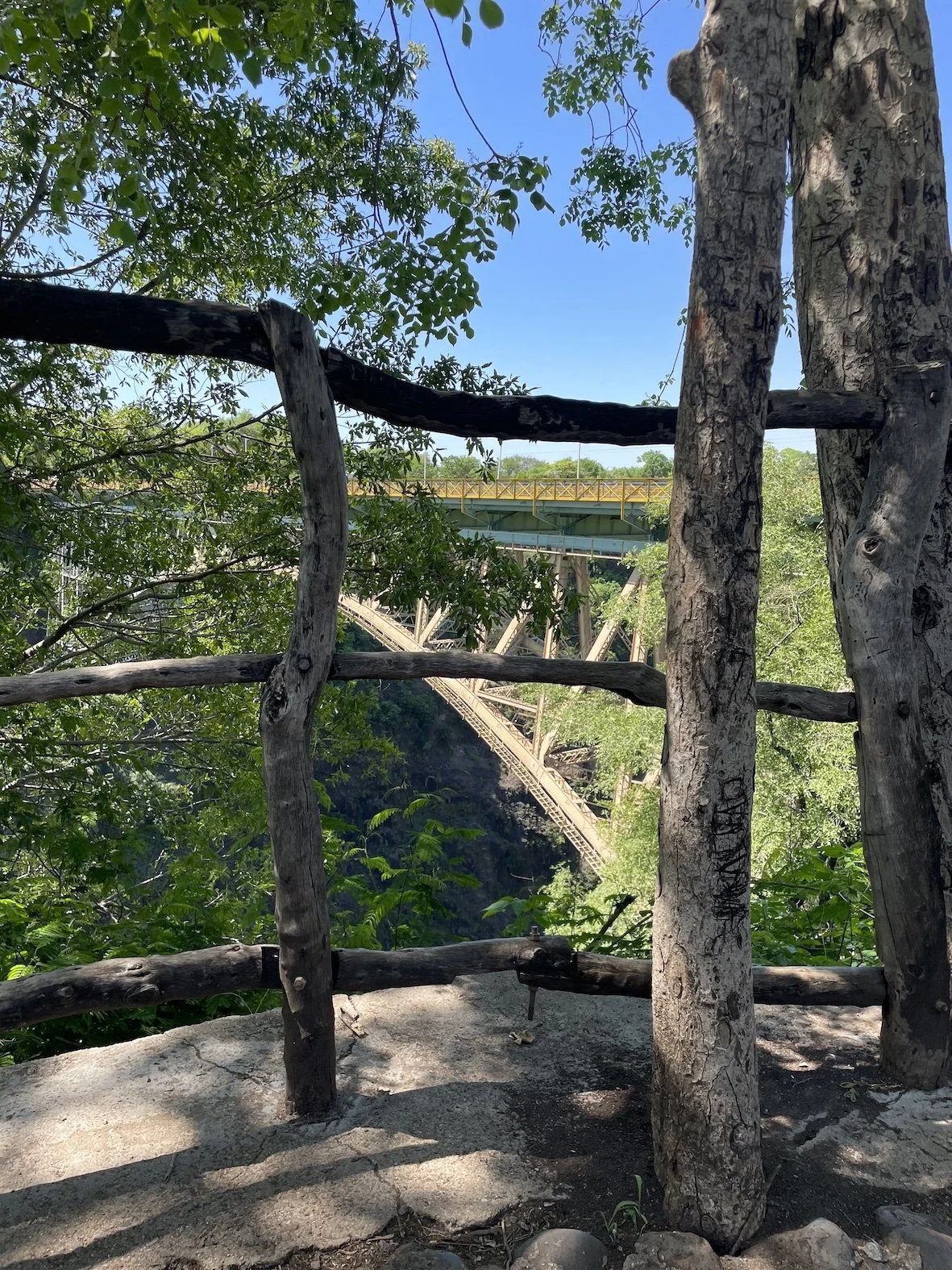
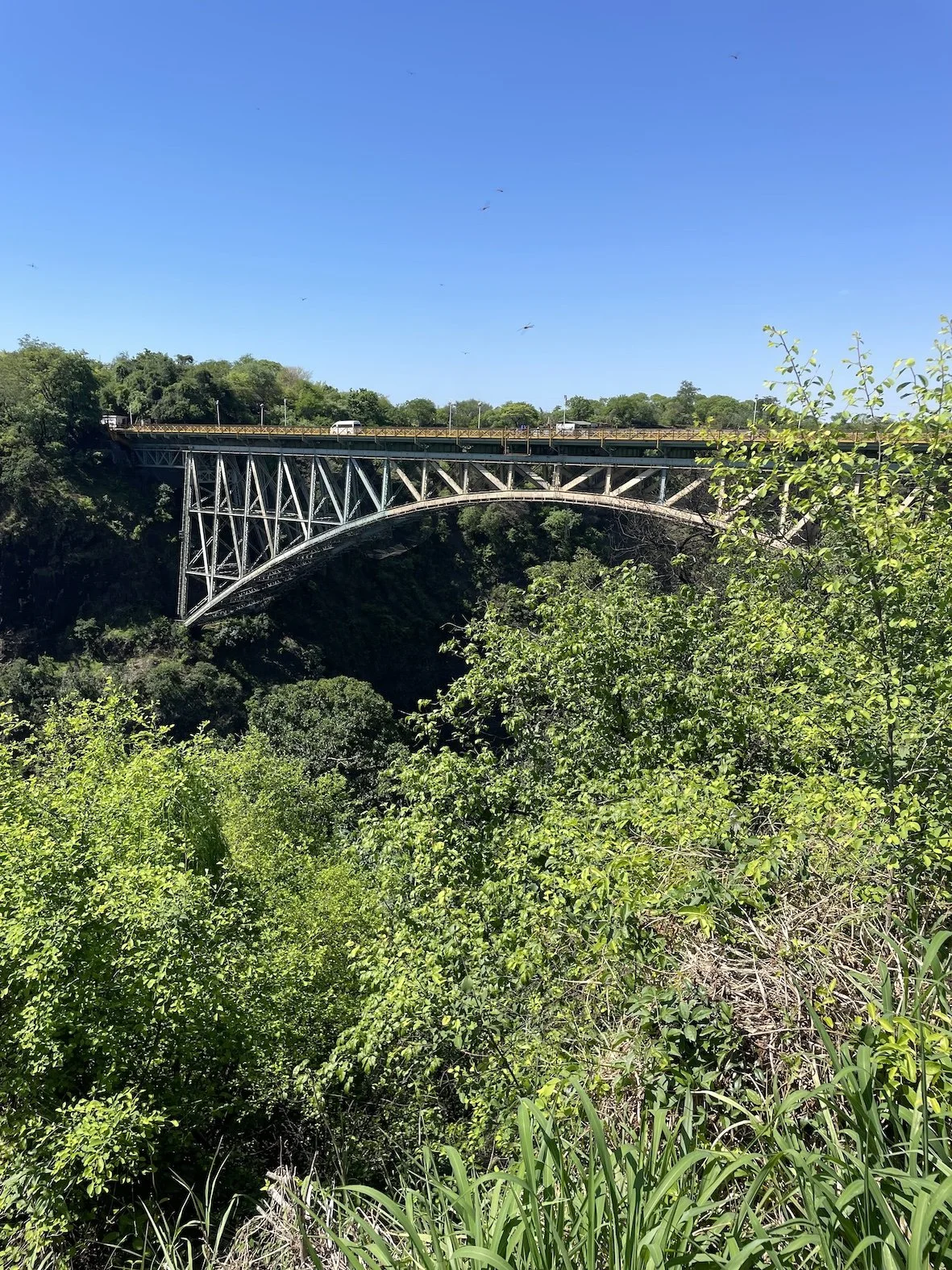
But facts and figures can't capture what Victoria Falls does to your chest, the way it makes you feel small and ancient and impossibly alive all at once.
I returned to the lodge for a late lunch, then spent the afternoon at the spa. After the intensity of the Falls—the noise, the mist, the overwhelming presence of all that water—the spa and Africhology massage, had us vibrating on the relax frequency.

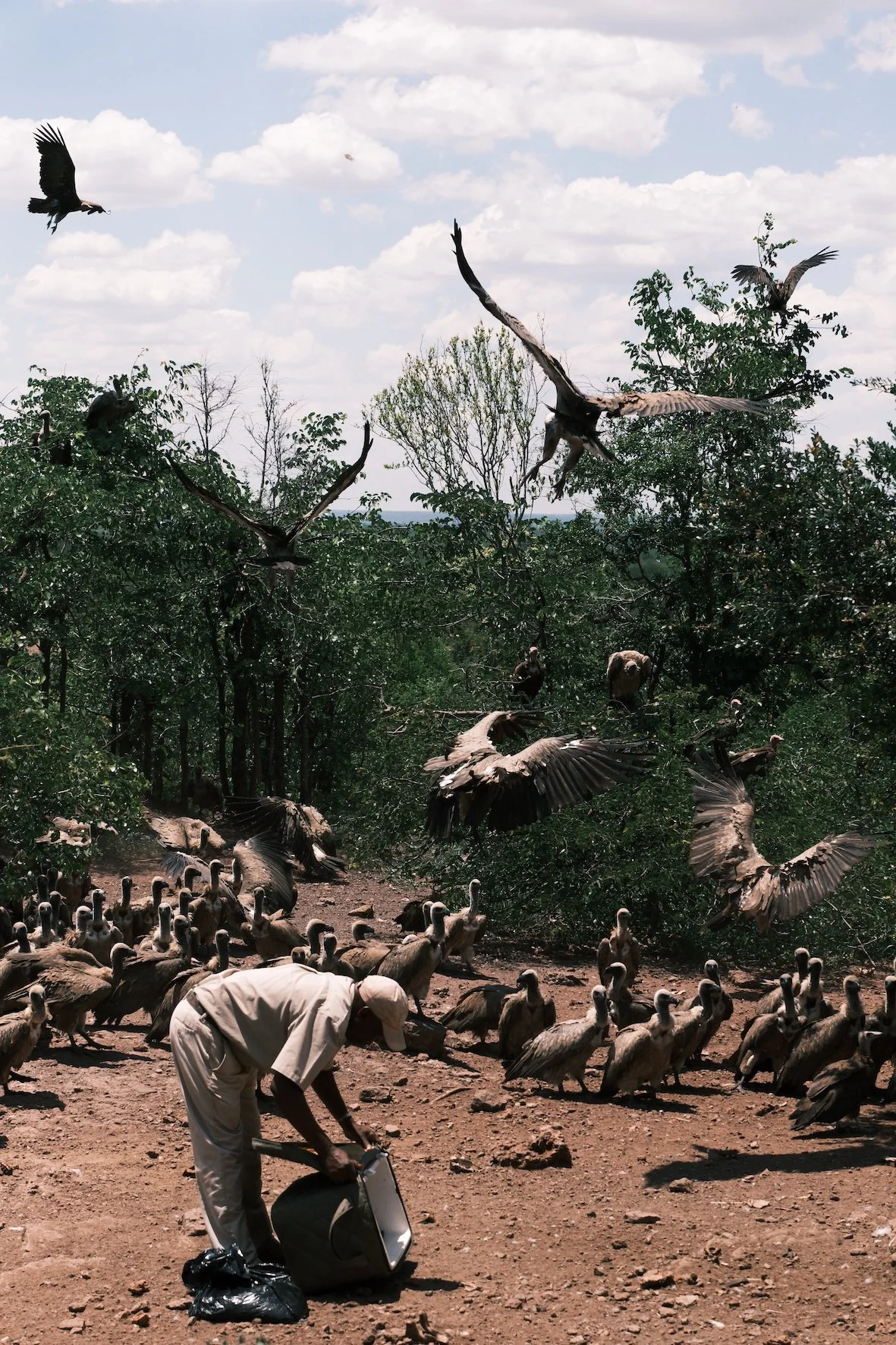
Then the most extraordinary experience came at one pm —the vulture feeding.
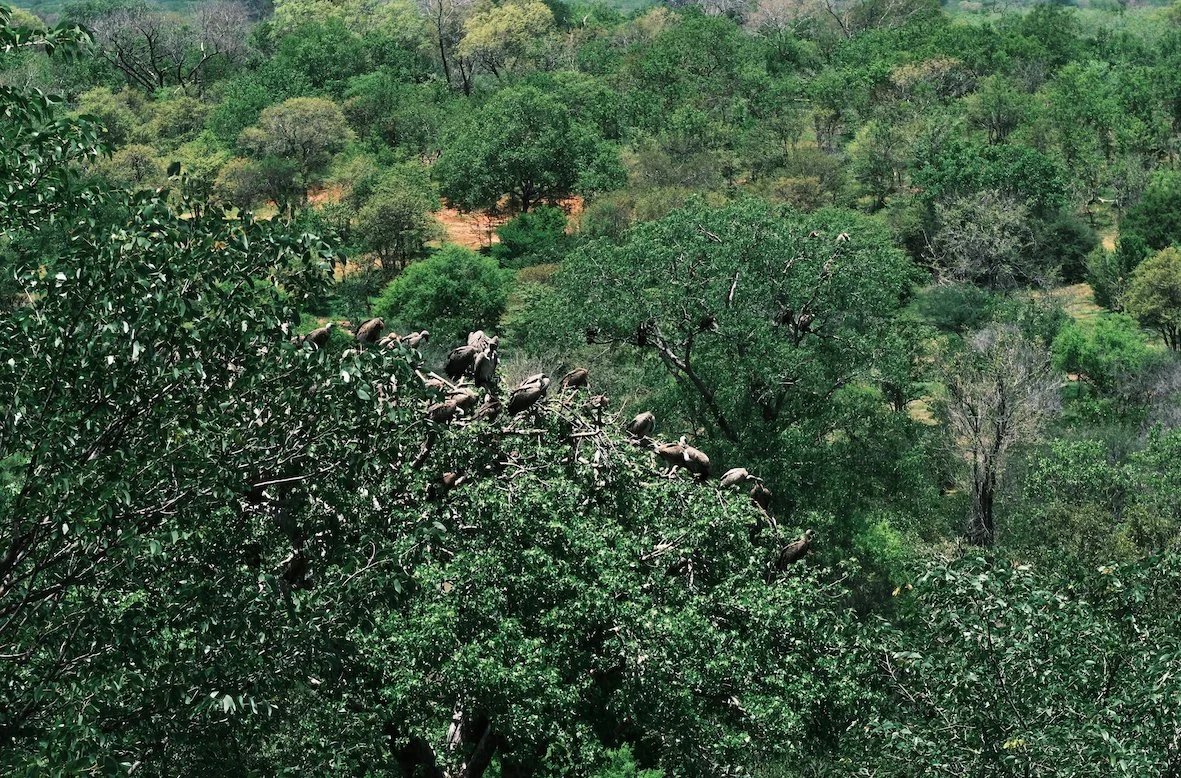
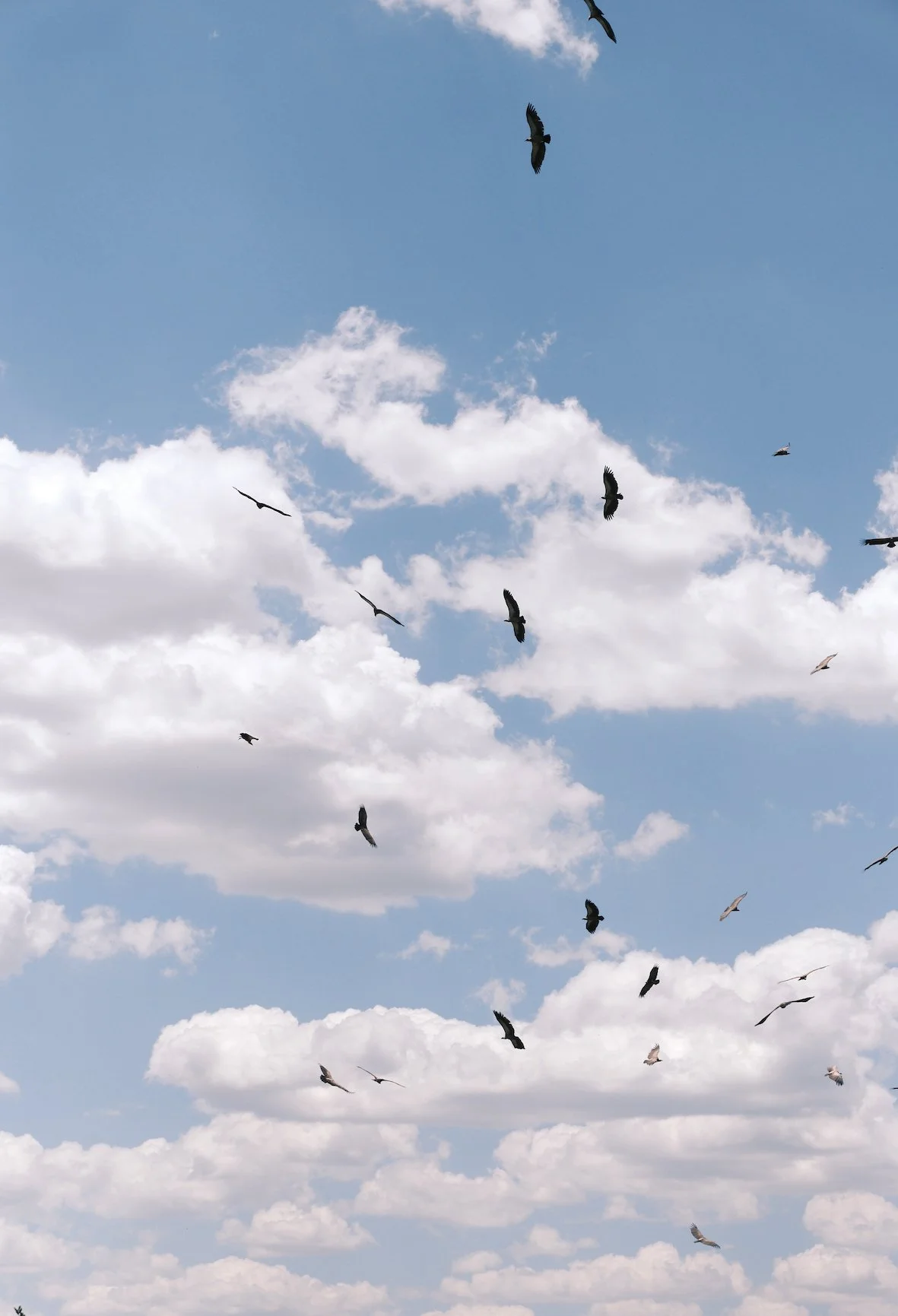
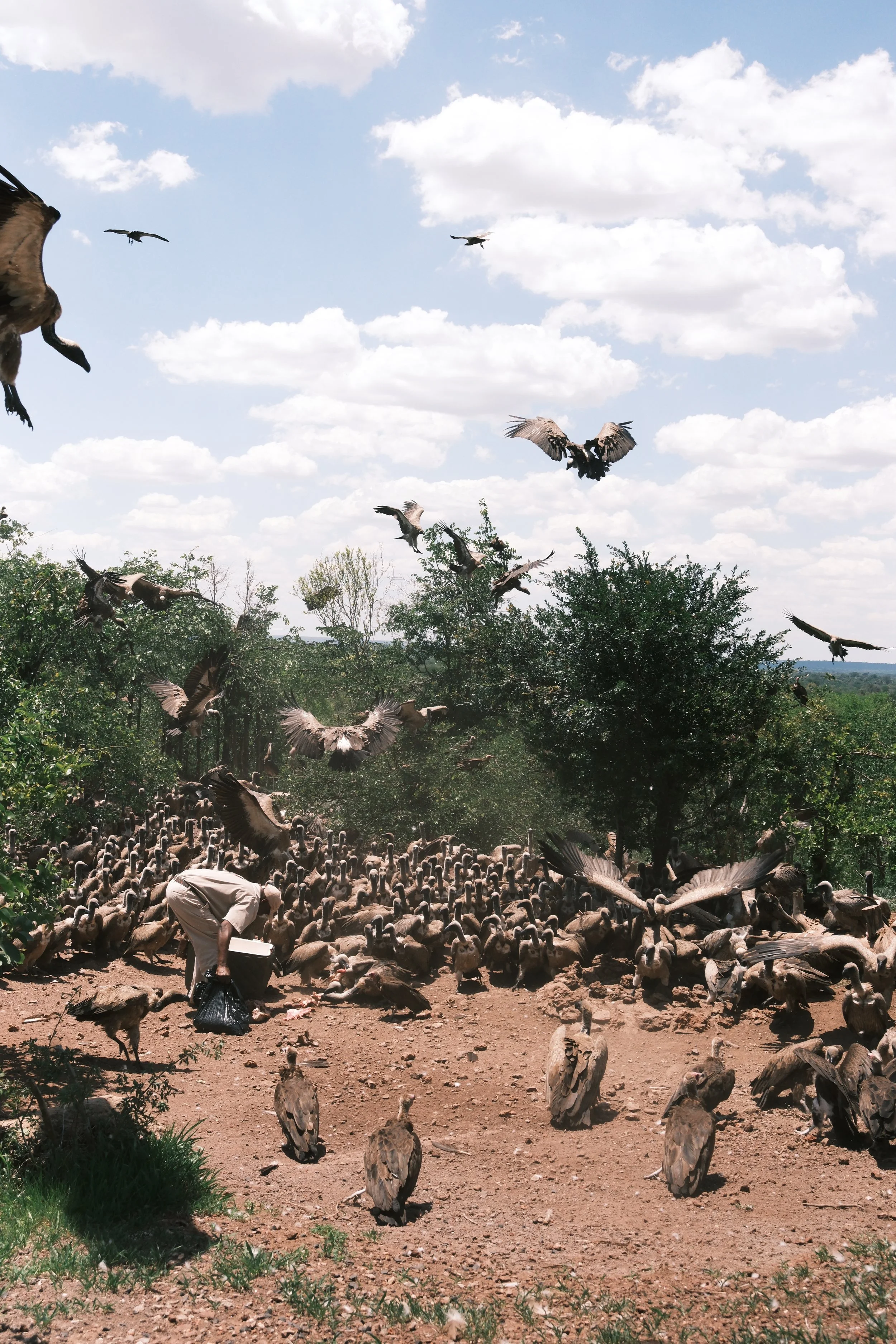
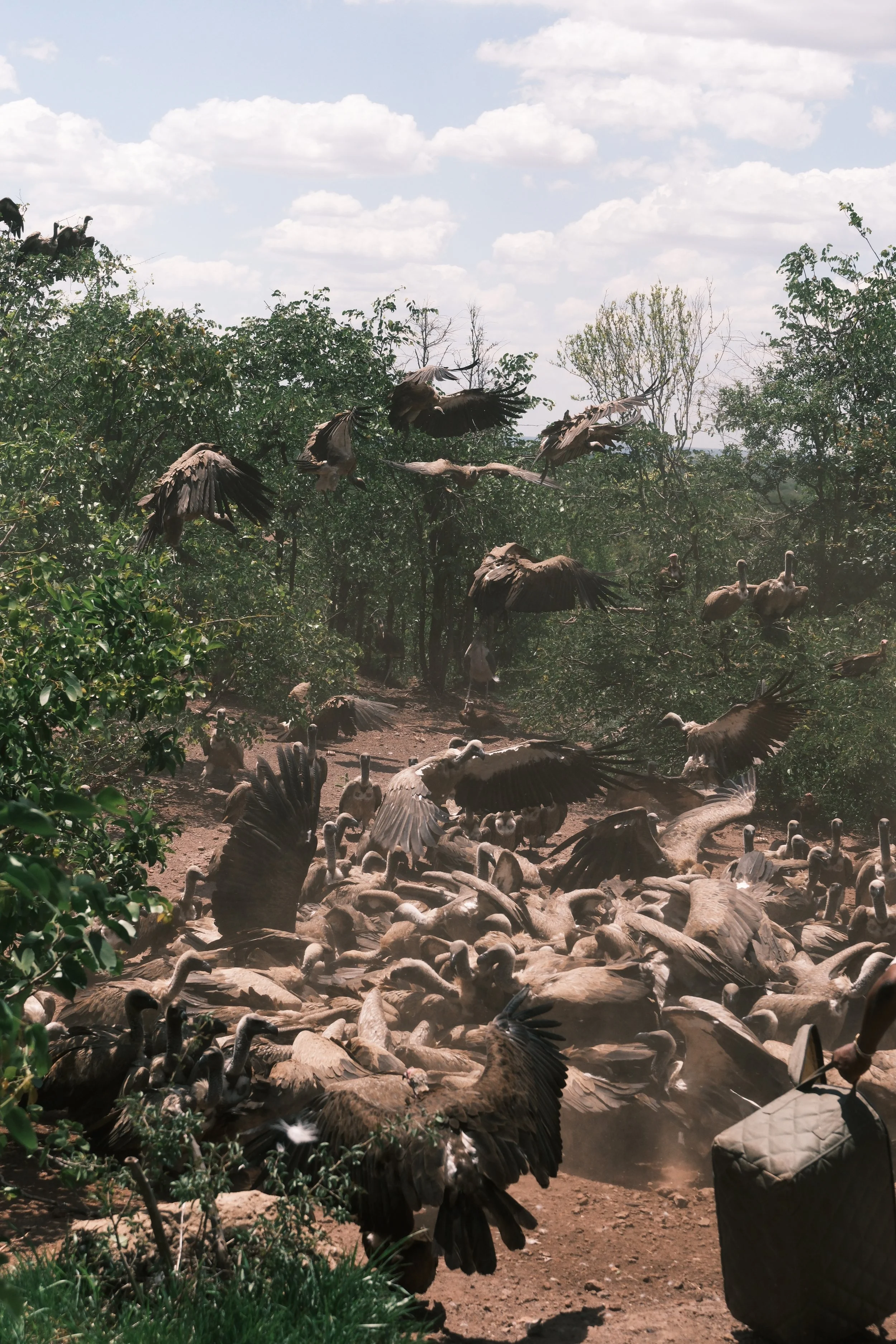
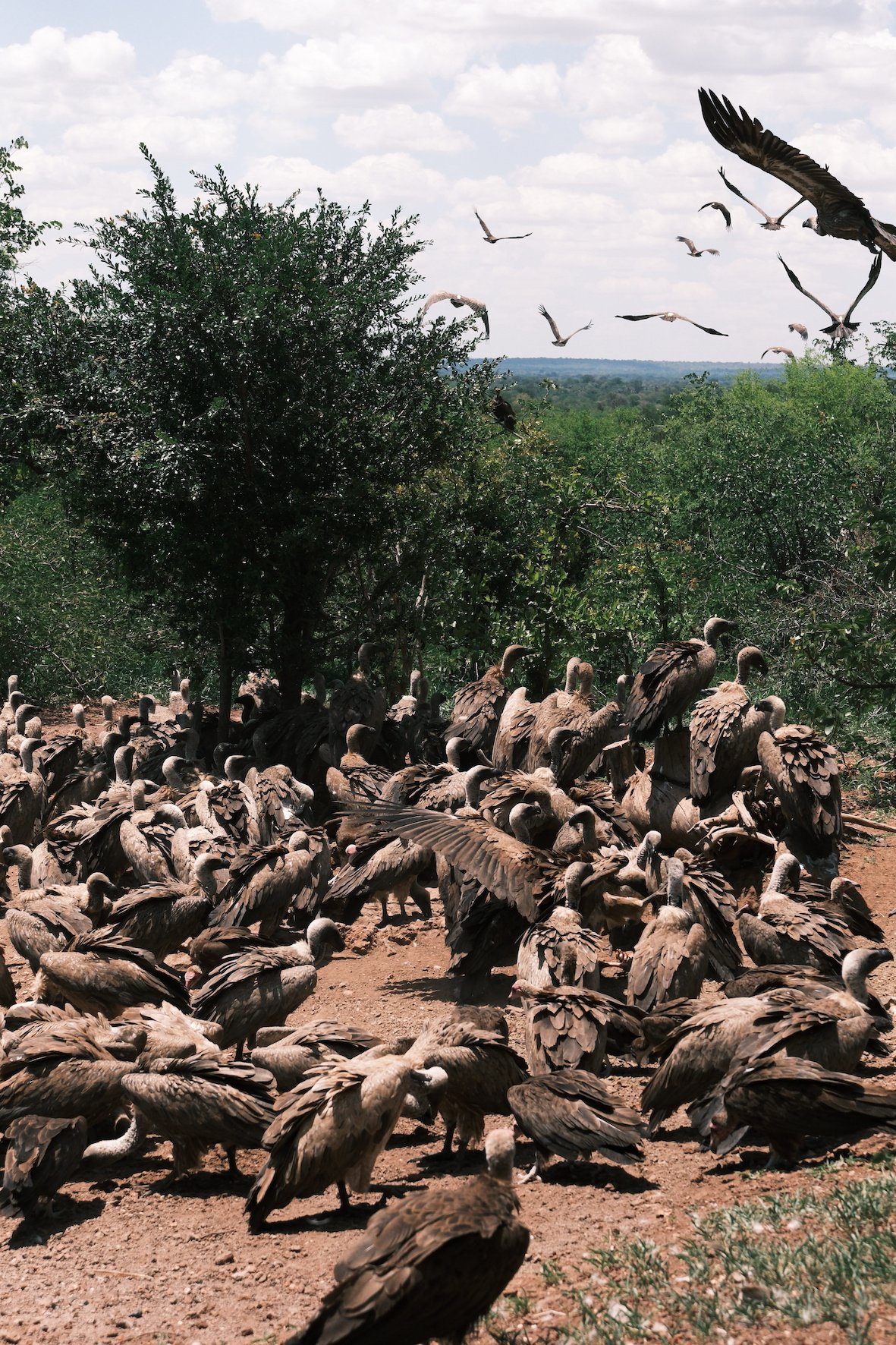
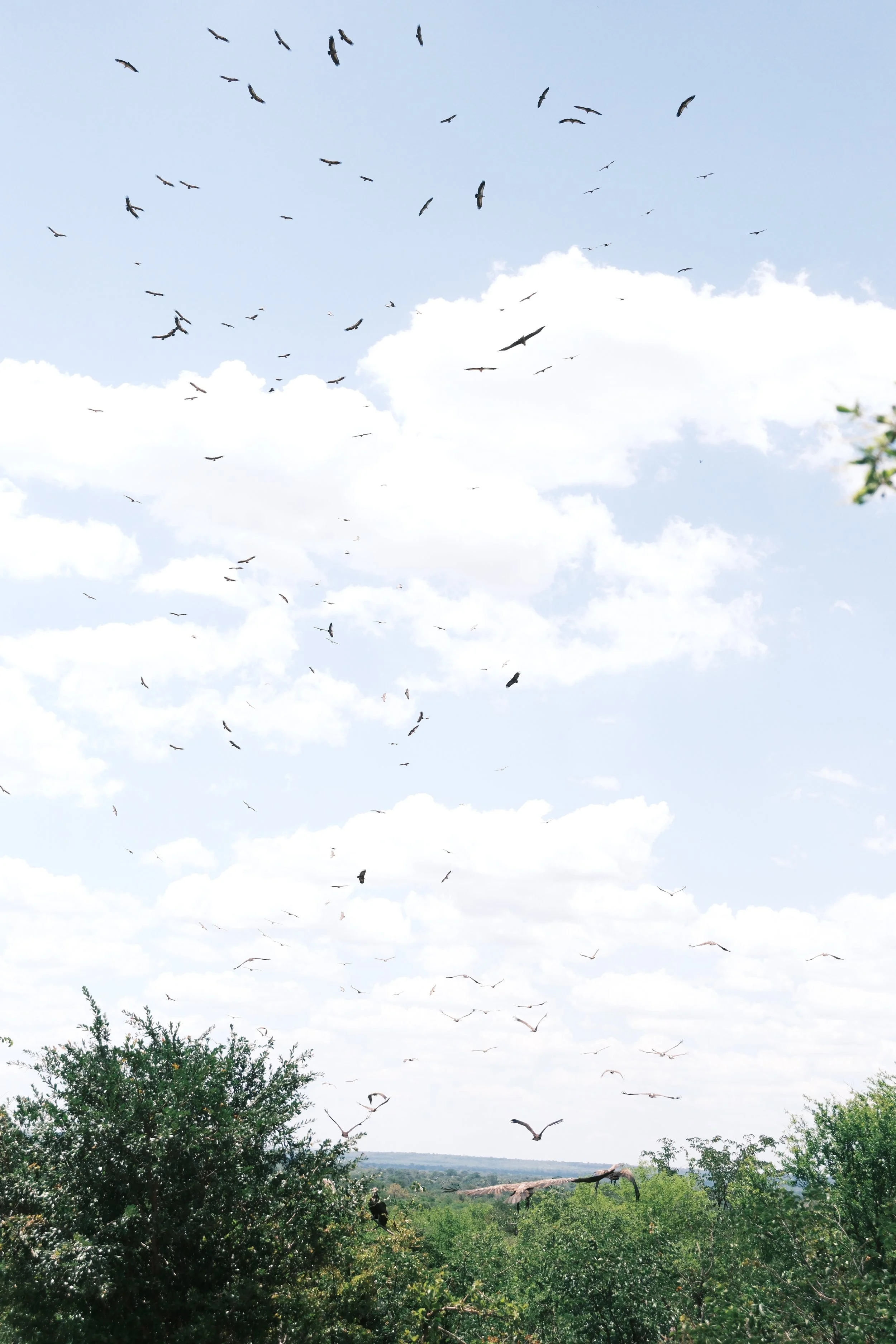
The same time every day, a ranger gathers the lodge guests and to bed led a specially built enclosure. I'd read about it in the lodge information, but nothing prepares you for what actually happens. First, the trees start moving. You're standing there in the enclosure, watching, trying to figure out what's happening, and then you realize: the branches are becoming heavy with vultures. Hundreds of them, appearing as if from nowhere, settling into position like some ancient congregation gathering for ceremony. The skies fill with bird outlines.
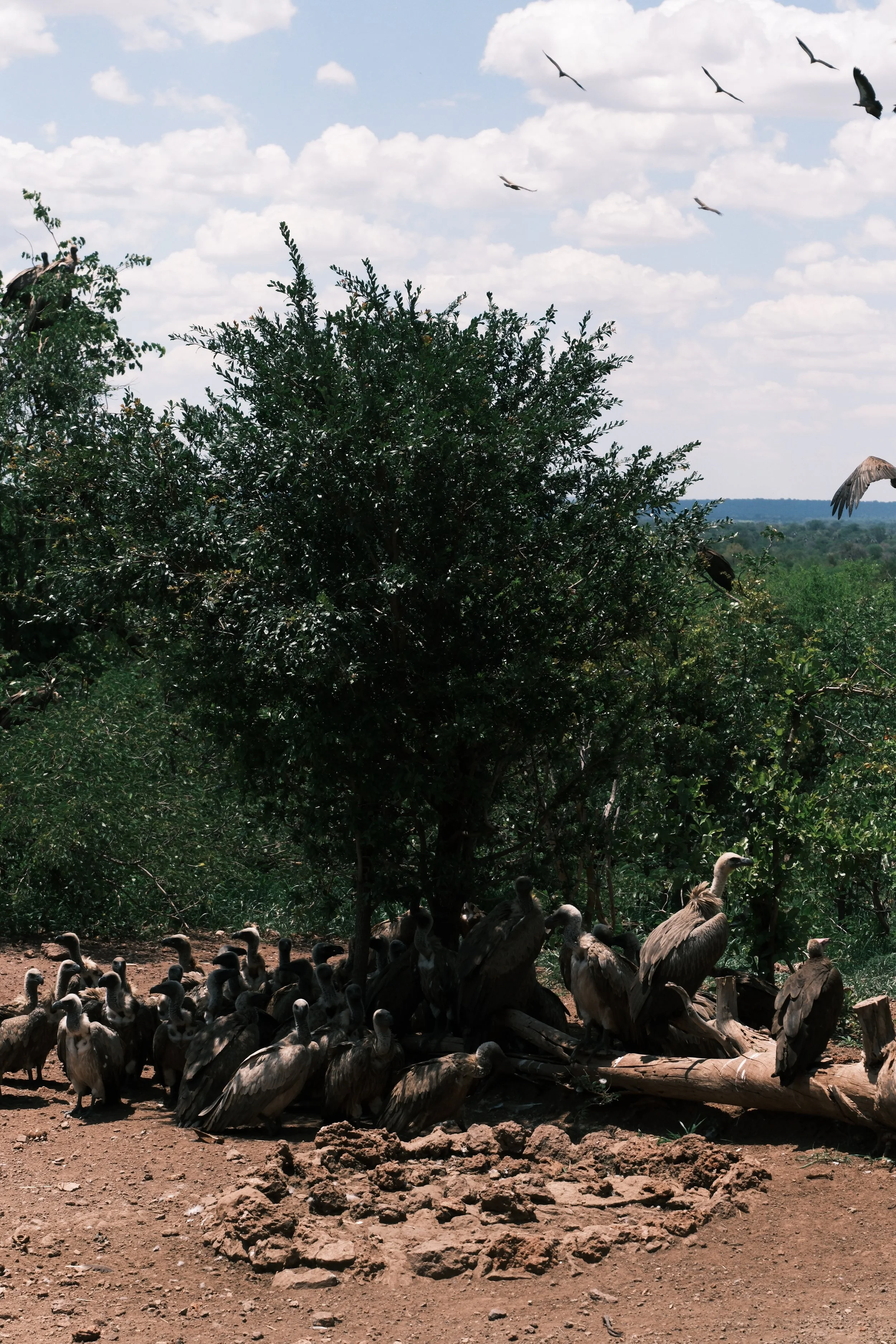
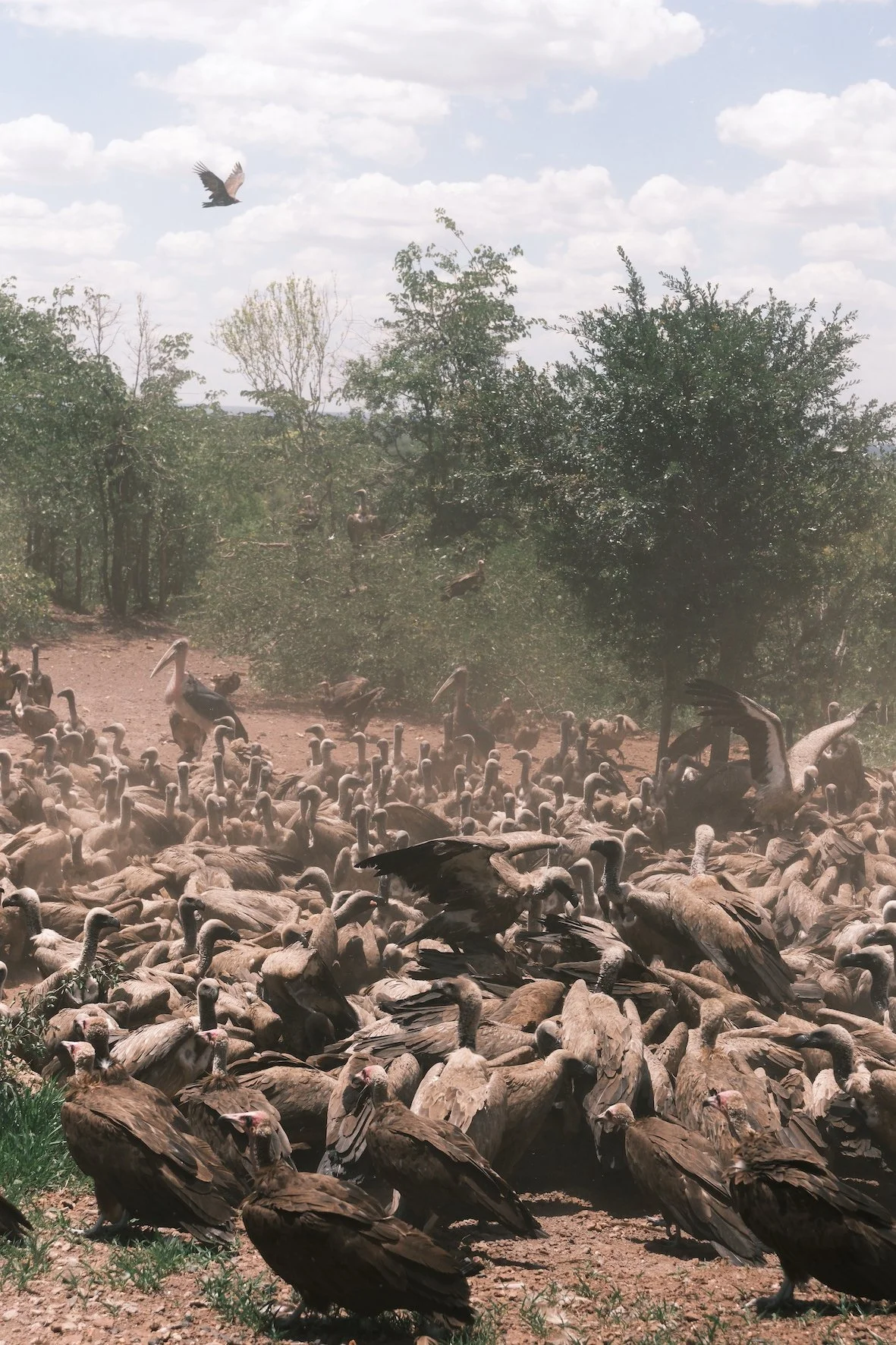
The ranger explained that the lodge feeds them daily on leftover meat scraps and bones from the restaurants, part of a conservation program for these endangered birds. Four species gather here: white-headed vultures, hooded vultures, lappet-faced vultures, and white-backed vultures, all of them listed as either endangered or critically endangered.
What amazed me most were the stories the ranger told. Vultures, he explained, are the go-betweens of the wild and humans. They consume carcasses that harbor bacteria potentially harmful to us—anthrax, rabies, botulism—but they possess enzymes that only they have, enzymes capable of killing these dangerous pathogens. They ingest what would make us sick, neutralize it with their unique biology, and prevent its spread through the ecosystem. They're not just scavengers—they're nature's sanitation system, a biological barrier between disease and everything else that lives here.
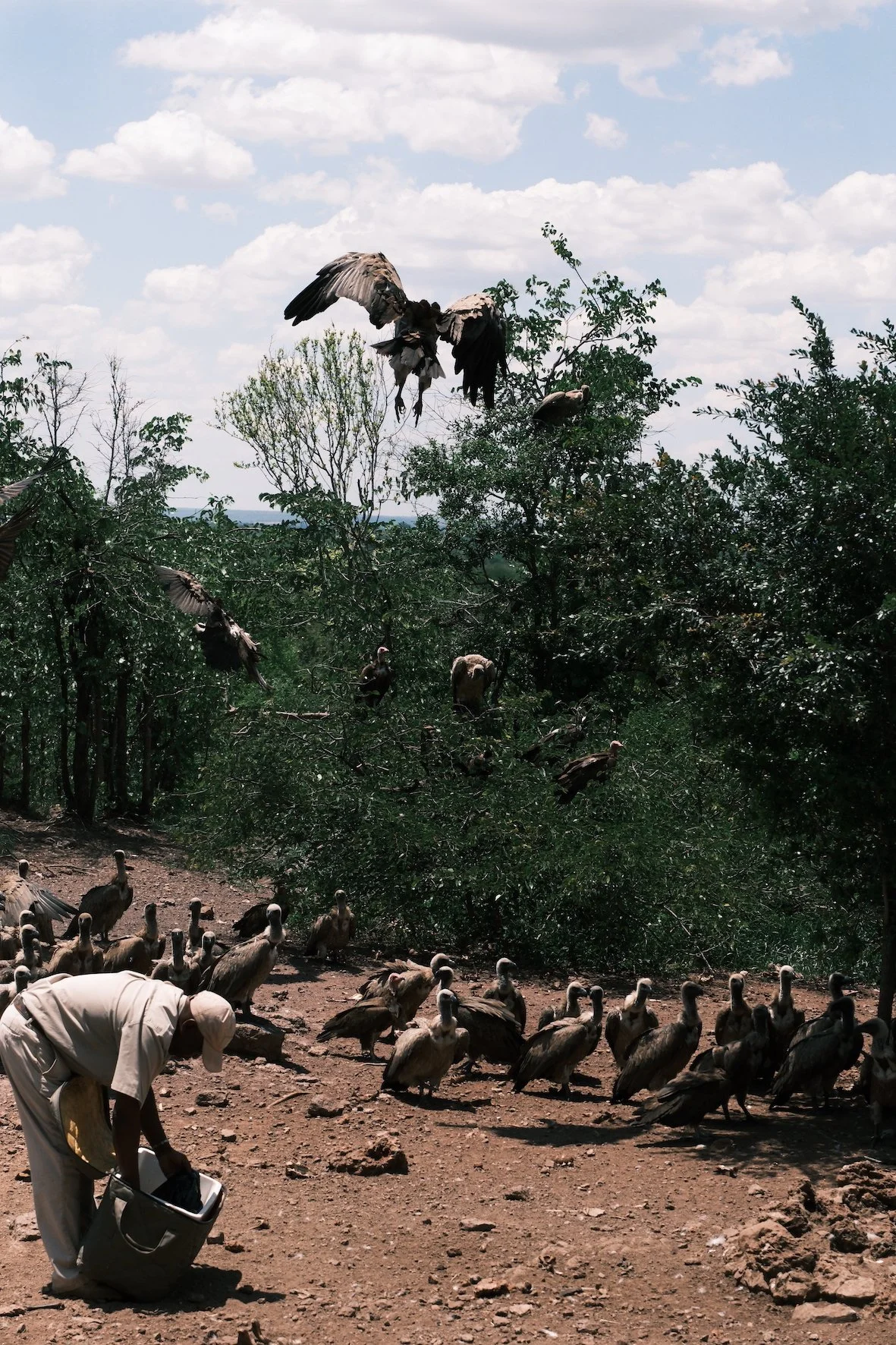
Then the meat is placed, and the feeding begins.
They descend in waves, these massive birds with their bald heads and powerful wings, creating a dust cloud as they land. Marabou storks join in, equally ungainly and magnificent. The noise alone—the beating of wings, the squabbling, the sheer chaos of survival—it's primal. You stand there in the enclosure with the other guests, close enough to see individual feathers, to watch their prehistoric faces as they tear at the meat, and you understand something about the rawness of this continent that no luxury amenity can replicate.
The conservation context makes it even more powerful. Vulture populations have collapsed across Africa—in 2019, hundreds were poisoned in Botswana at poached elephant sites, one of the biggest losses in history. Poachers poison vultures because they circle over carcasses, alerting rangers to illegal activity. The birds are also killed for traditional medicine and electrocuted by power lines.
Standing there watching them feed, knowing how precarious their existence has become, I felt that lump in my throat again. This daily feeding at the lodge—it's not just a tourist attraction. It's a lifeline for birds that play a crucial role in the ecosystem but are running out of safe food sources. The lodge provides just enough to supplement their diet, not enough to create dependency, helping them survive while they search for natural food.


Later that afternoon, we took the sunset cruise on the Zambezi with Pure.Africa. After the intensity of the vultures—the dust and noise and raw biology of it all—the river felt like a different world entirely.
The cruise was beyond special. Two hours drifting on this magical river, cocktail in hand, watching hippos frolic in the shallows. They're usually such ponderous creatures, but in the water they moved with unexpected grace, surfacing and diving, their massive heads breaking the surface with snorts and grunts. Crocodiles lay motionless on the banks. Elephants came down to drink on the Zambian side, their silhouettes darkening as the light changed.
And then the African sun began its descent.
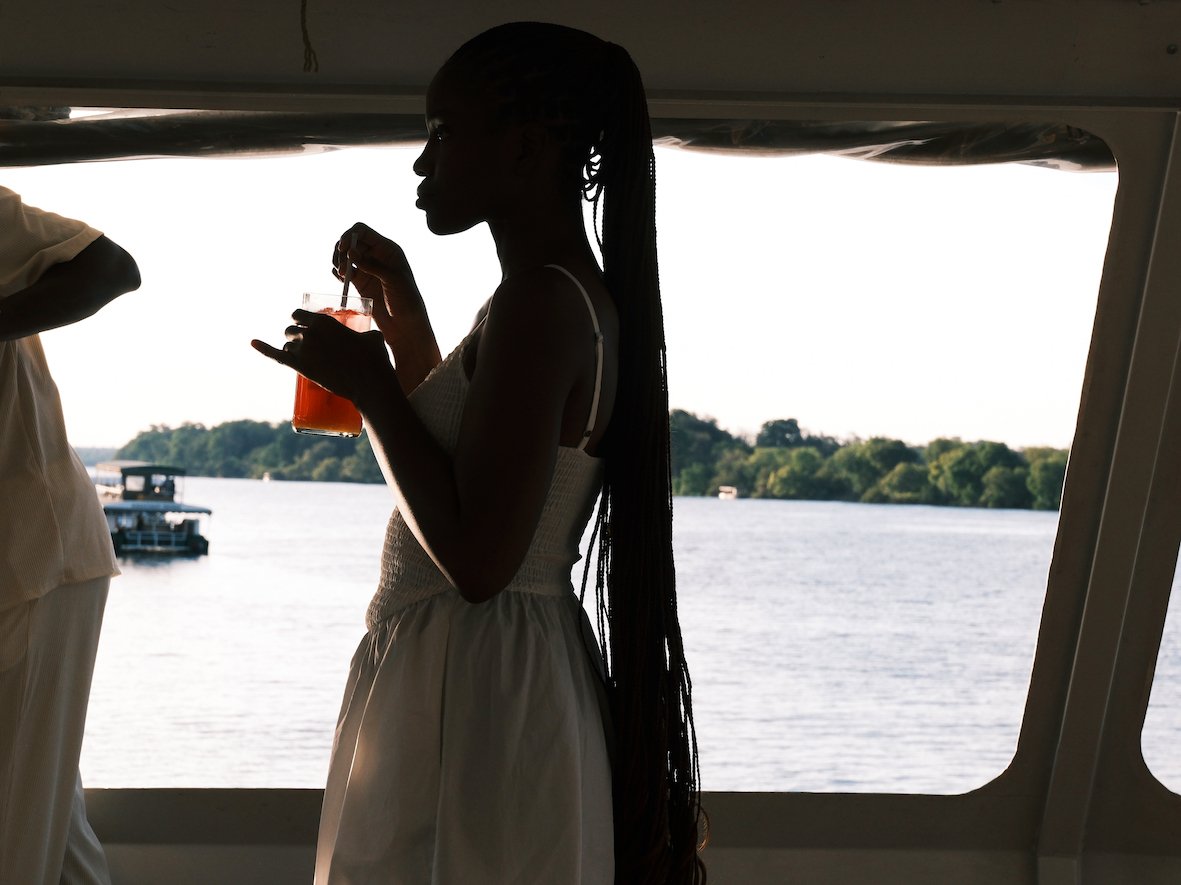
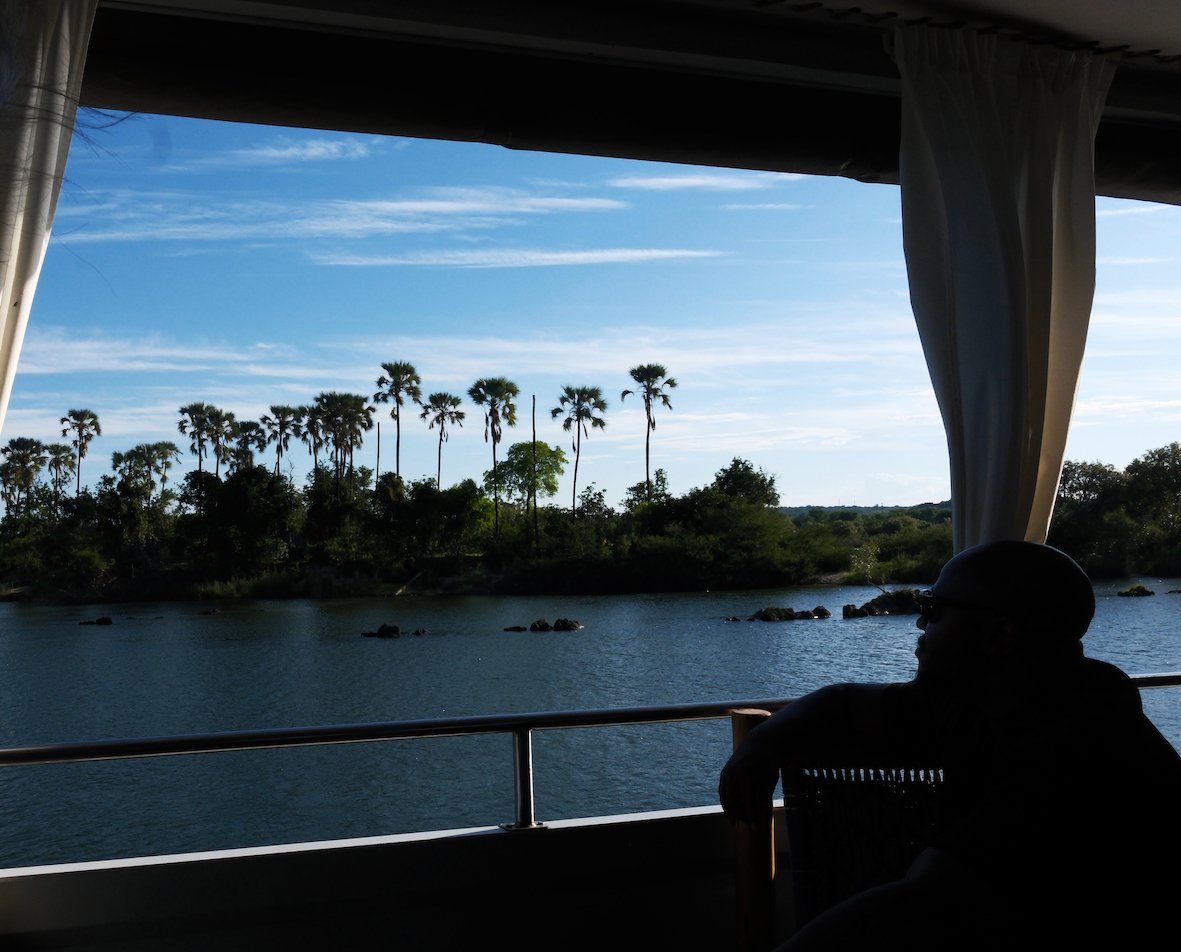
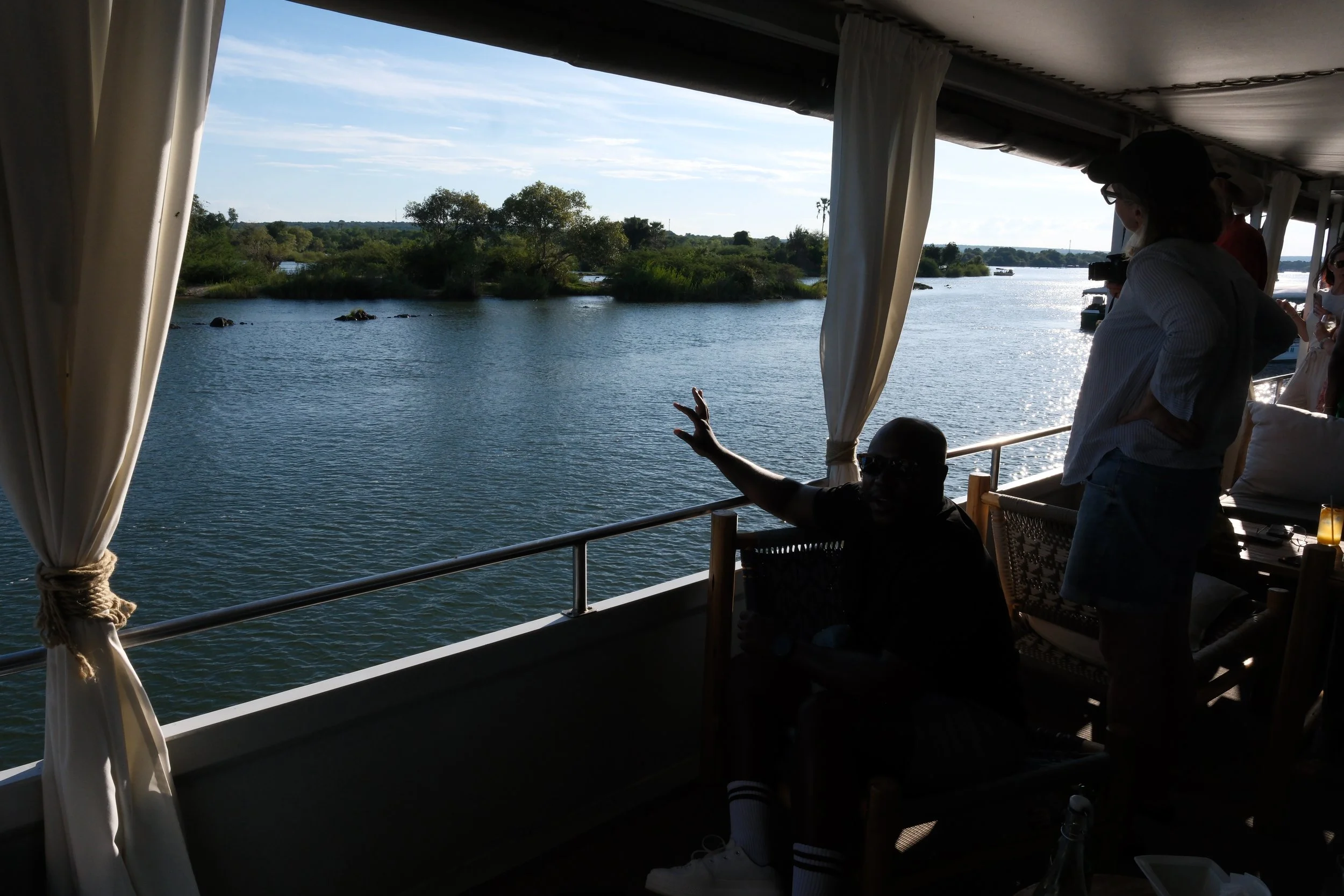
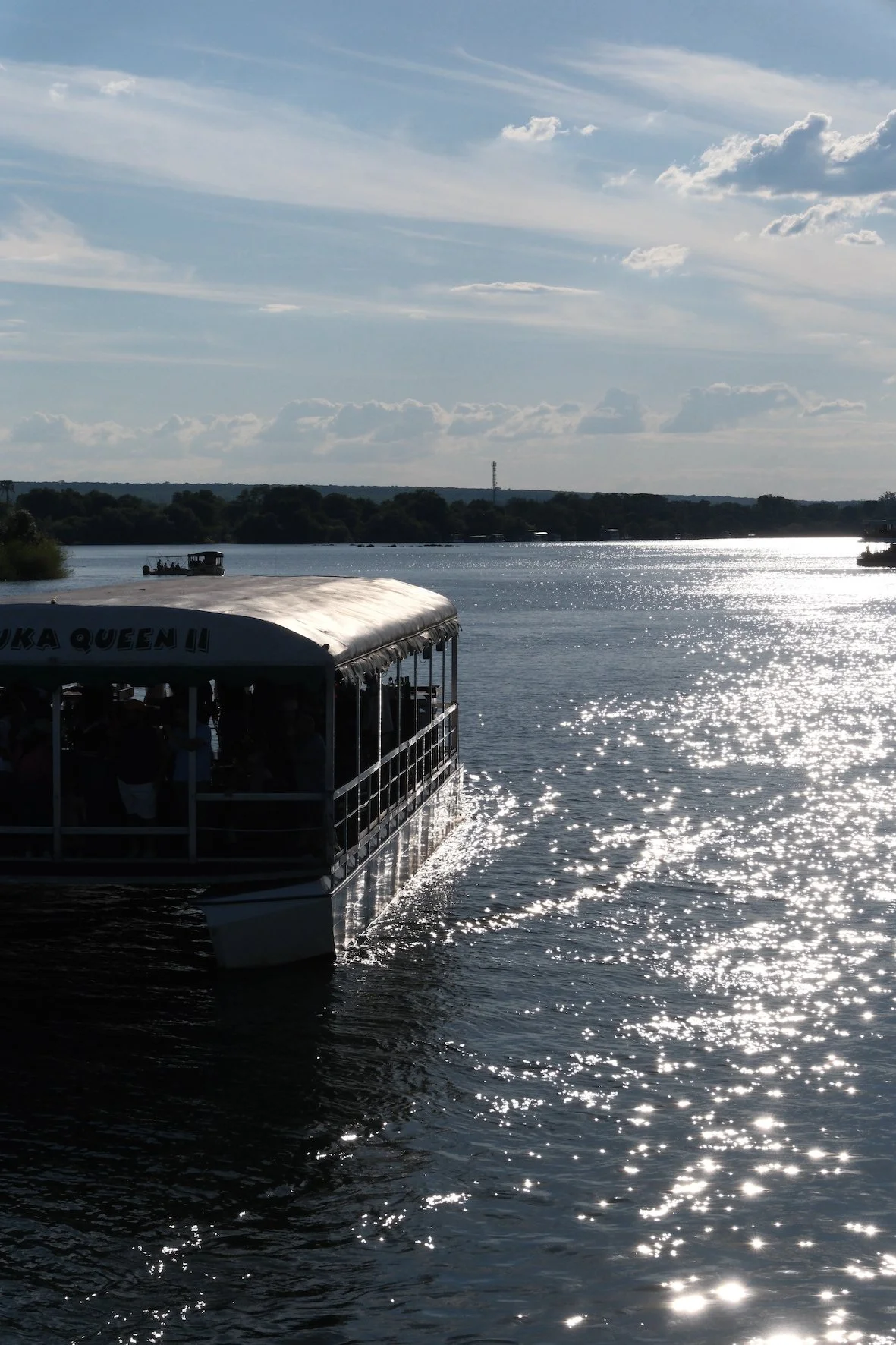
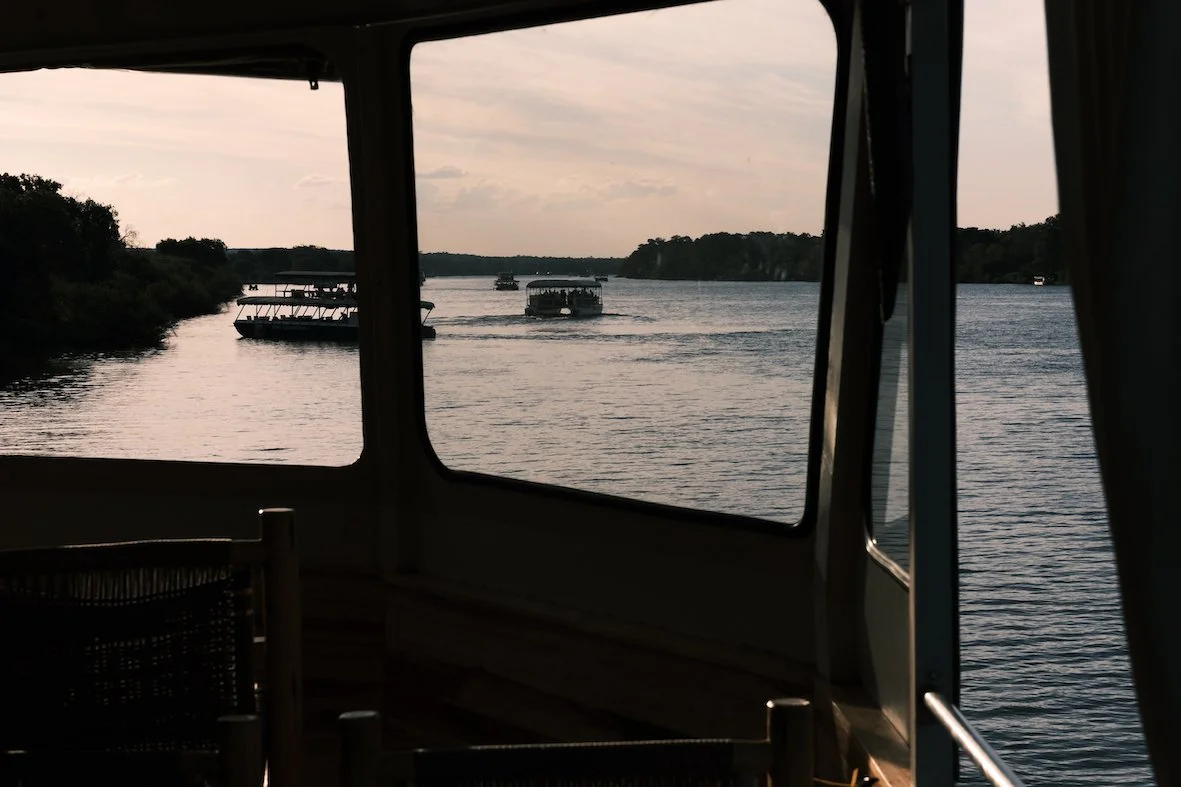
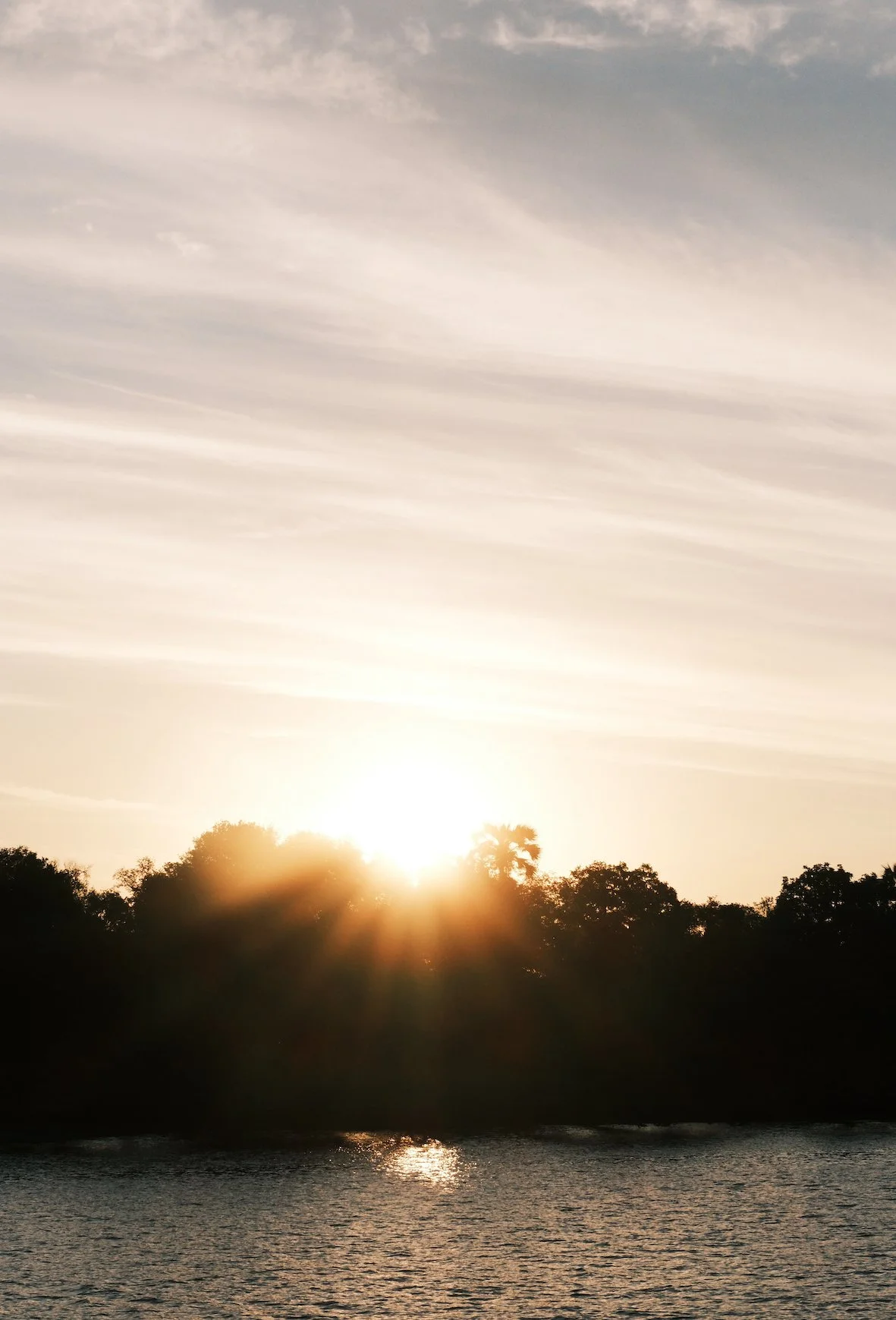
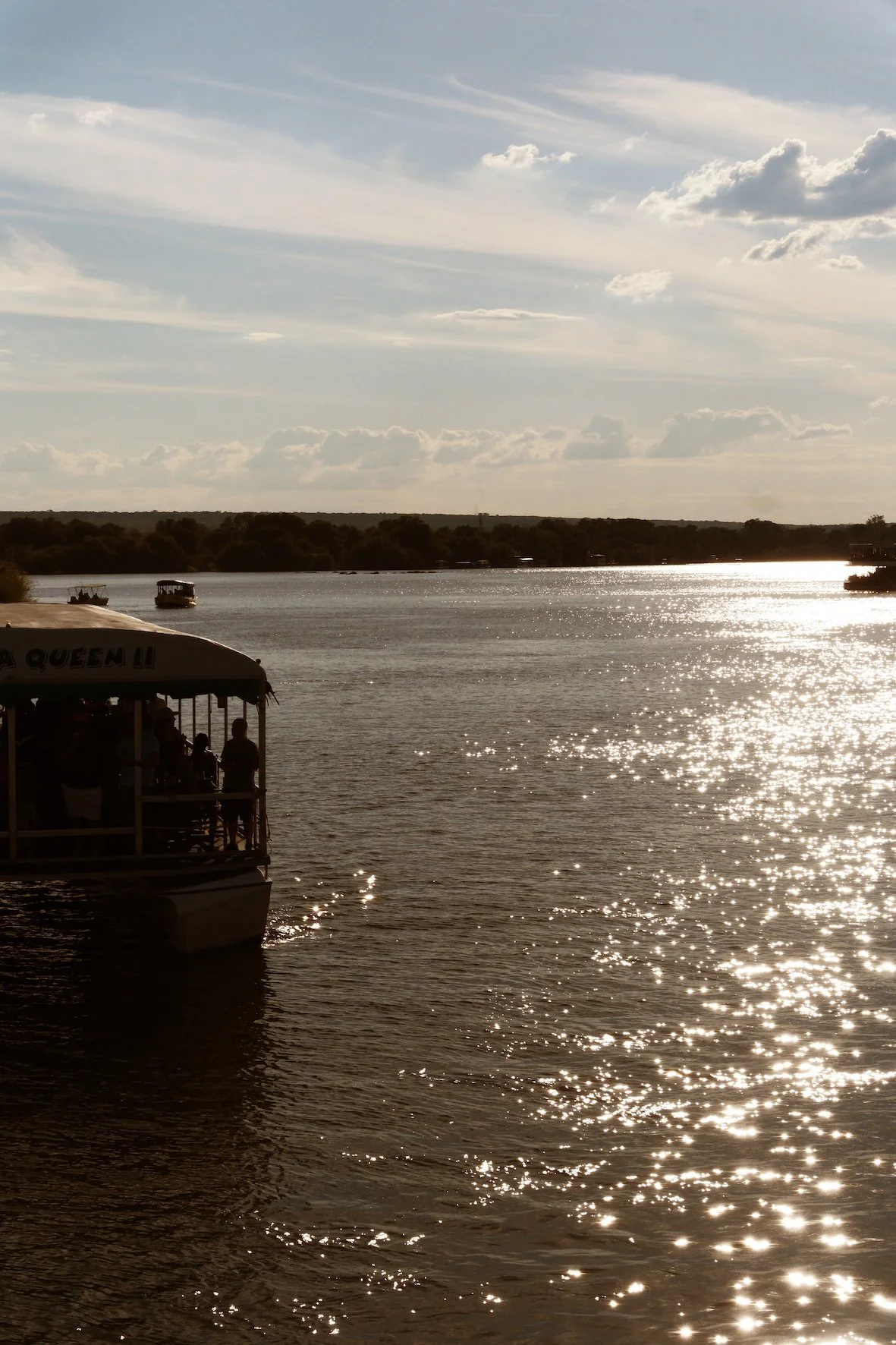
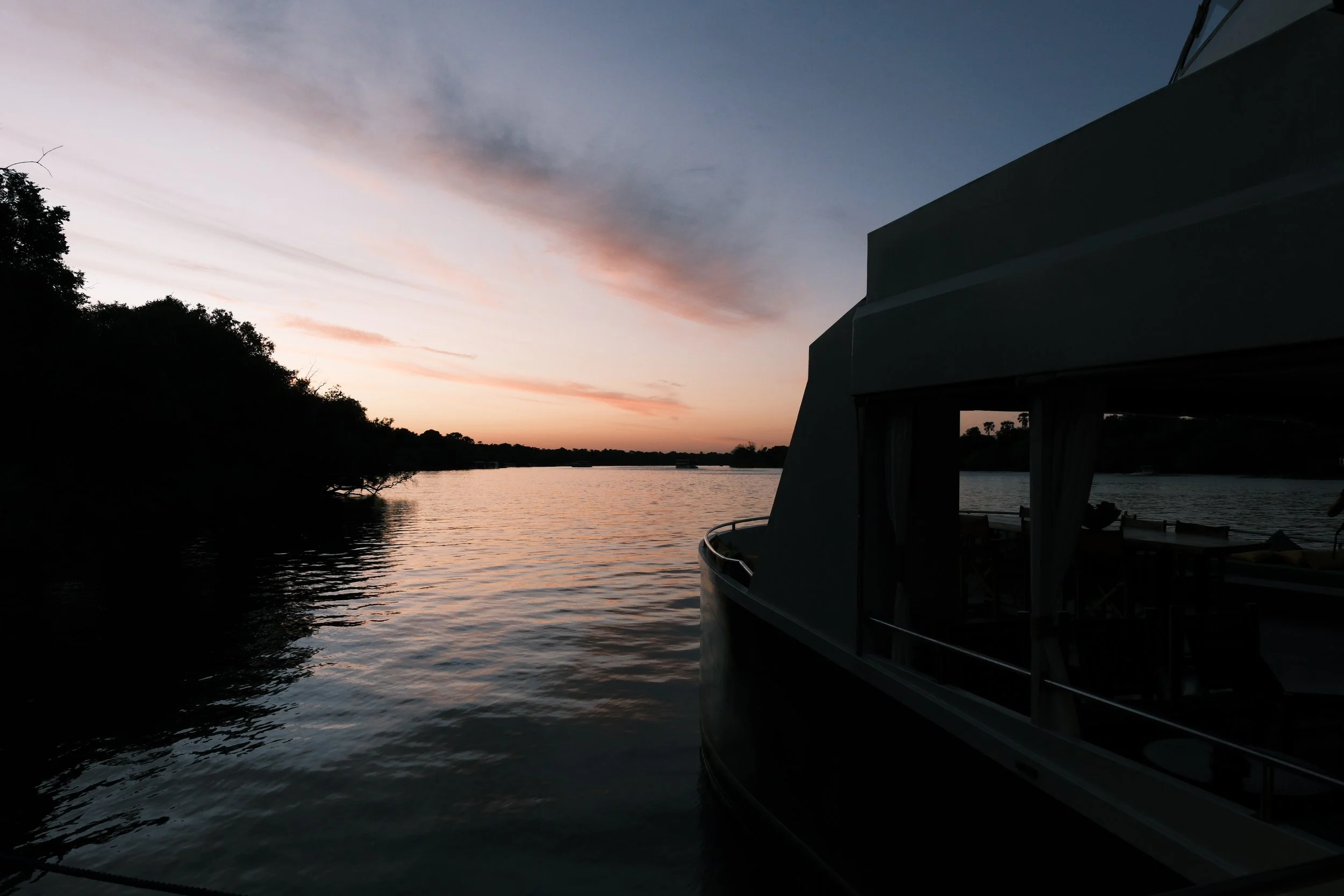
The other guests were quiet, everyone caught in that particular spell the African sunset casts. The boat's engine hummed low. Ice clinked in glasses. And the sun dropped behind the treeline, turning the Zambezi into molten gold, painting the sky in layers of orange and pink and purple that no photograph ever quite captures.
I thought: this is why I keep coming back. Not just for the big moments—the Falls, the vultures—but for these quieter ones, where you're holding a drink on a river that's been flowing for millions of years, watching hippos play and the day end the way it's ended here forever. Two hours on the water, and somehow it felt both infinite and too brief.
The group I was with kept saying this, three days could have been a week , or ten days, days were packed and slow at the same time. African time, experienced.
What surprised me, though—what brought unexpected emotion—was Victoria Falls Safari Lodge gardens..
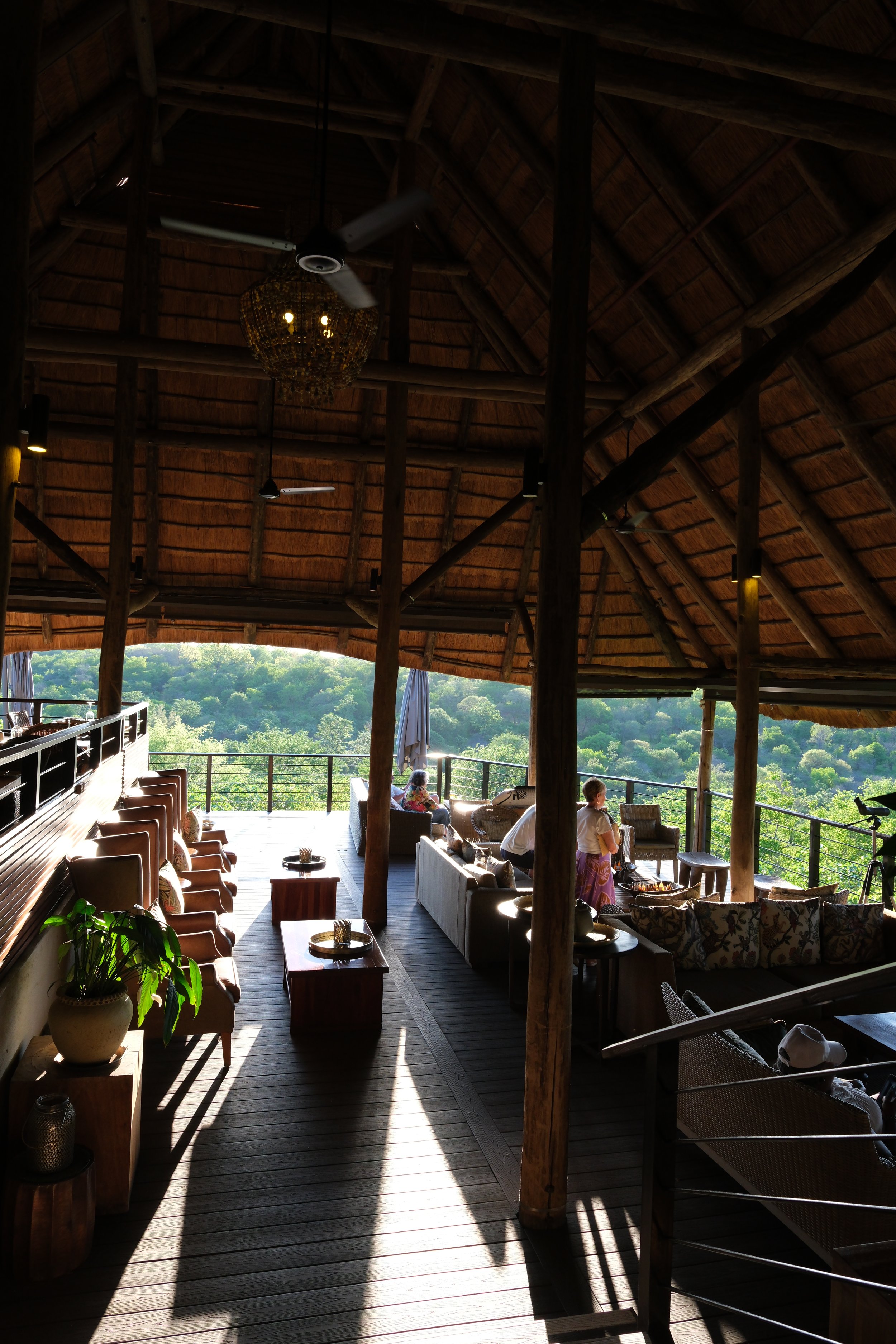
We know what African safari lodges have become: polished stone, ambient lighting, that carefully curated wildness that whispers "expensive" in every detail.
But the lodge's importance goes beyond luxury accommodation. Victoria Falls Safari Lodge has essentially saved this area from poachers and unwanted developers, setting a protective stage around the Falls that allows the local community to take pride in what they have. Where development could have been chaotic and extractive, the lodge established a model of sustainable tourism that protects the wilderness while supporting the people who live here. It's created a buffer zone where wildlife can thrive and where the Falls remain the centerpiece they deserve to be, not a backdrop to overdevelopment.
But something else happened here that I wasn't prepared for.
These days, lodges have become designers' portfolio pieces—architectural statements where every sightline is calculated, every texture Instagram-ready.
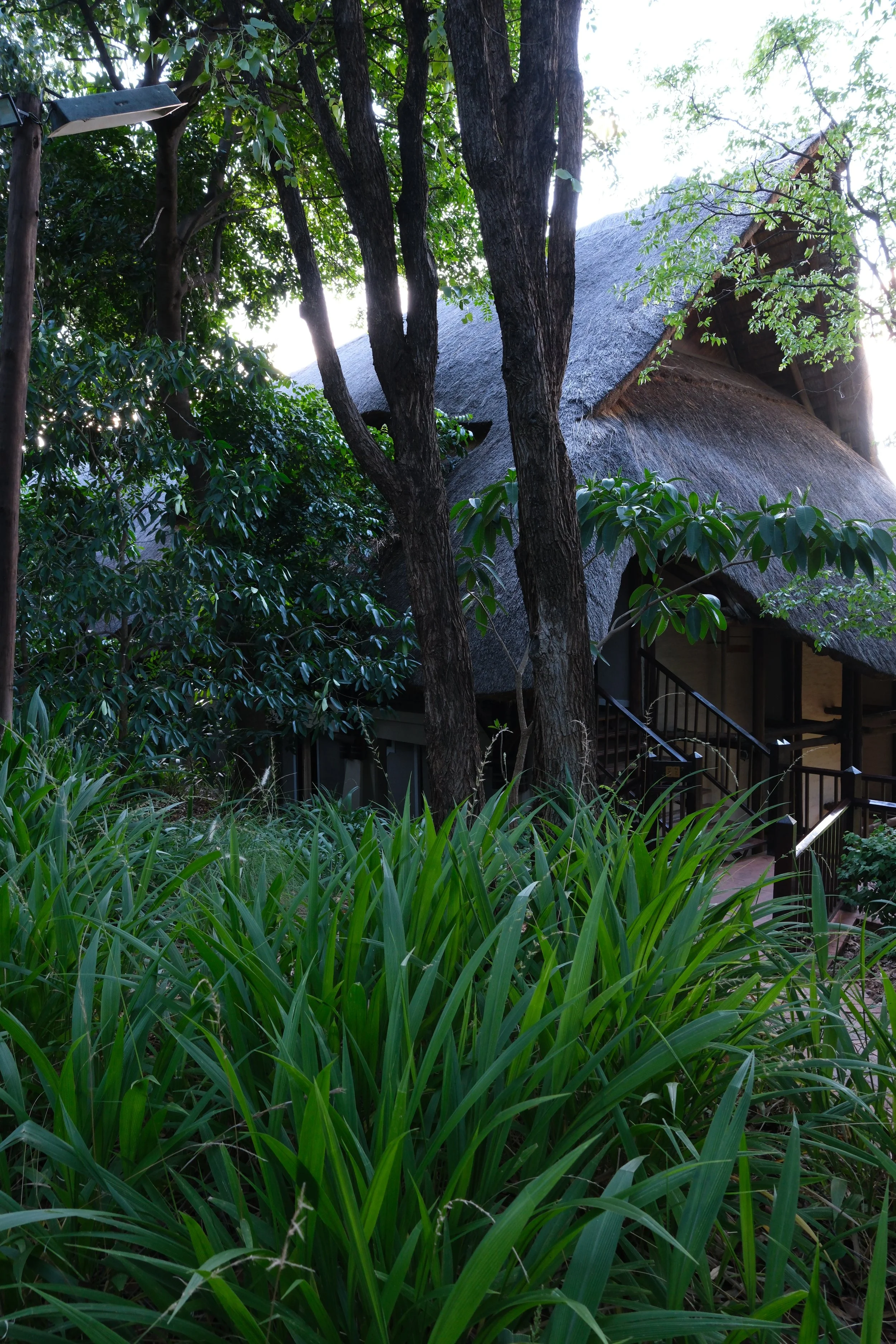
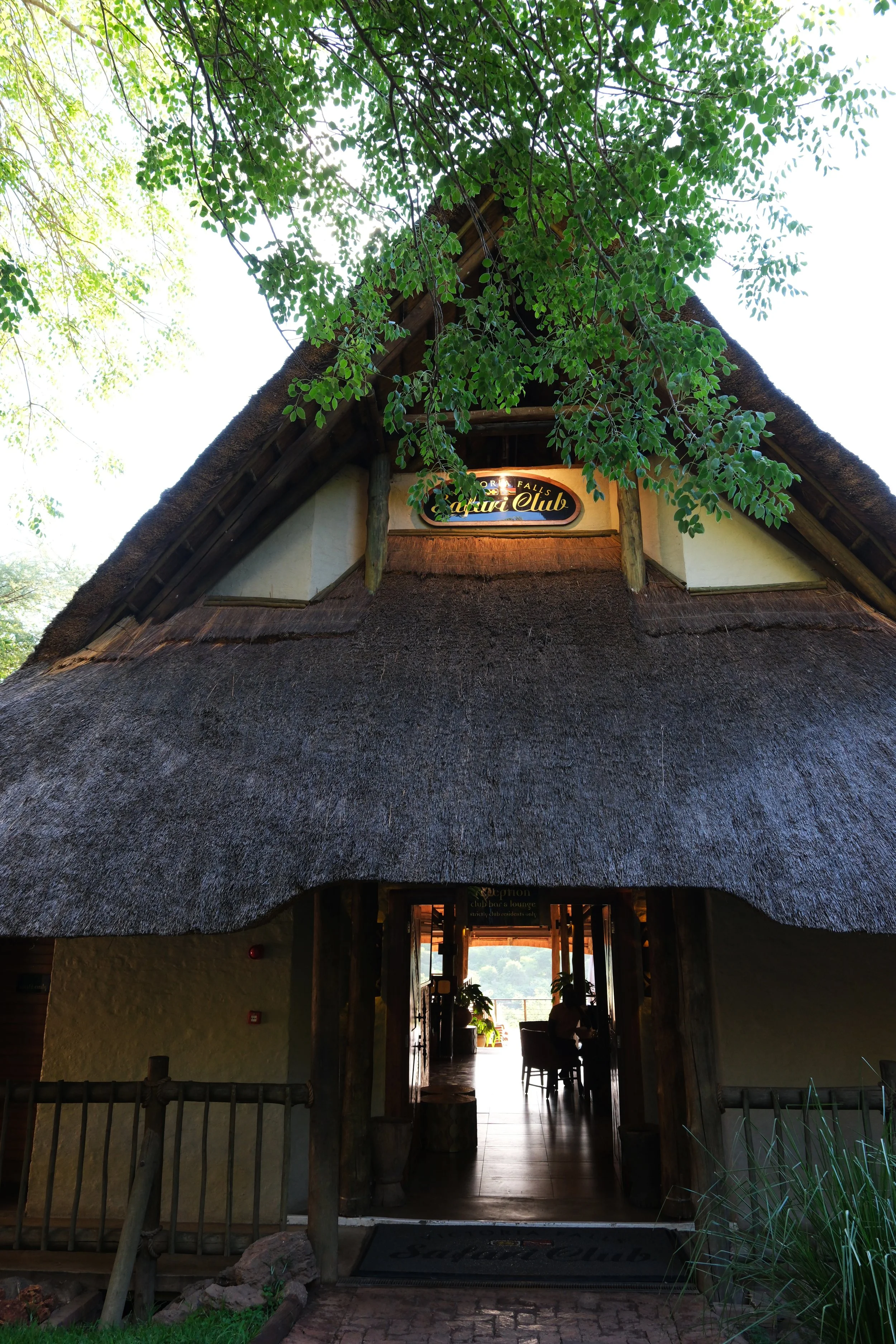
But It was the smell. You know that smell if you grew up in Africa—if your parents took you to the bush once or twice when you were young, when lodges were simpler and fewer and budget didn't always stretch. It's part thatch, part African soil, part something else that defies naming. It's the smell of rain coming across red earth, of sun-heated grass, of wood smoke and dust and time. It hit me immediately, bypassed every defense I'd built, and suddenly I was seven years old again, holding my father's hand as we walked to our rondavel while guinea fowl called in the gathering dusk. Something like that. Something in my memory bank.
Because somehow, amid all the travel experiences , Victoria Falls Safari Lodge had kept that essential thing—that smell, that feeling, that truth. They hadn't erased what matters. The staff—praised consistently for their exceptional hospitality—carry themselves with a warmth that can't be manufactured or trained. But it's more than warmth. There's something in their faces, in the way they move through their work, that I realized I hadn't seen in a long time: genuine happiness. Not the performed enthusiasm of hospitality training, but something angelic, almost innocent. Pure joy.
When they speak about the wildlife at the waterhole, there's real excitement in their voices. When they greet each other across the grounds, there's laughter that comes from somewhere deep and unguarded. When was the last time I'd seen this kind of happiness in people? Minds unclouded by the web of social media, by the constant comparison, by the anxiety that seems to coat everything in the connected world. These weren't people performing contentment for Instagram or building personal brands. They were just genuinely, inexplicably joyful in their work, in their place, in their day. This for a country with 95% unemployment. The poverty bought on by a government who does not aid simple things like conservation. My observation from speaking to people, and not the staff’s opinions.
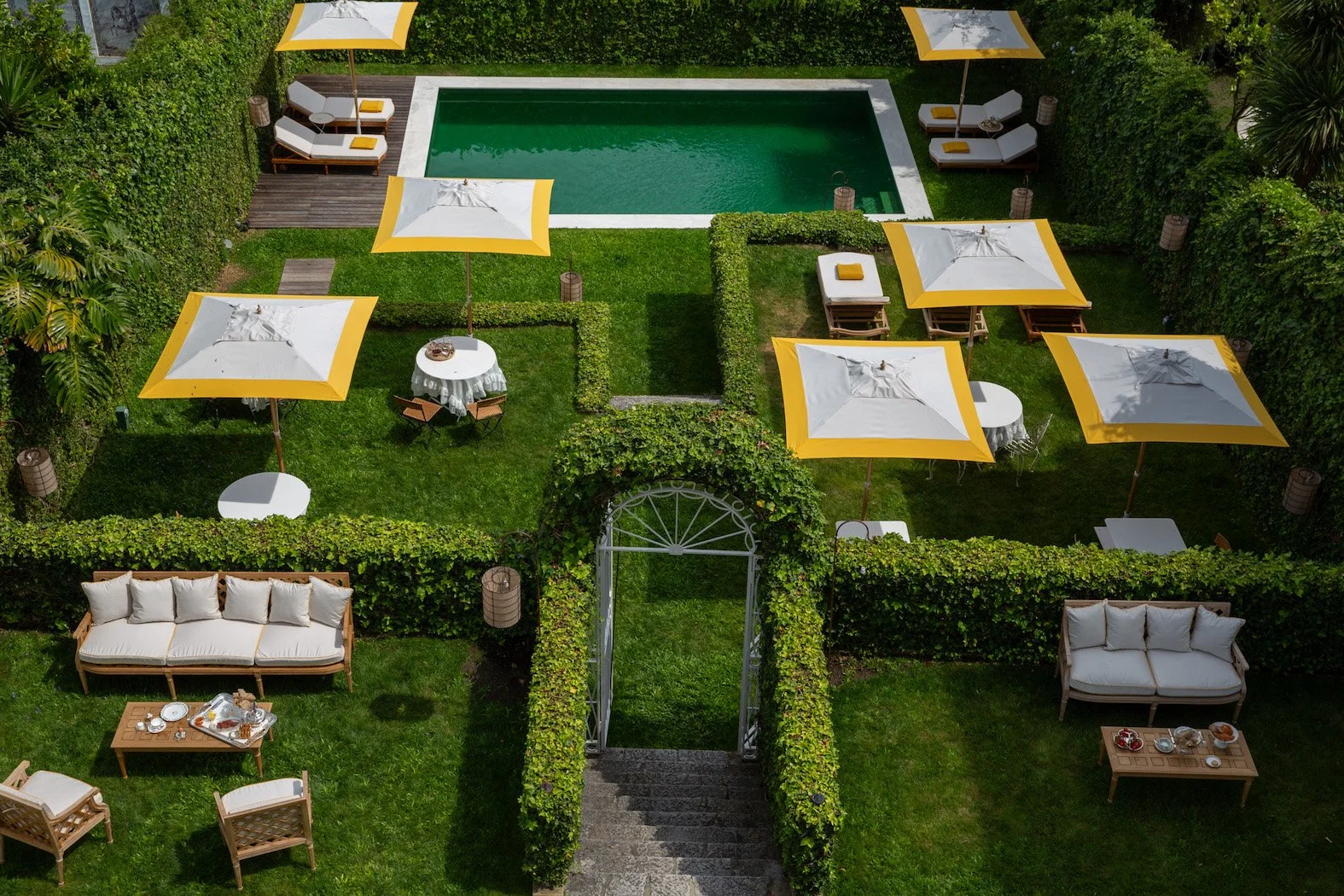
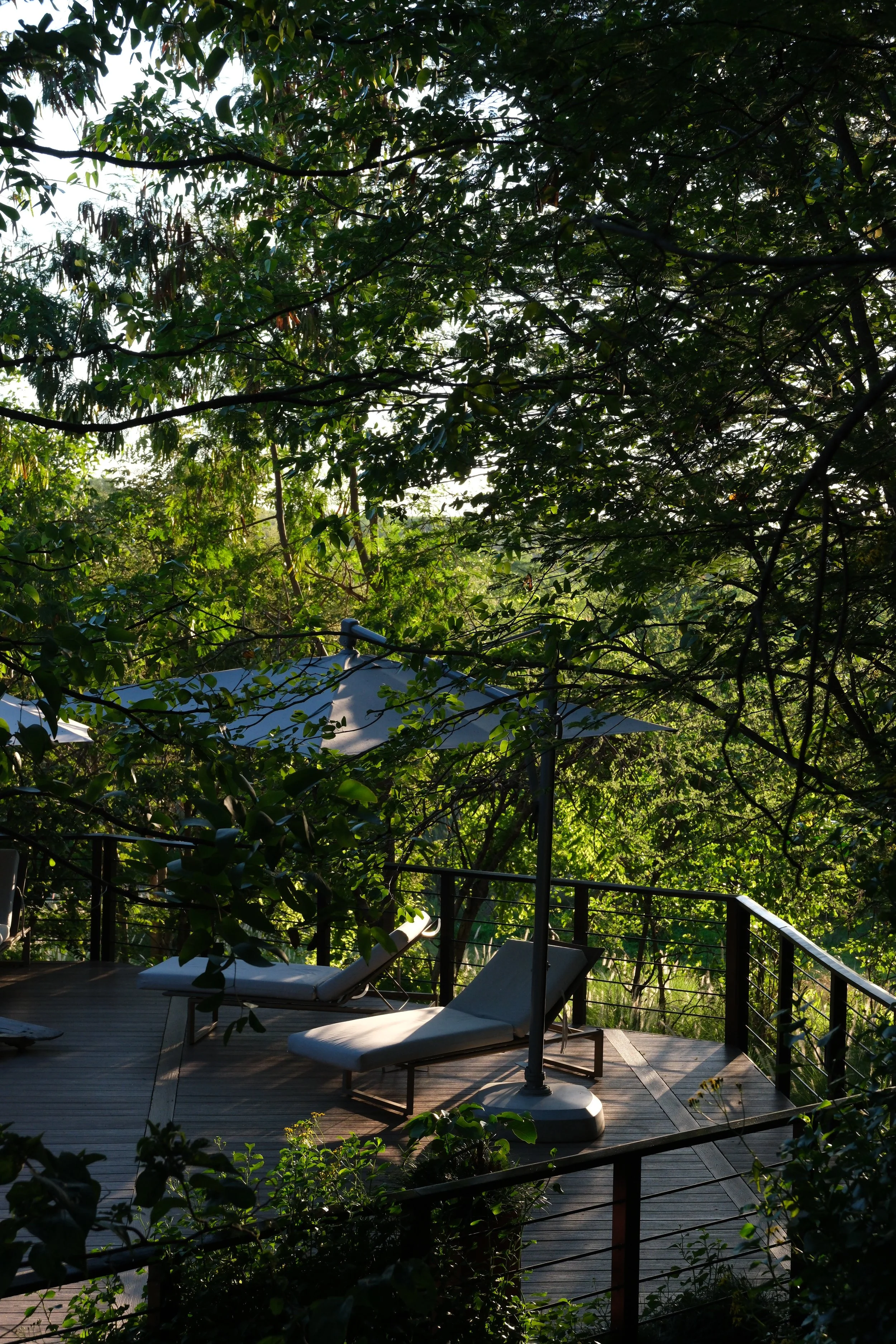
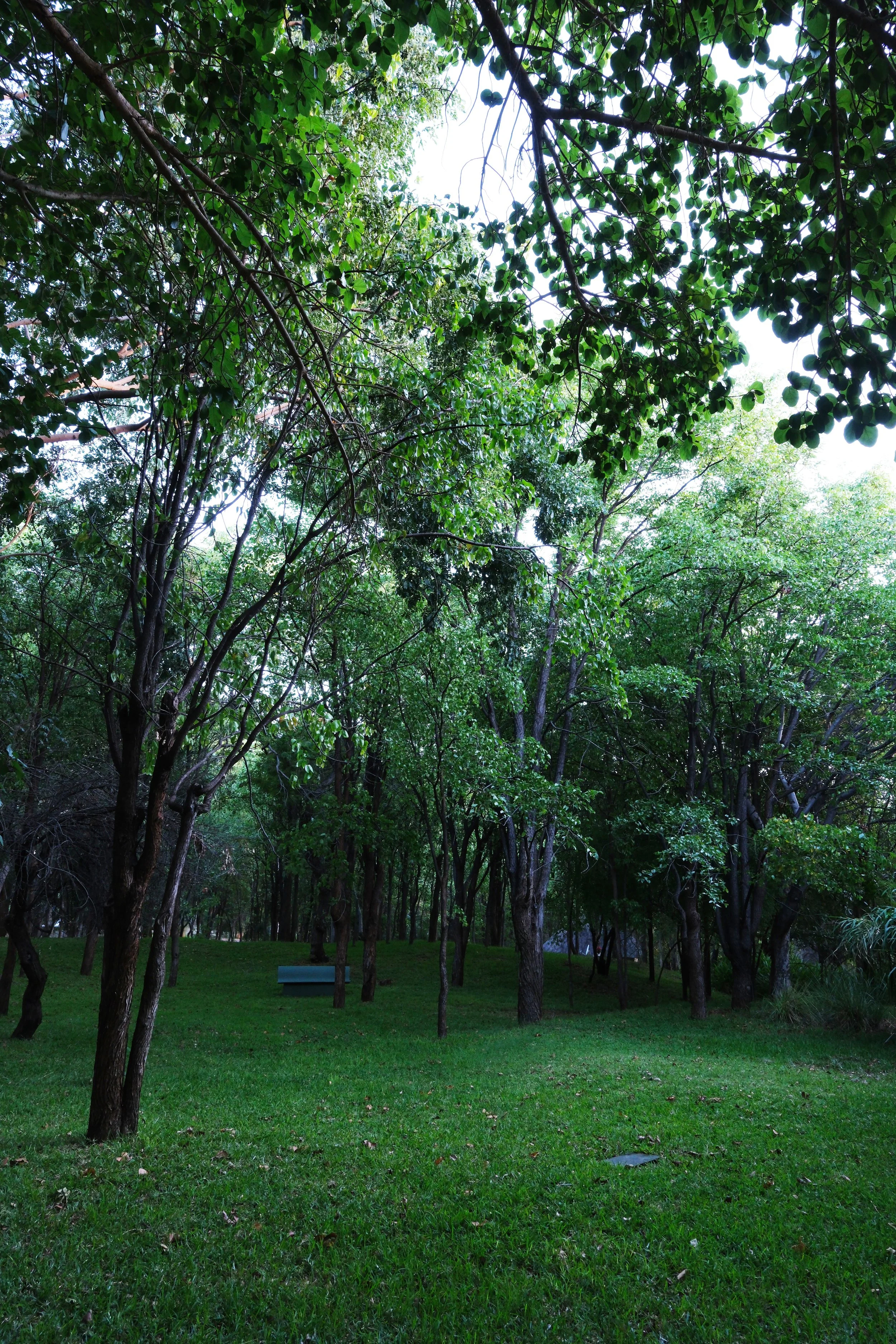
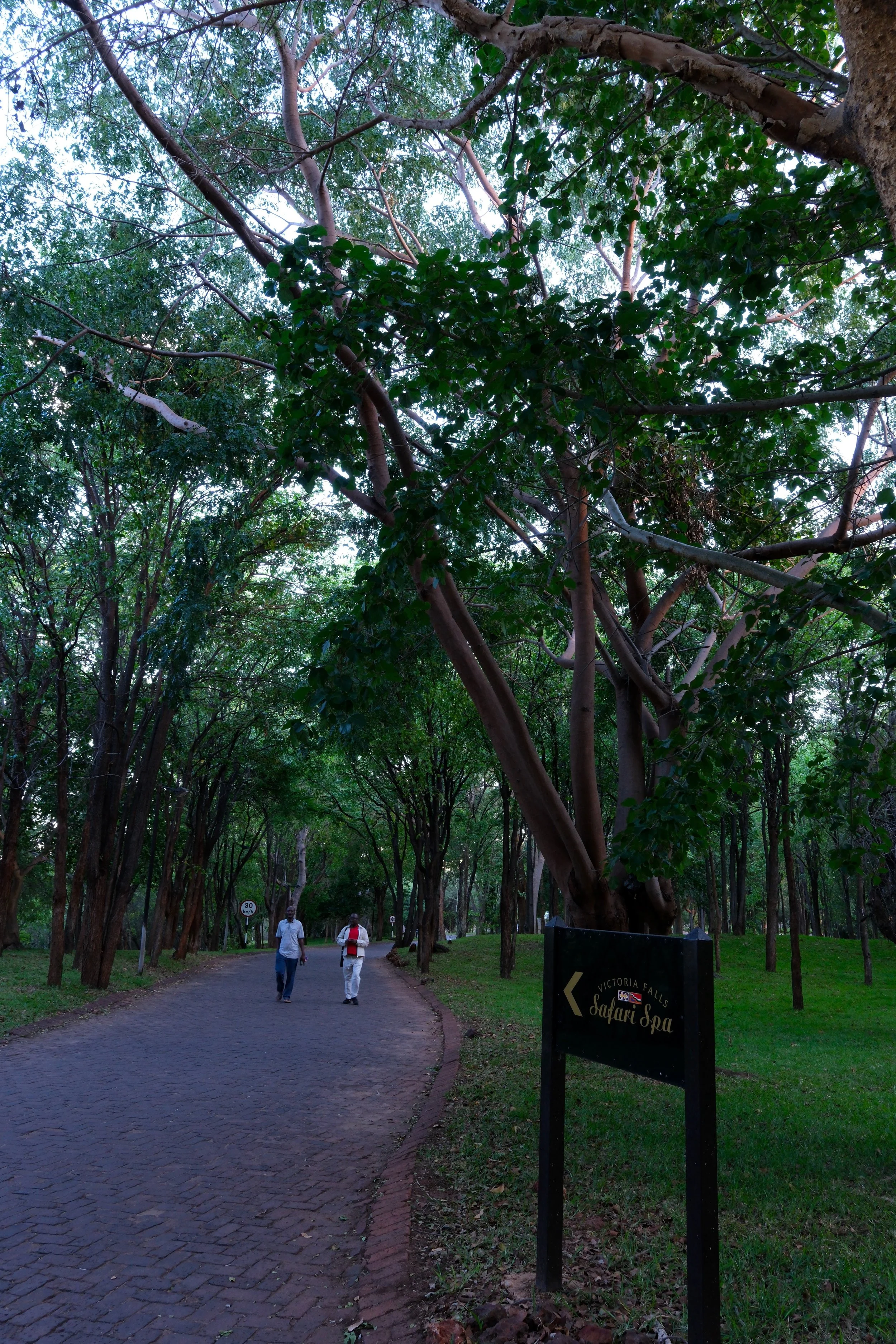
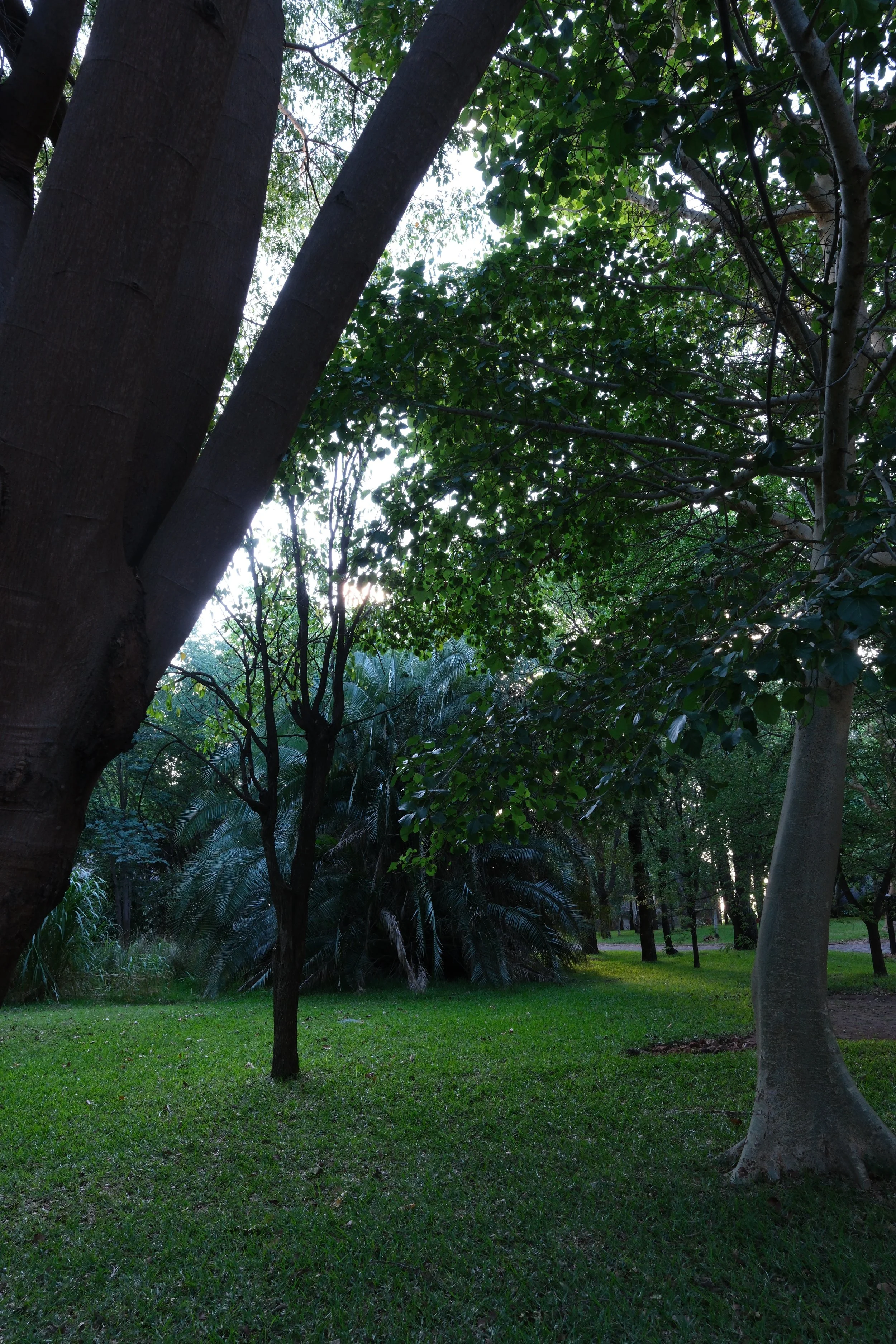
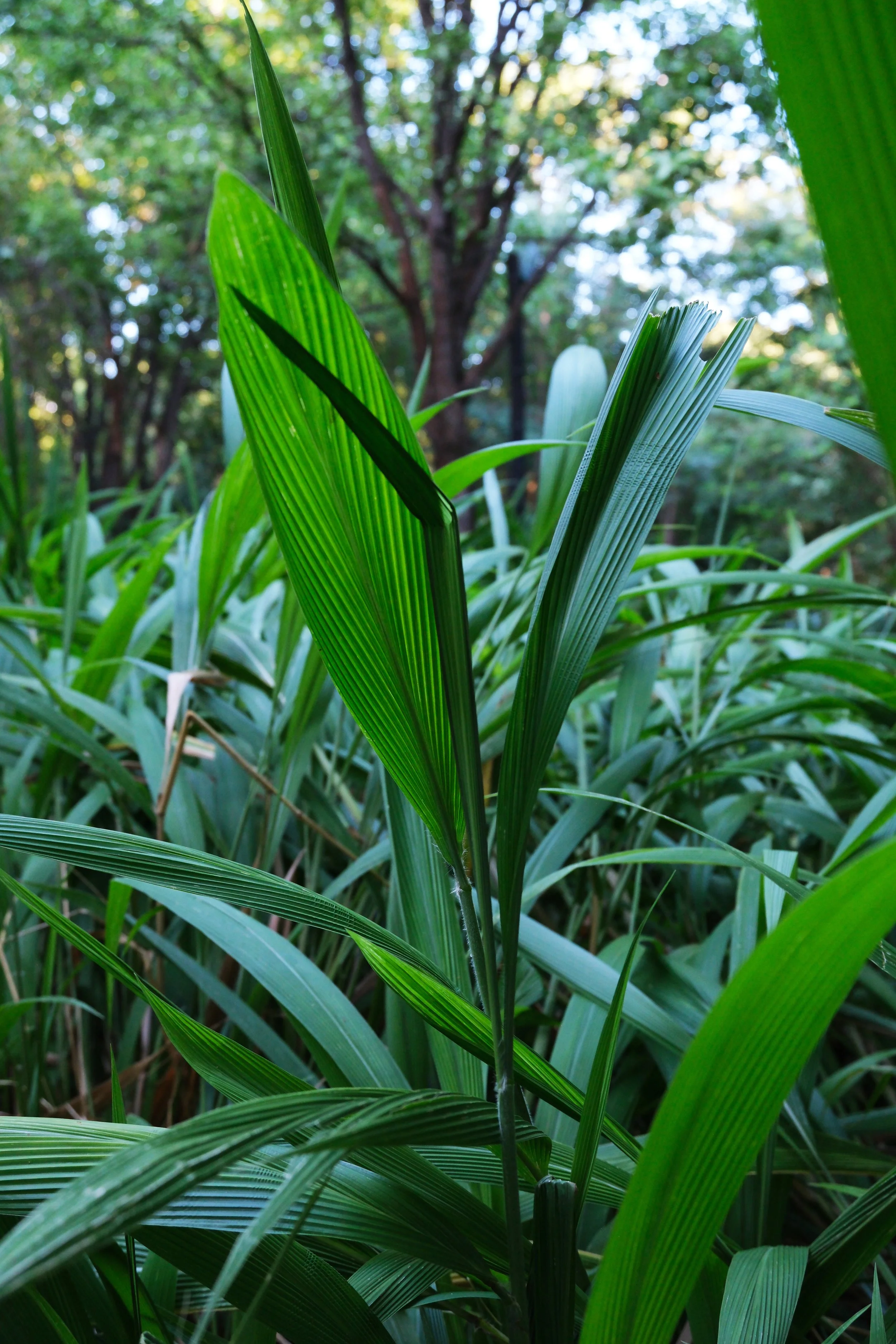
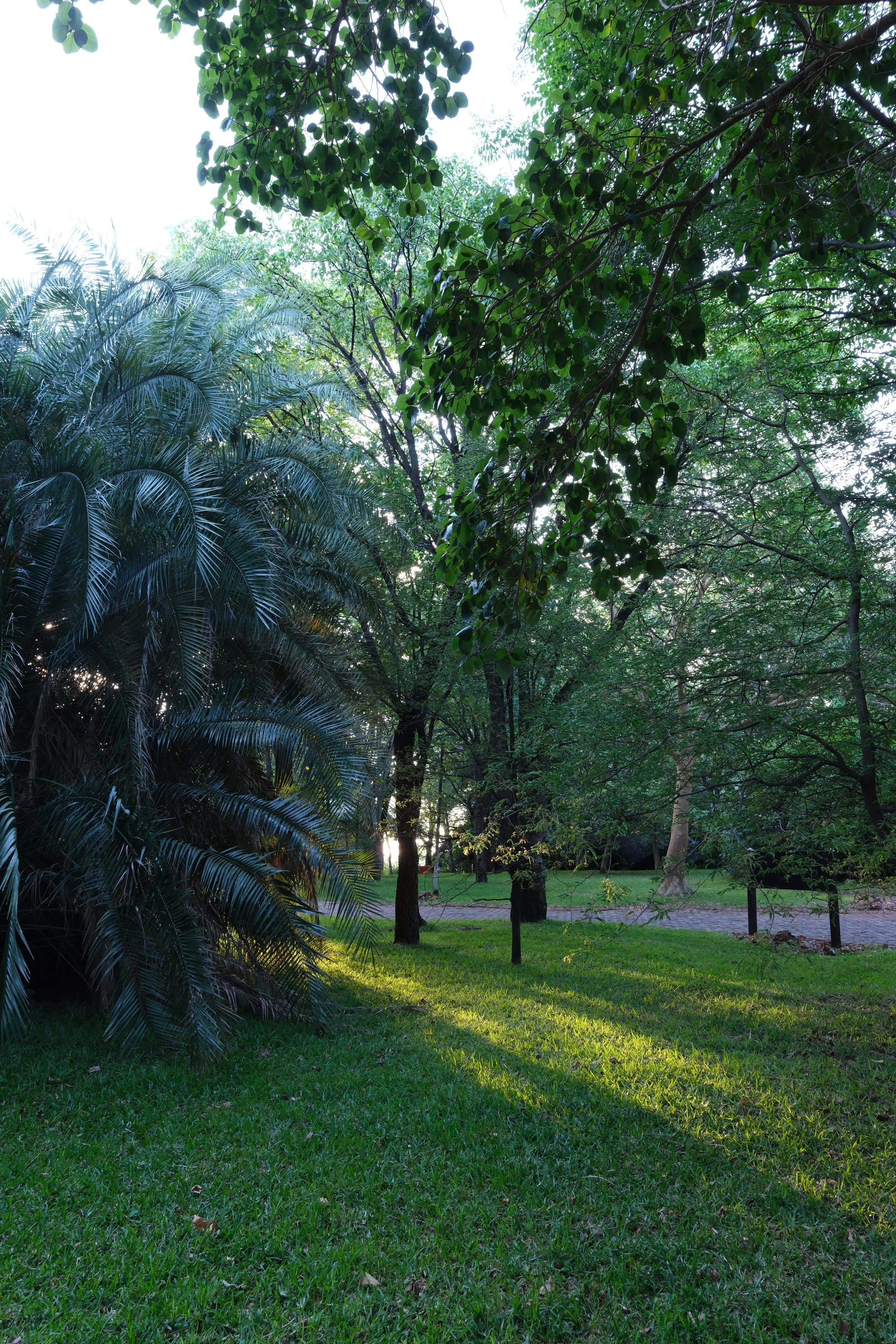
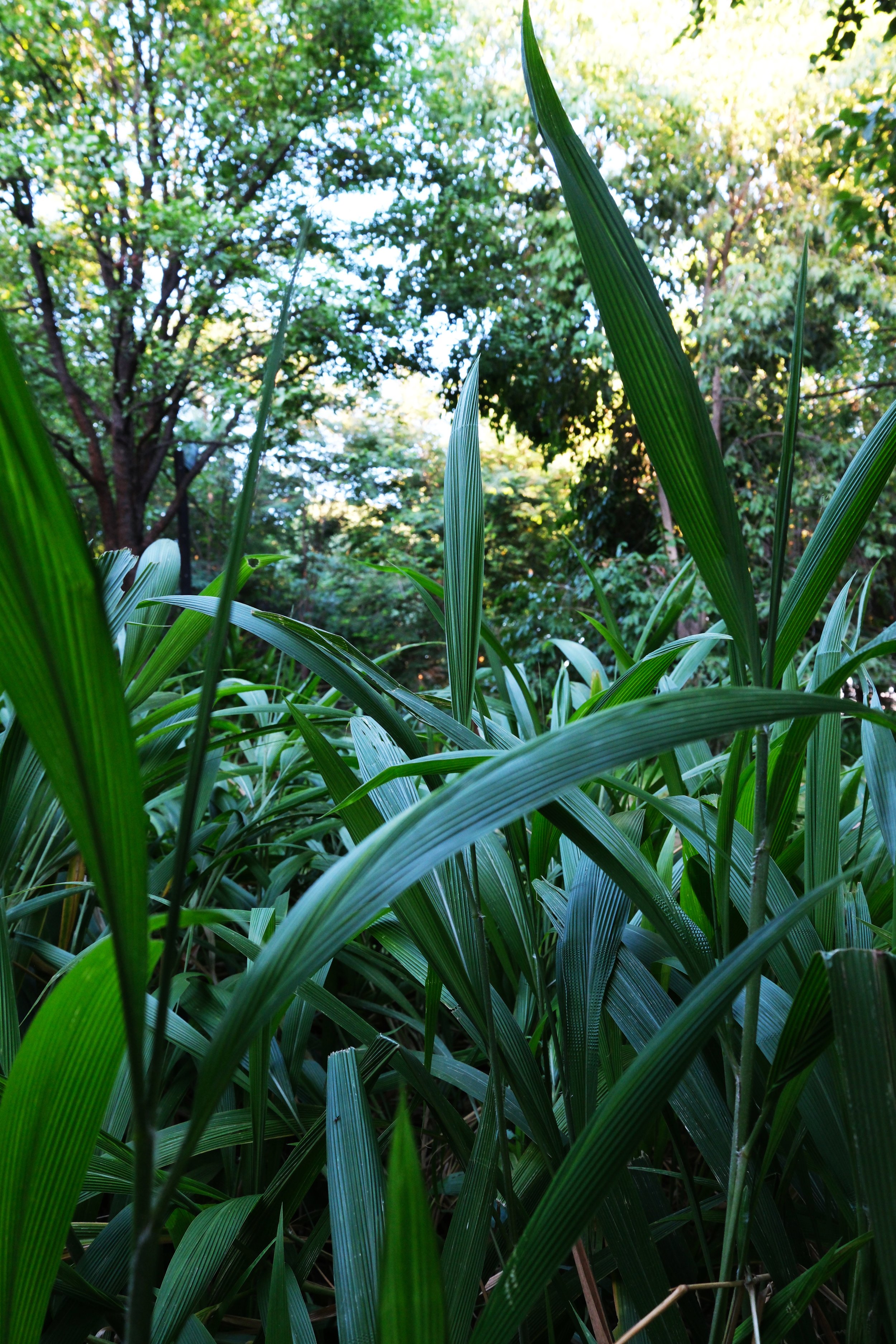
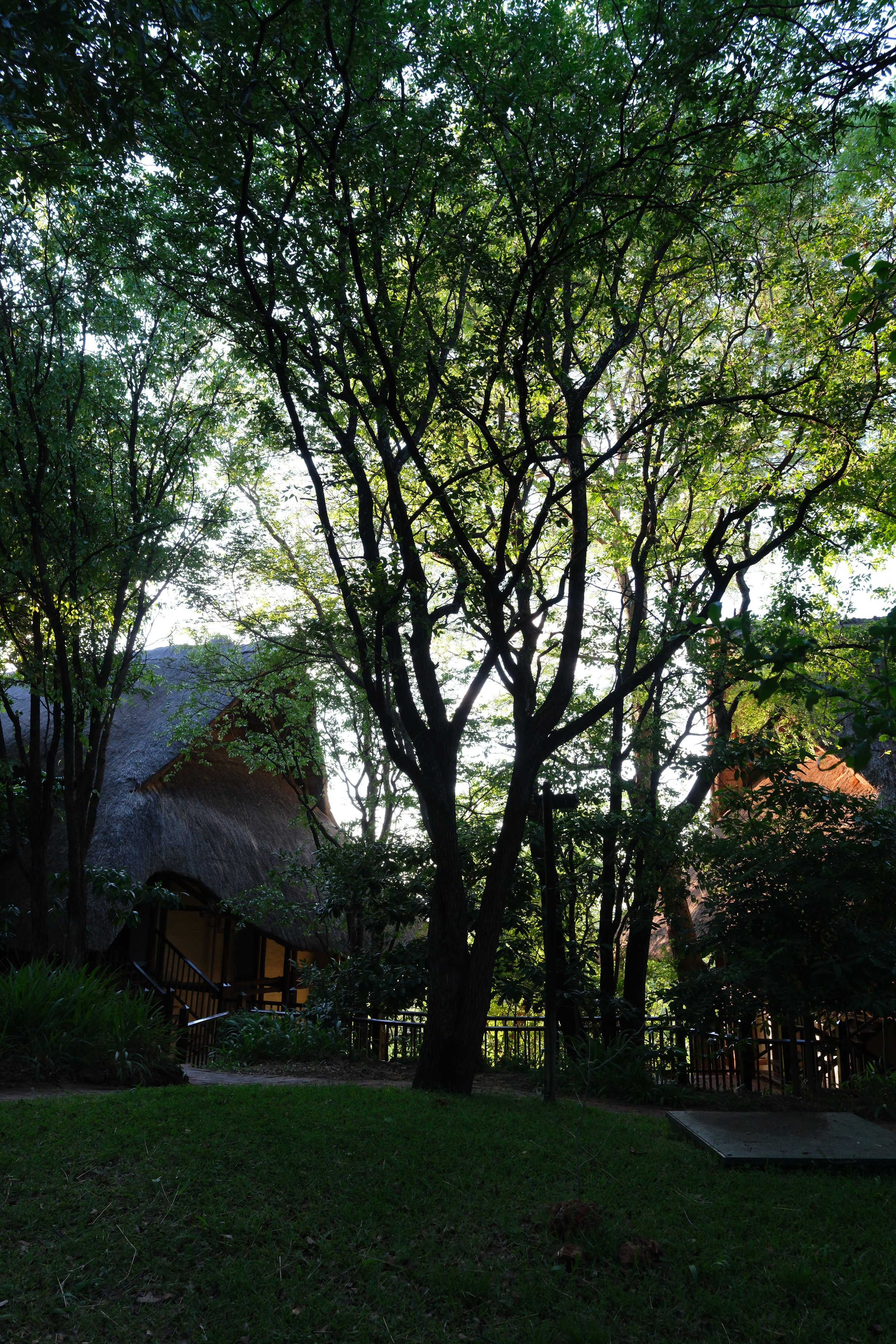
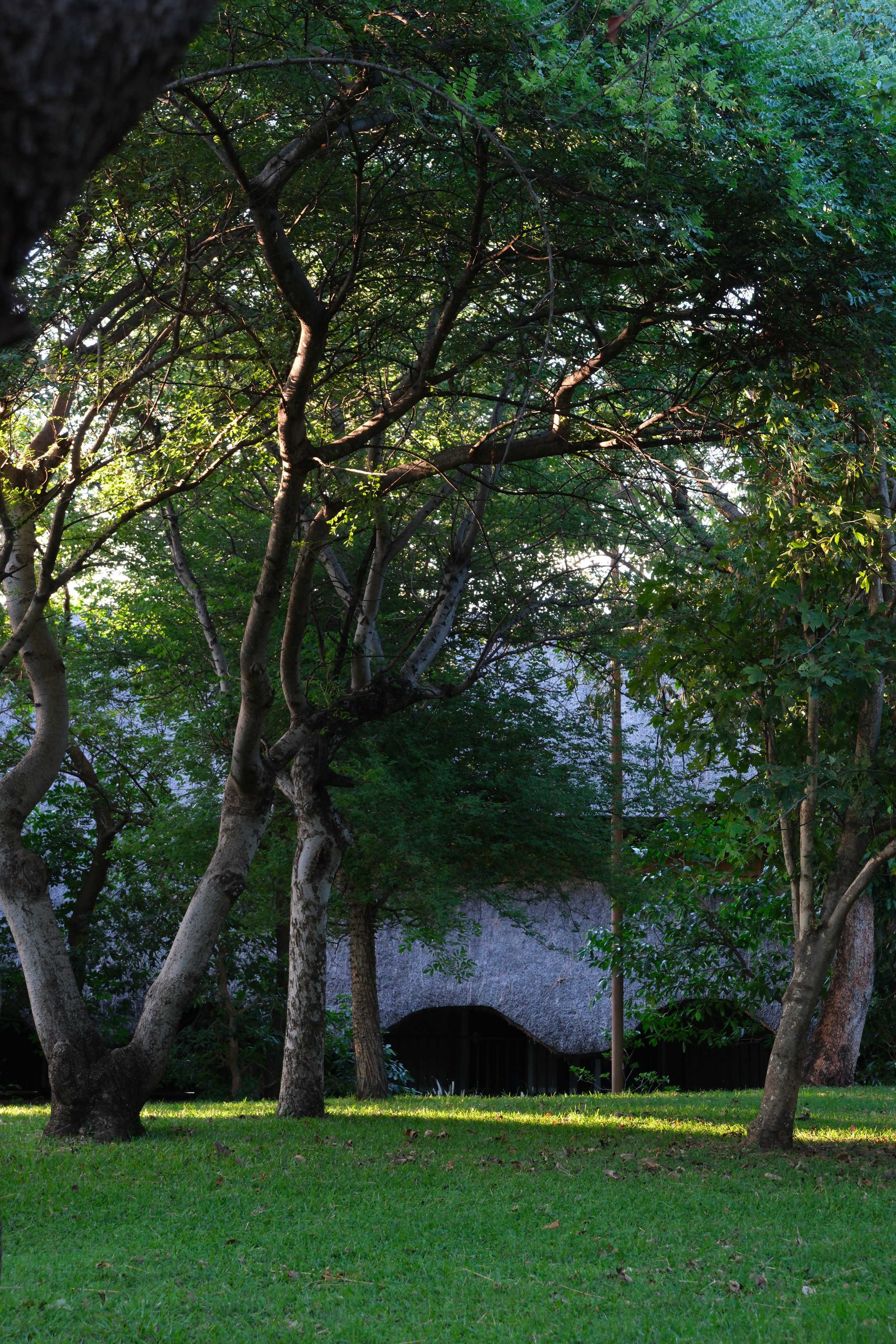
Late one afternoon, I walked through the lodge's gardens. The light was doing that thing it does in Africa—stretching shadows long across the ground, turning everything gold and amber. The gardens themselves are magnificent, a careful balance of indigenous plants and cultivated beauty that somehow feels both intentional and wild. I watched staff members coming and going in that late-day rhythm, unhurried, moving through dappled light with an ease that spoke of being exactly where they belonged.
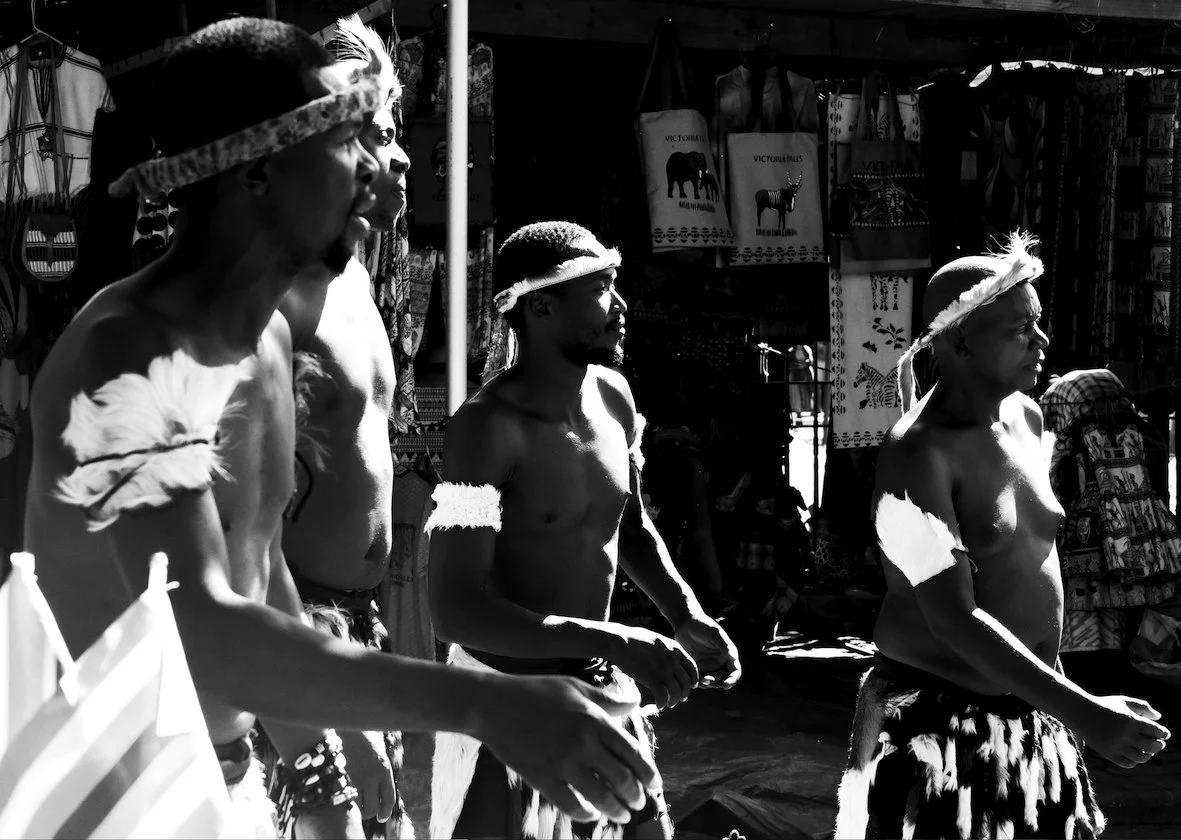
The last night brought the full African cultural experience at the Boma. The drummers started first, their rhythms building and layering until the whole space pulsed with sound. Then the dancers arrived in their traditional dress, moving with that combination of precision and joy that makes African dance so compelling.
But the real magic happened when they invited us to join in.
Suddenly guests were up from their tables, attempting the drumming, trying to match the dancers' steps, laughing at their own lack of rhythm, not caring. There's something about live drums and an invitation to dance that bypasses every inhibition, every self-consciousness you carry. What a fun way to forget your hang-ups and just laugh and live.
I've stopped trying to leave. Instead, I return, again and again, to places like this—where the land still thunders with old power, where luxury and wilderness exist without contradiction, where a child of Africa can remember why this continent won't let go.
Victoria Falls Safari Lodge sits on Stand 471 Squire Cummings Road, approximately 24 kilometers from Victoria Falls International Airport. FastJet operates flights to Victoria Falls, with airport immigration typically clearing in under two hours and transfers to the lodge taking under 20 minutes. The property includes the Victoria Falls Safari Club and Victoria Falls Safari Suites, offering accommodation options from standard rooms to waterhole-facing suites. Activities include game drives in Zambezi National Park, helicopter flights over the Falls, sunset cruises on the Zambezi River, guided tours of Victoria Falls, and the daily 1 pm vulture feeding. The Falls themselves are a UNESCO World Heritage Site, designated in 1989 for their natural and cultural significance.