Pierre Geldenhuys Returns to Investec Art Fair
Pierre Geldenhuys Returns to Investec Art Fair by Margo Fargo
A poetic dialogue between silk and nature, where craft becomes a quiet act of listening to the planet.
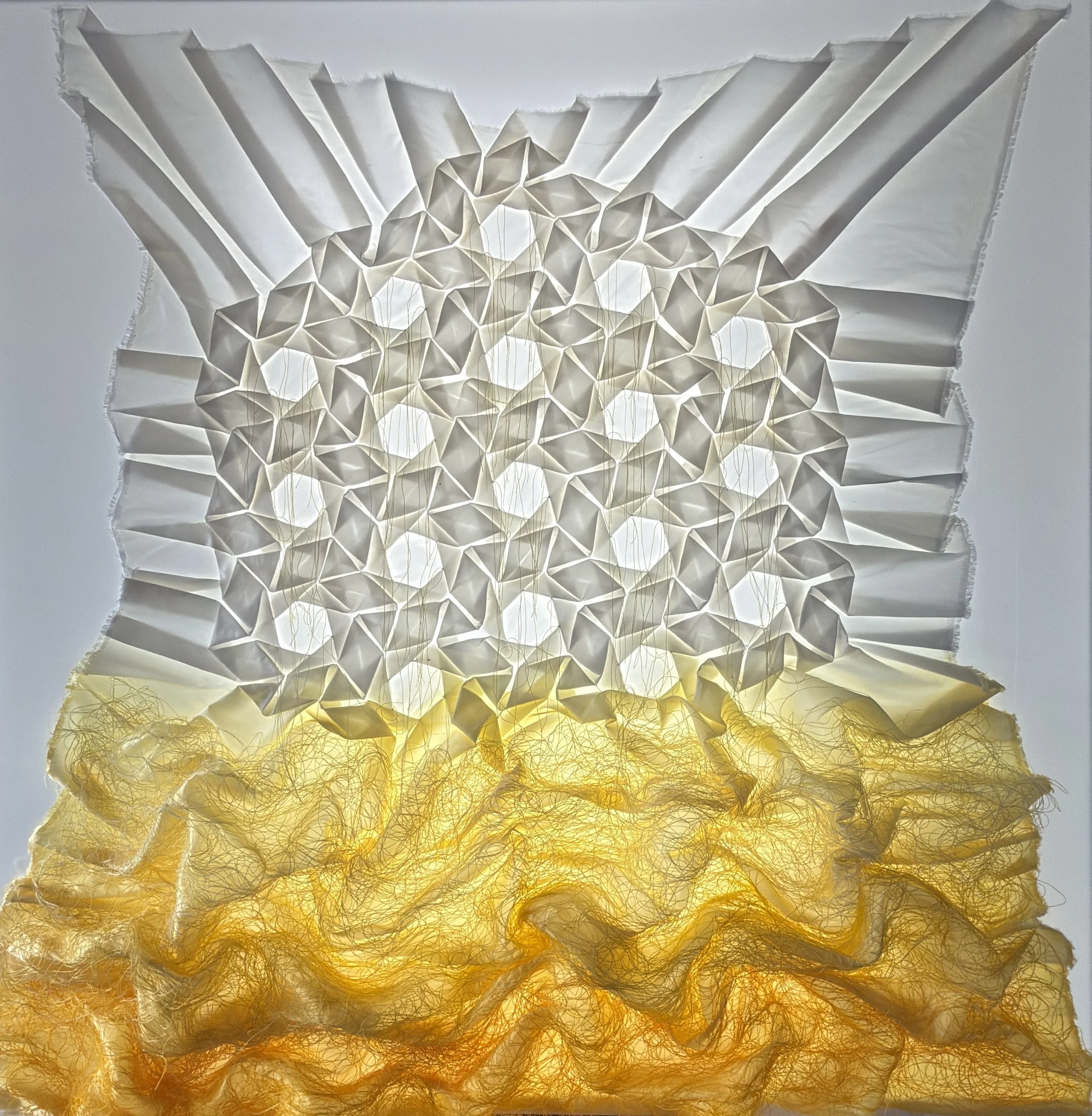
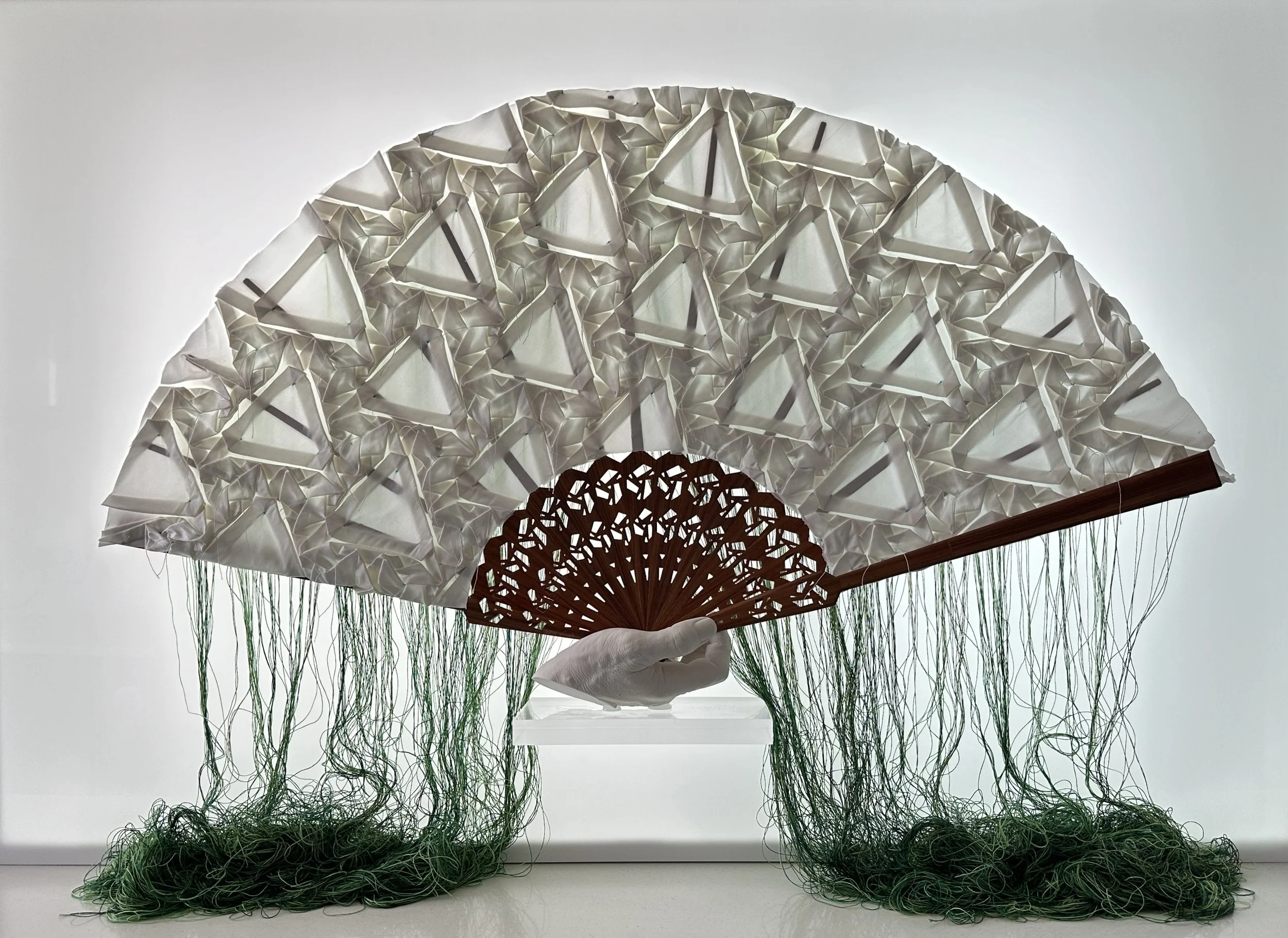
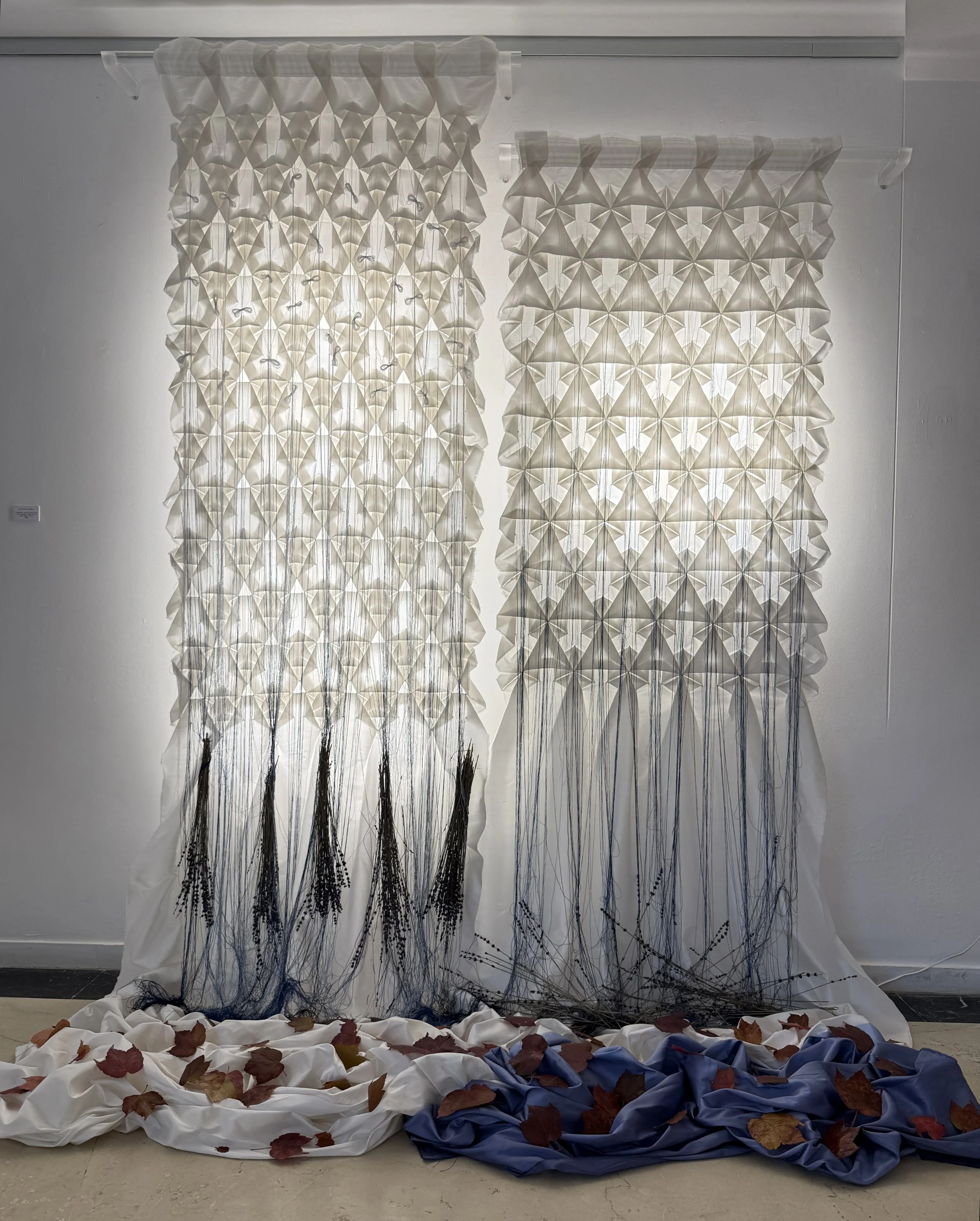
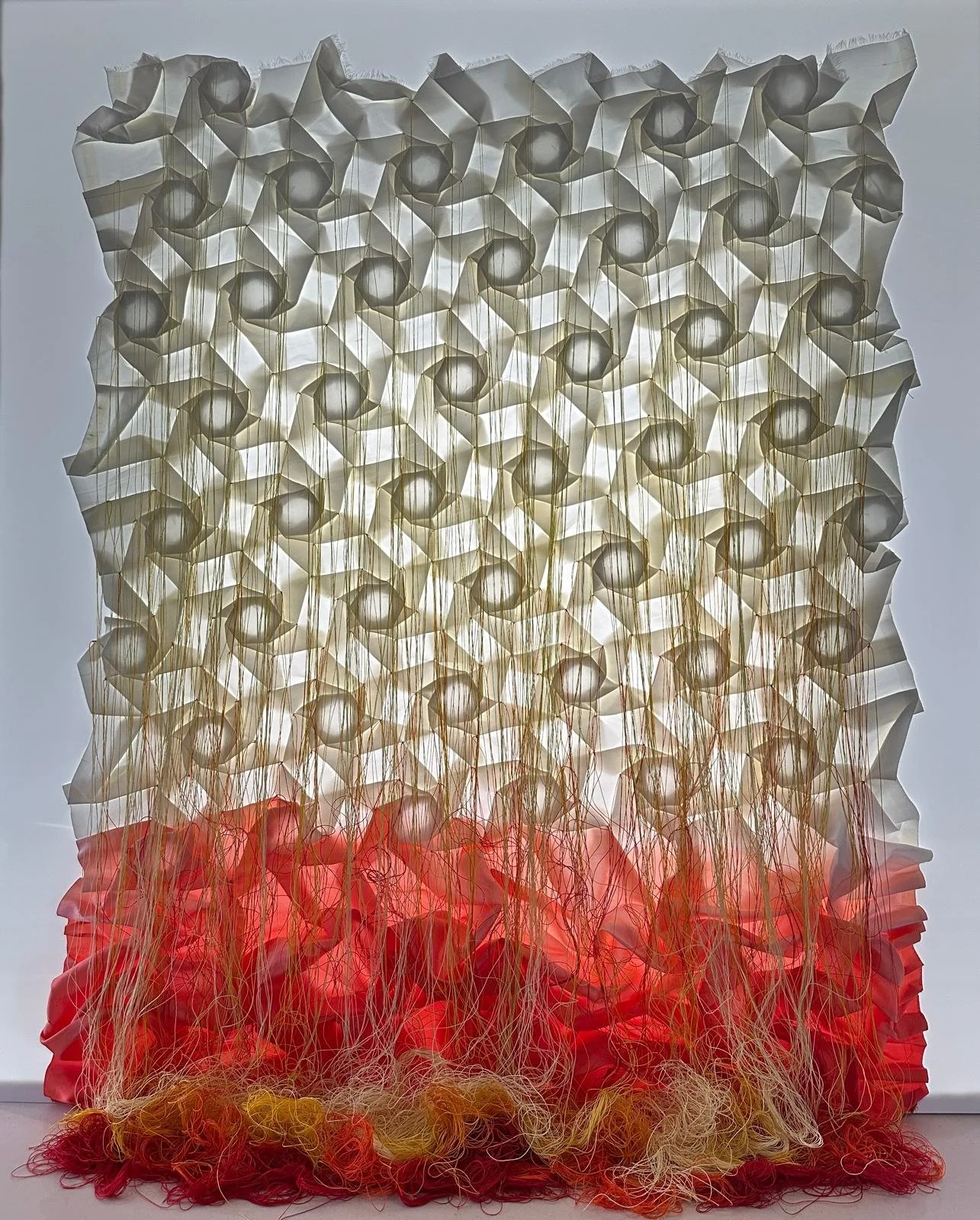
As Investec Cape Town Art Fair opens under the resonant theme LISTEN, the South African-born textile artist returns home with a body of work that feels both urgent and contemplative. Presented by Luisa Pita Gallery at Booth C11, his series “The Planet is Screaming, Listen to Mother Earth” brings together geometry, raw silk, light, and ecological consciousness in a language that feels both precise and deeply human.
There are certain artists whose work does not simply occupy space, it asks something of you. When I first encountered Pierre Geldenhuys’ practice, what struck me was not only the precision of his silk compositions, but the stillness within them. In a world that feels increasingly loud and fragmented, his work insists on something radical: pause.
For Geldenhuys, listening extends far beyond sound. “Listening is part of the physical act of creating,” he explains, “but more importantly, it is the message I seek to transmit.” Through fragile silk and thread, his works evoke vulnerability and resilience at once. They appear wounded yet luminous, embodying the planet’s silent suffering while holding space for healing. His art does not shout. It invites awareness. Environmental crisis is not presented as distant catastrophe, but as intimate, shared responsibility.
Geldenhuys’ foundation lies in geometry and tessellation; disciplines rooted in meticulous structure. Influenced by Gestalt principles and the visual intelligence of M. C. Escher, his early work rigorously explored perception, figure and ground, illusion, and transformation. Today, geometry remains central, but it coexists with organic symbolism and intuition. His compositions are mathematically disciplined, yet alive, shifting between structure and softness. Viewers are invited to look beyond what first appears, to question what is constructed and what is emerging.
If the work could speak, it would not offer answers. It would ask: What do you see? Can you follow the thread? Each piece carries both literal and conceptual threads connecting his wider practice, encouraging experience over passive observation.
Environmental degradation is not a theme for Geldenhuys, it is lived concern. Each artwork reflects a fragment of our shared habitat, whether a species, ecosystem, natural resource, energy source, or cultural system under threat. Yet his vision remains eco positive. Encased in illuminated light boxes, the textiles suggest that nature and progress can coexist, but only when approached thoughtfully and respectfully. His life mirrors this philosophy. From residing within the natural landscape of Springerbaai Eco Coastal Estate in South Africa to restoring a historic stable in Cantabria, Spain, in dialogue with its environment, art for him is not separate from life. It is an extension of it.
Growing up on a farm shaped this worldview in ways no formal training could. Nature taught him patience through slow growth, observation through the rhythms of animals, and humility through cycles of life and loss. That lived relationship with the land informs his practice more deeply than theory ever could. There is a grounded awareness in his work, a presence shaped by seasons rather than schedules.
Though he divides his time between South Africa and the coastal village of Comillas in northern Spain, Geldenhuys has never truly left home. His African heritage forms the foundation of his artistic language. Before textile art, he worked as an haute couture designer in Cape Town, developing an intimate understanding of fabric and form. When the 2008 financial crisis disrupted the fashion industry, he redirected his craftsmanship into textile based conceptual work, transforming precision into experimentation.
Returning to the Investec Cape Town Art Fair marks both a physical and artistic homecoming. South Africa holds a strong textile art tradition, yet his fusion of geometry, environmental philosophy, and light-based presentation feels distinctly his own. It may not fit neatly into a category, but it will not leave viewers indifferent.
In an age saturated with distraction, competition, and constant stimulation, Geldenhuys believes we have stopped listening to nature, to empathy, and to one another. His work calls not for loud protest, but for quiet awareness.
What gives him hope? “I believe humans are good by nature and therefore nature is good for humans.”
For Geldenhuys, sustainability is not trending language. It is legacy work. It is about what we leave behind, materially and ethically. Every thread becomes part of a larger conversation about responsibility and continuity. The smallest shift, he believes, is also the most powerful: to pause, to listen, to act with awareness.
Pierre on his hopes on how people will see his work: “I hope visitors experience a combination of surprise, beauty, and curiosity,” he says. “I want them to be drawn in by the visual impact and the precision of the geometry, but also to pause and reflect on the deeper messages within the work.”
At the Investec Cape Town Art Fair, Geldenhuys offers more than artworks. He offers an invitation to see sustainability not as obligation, but as inheritance, and to recognise that the legacy we craft today will shape the world we pass on tomorrow.