
The Waldorf Astoria: Palace of Power, Glamour, and History
A Family Feud Births an Icon
The story begins with a real estate rivalry that would make any soap opera jealous. In 1893, William Waldorf Astor built the Waldorf Hotel on Fifth Avenue and 33rd Street—right next to where his cousin John Jacob Astor IV's mother lived. John found this territorial breach annoying enough to build an even taller hotel four years later, using the same architect his cousin had commissioned. Eventually, the feuding relatives made peace and connected their buildings with a 300-foot marble corridor known as Peacock Alley. The Waldorf-Astoria was born.
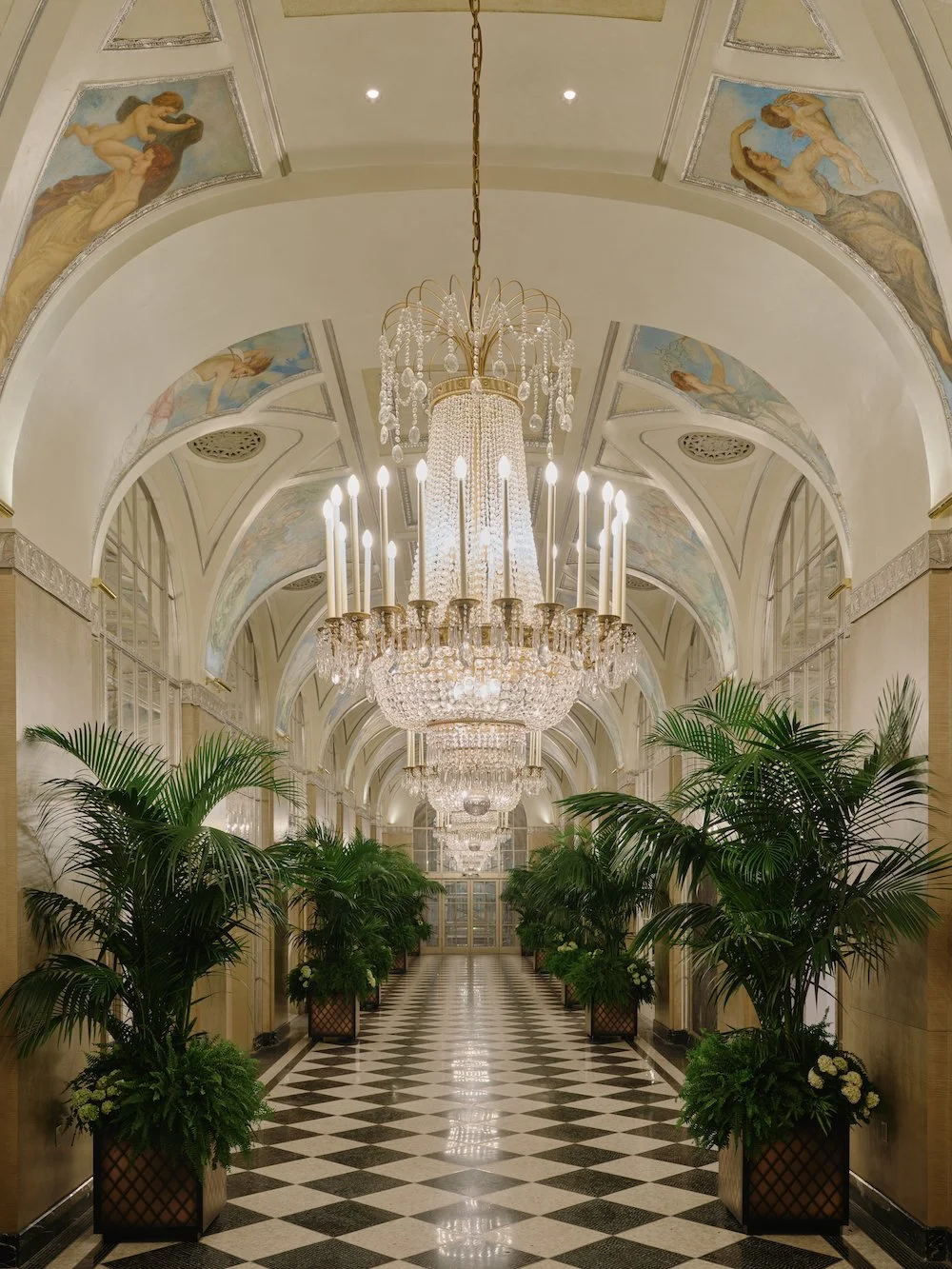
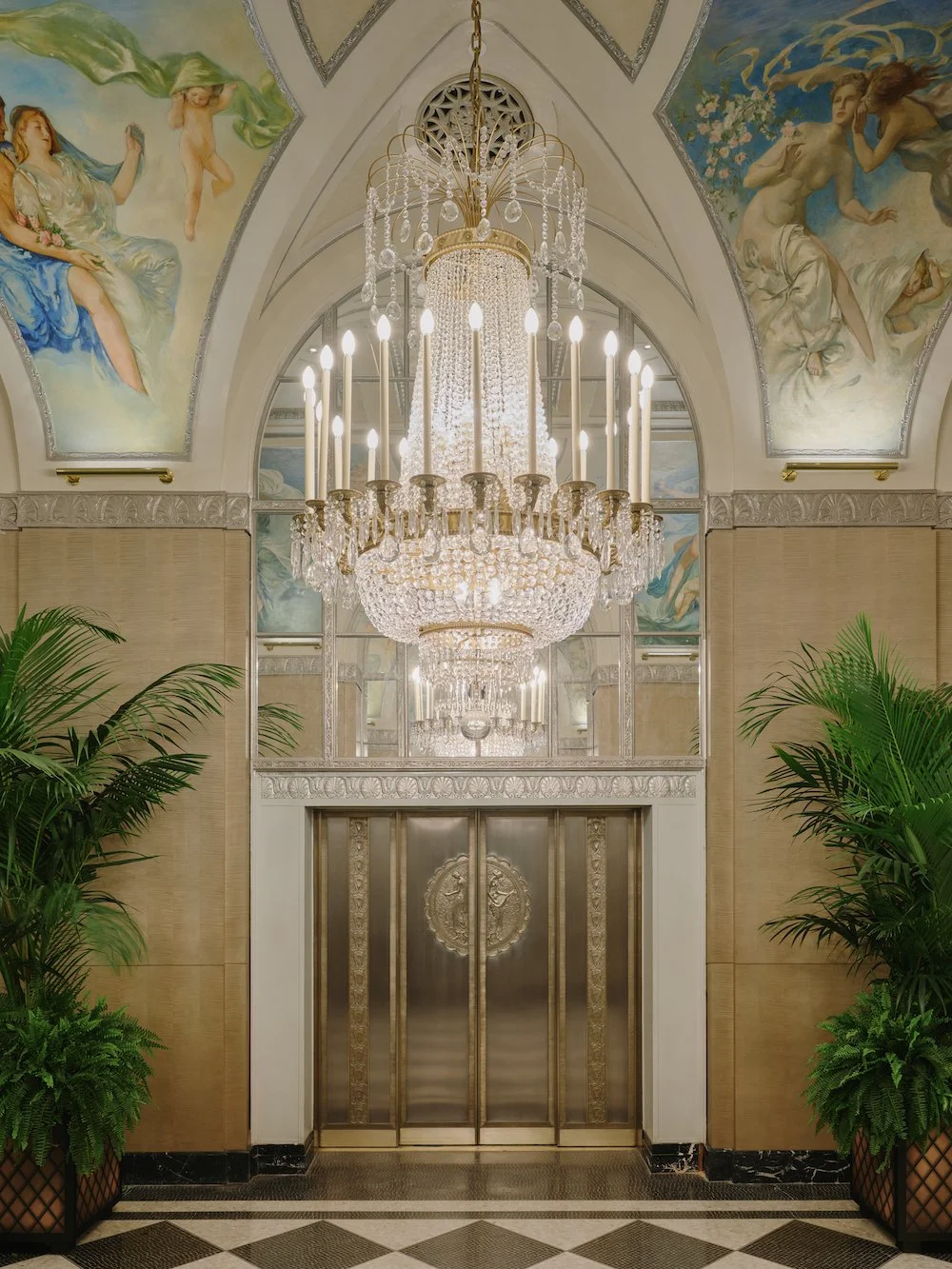

The merger created the biggest hotel in the world at the time. The Waldorf had 15 public rooms and 450 guest rooms, while the Astoria boasted 16 stories with 25 public rooms and 550 guest rooms. Both were designed in German Renaissance style, heavily furnished with antiques, and catered to New York's elite society.
Then tragedy struck. John Jacob Astor IV perished on the Titanic in 1912. The hotel later hosted the first U.S. Senate hearings on the disaster, examining ice warnings that were ignored and the inadequate number of lifeboats. Just weeks after the sinking, 82 witnesses testified about the tragedy in the hotel's halls.
The Move to Park Avenue
The original Waldorf-Astoria was demolished in 1929 to make way for the Empire State Building. Two years later, in 1931, the hotel reopened at its current location—301 Park Avenue between 49th and 50th Streets. The new building was designed by architects Schultze and Weaver in Art Deco style, standing 47 stories tall and 625 feet high. It was the world's tallest hotel until 1957.
President Herbert Hoover delivered a radio speech from the White House for the opening, calling it an event in the advancement of hotels and "an exhibition of courage and confidence to the whole nation." About 2,000 people gathered in the ballroom to listen, though the 2,200-room hotel had only 500 occupants by day's end—a sign of the Great Depression's grip on the country.
The new Waldorf-Astoria was packed with innovations. It had phones that rang automatically, teletype devices, radios in all 2,000 guestrooms, and 190 miles of wire connecting the telephone system. It was the first hotel in the world to offer 24-hour room service, starting in the 1930s. Each room service order came topped with a rose.
A Presidential Palace
Every U.S. president from Herbert Hoover to Barack Obama has stayed at the Waldorf Astoria. Hoover spoke via radio at the hotel's 1931 opening and later lived there for the last 30 years of his life. Former presidents Truman and Eisenhower also made The Towers their home after leaving office.
The Presidential Suite became stuffed with memorabilia: JFK's favorite rocking chair, Jimmy Carter's eagle desk set, Ronald Reagan's mirror and eagle-base table, Lyndon Johnson's eagle wall sconces. In 1965, Pope Paul VI met with President Lyndon B. Johnson at the hotel during the first papal visit to the United States. When FDR was in office, he used a secret train platform beneath the hotel to arrive discreetly in his wheelchair, away from public view.
The hotel's role in diplomacy extended beyond American presidents. The U.S. Permanent Representative to the United Nations maintained an official residence on the 42nd floor for many years. Winston Churchill delivered a major speech there on March 15, 1946, just days after coining the term "Iron Curtain" in his famous Fulton, Missouri address. At the Waldorf, he doubled down, telling the crowd he did not wish to withdraw or modify a single word.
Hollywood's Grand Hotel
The Waldorf Astoria has been featured in more than 20 films since opening on Park Avenue in 1931. The first was 1945's Week-End at the Waldorf, starring Ginger Rogers, Lana Turner, Walter Pidgeon, and Van Johnson. MGM shot some scenes on location but recreated the lobby, Starlight Roof, and guest rooms on their Culver City backlot. The film was shot in color specifically to showcase the hotel's vibrant Art Deco interior. Mrs. Lucius Boomer, wife of the Waldorf Astoria Corporation president, served as technical advisor.
The hotel has appeared in numerous other films: The Out-of-Towners (1970), Broadway Danny Rose (1984), Coming to America (1988), Scent of a Woman (1992)—whose unforgettable tango scene was filmed in the Vanderbilt Room—Analyze This (1999), Serendipity (2001), The Royal Tenenbaums (2001), Maid in Manhattan (2002), Catch Me If You Can(2002), Mr. and Mrs. Smith (2005), and The Pink Panther (2006).
Television series have also used the location extensively, including Law and Order, Rescue Me, Sex and the City, The Sopranos, and Will and Grace.
Residents and Legends
The hotel wasn't just for overnight guests. Composer Cole Porter lived in The Towers from 1934 until his death in 1964. His ten-room suite on the 33rd floor was what he called "a dream of beauty." Hotel management gifted him a custom Steinway piano he nicknamed "High Society," on which he composed iconic songs including "Anything Goes." That piano still sits in Peacock Alley. Porter immortalized the hotel's namesake Waldorf salad in his song "You're the Top."
Other long-term residents included General Douglas MacArthur, whose widow Jean MacArthur lived there from 1952 until 2000. The Duke and Duchess of Windsor made The Towers their home for 20 years after his abdication, arriving each fall in time for the city's social season. Frank Sinatra, Grace Kelly, and Ella Fitzgerald were all residents at various times. Marilyn Monroe and Elizabeth Taylor also called suites there home—Taylor was particularly fond of the decadent bathtubs.
The hotel has welcomed Queen Elizabeth II (who made her one and only New York City hotel stay there in 1957), the Dalai Lama, Martin Luther King Jr., Helen Keller, Charlie Chaplin, Judy Garland, and Katharine Hepburn. In 1950s, Grace Kelly and Prince Rainier III of Monaco held their engagement party at the hotel. John F. Kennedy and Jacqueline Kennedy kicked off their honeymoon there.

Music and Entertainment
The Starlight Roof nightclub became the place to see and be seen in the 1930s and 40s. The Waldorf-Astoria Orchestra entertained guests alongside noted musicians like Xavier Cugat, Eddie Duchin, Lester Lanin, and Glenn Miller. In the Wedgwood Room, guests dined during performances by Frank Sinatra, Victor Borge, and Gracie Fields.
Guy Lombardo broadcast live on the radio from the Starlight Roof for decades. Time magazine observed that the American public simply wouldn't believe it was New Year's Day unless Lombardo heralded its arrival from the Waldorf Astoria. Ella Fitzgerald regularly sang in the Starlight Roof ballroom. Maurice Chevalier performed in the Grand Ballroom in 1965 in his last appearance, and Louis Armstrong played there in March 1971 in what would be his final performance.
The hotel became the home of the Rock & Roll Hall of Fame induction ceremonies starting in 1986. On January 20, 1988, the Beatles were inducted in the Grand Ballroom. Guests paid $300 each to attend. The Beach Boys, Bob Dylan, the Drifters, and the Supremes all performed, with "I Saw Her Standing There" featuring vocals by George Harrison, Mick Jagger, Bruce Springsteen, and Billy Joel. The following year, the Rolling Stones, Stevie Wonder, Otis Redding, and the Temptations were inducted in another sold-out ceremony.
In 1965, Andy Warhol held one of his notorious "Underground Parties" on an unused subway platform below the hotel, celebrating the launch of his film "Outer and Inner Space." A red Warhol self-portrait was on display, and the hotel ran an electrical cord down to the platform so the film could be projected.
Cultural Milestones
The Waldorf Astoria has been at the center of major cultural and political moments. On September 29, 1982, it hosted the first benefit dinner for the Human Rights Campaign Fund, a gay-rights political action committee. Former Vice President Walter Mondale became the first major politician to address a gay-rights organization. Admission was $150 per plate, and the dinner raised $50,000.
The hotel played a role in fashion history when Eleanor Lambert chose it as the inaugural location for Seventh Avenue Press Week—the forerunner of today's New York Fashion Week. Lambert also founded the Council of Fashion Designers of America, and the hotel hosted the glittery Coty Awards fashion gala for years.
Legendary maître d'hôtel Oscar Tschirky became a culinary superstar and arbiter of taste, credited with inventing or popularizing Veal Oscar, Eggs Benedict, Thousand Island dressing, red velvet cake, and the world-famous Waldorf salad. His face appeared on bottles of sauce sold nationwide, establishing the hotel's fame across the country.
The hotel has hosted countless other events: the Viennese Opera Ball, International Debutante Ball, NASCAR Sprint Cup end-of-season awards (1981-2008), the April in Paris Ball, and the Alfred E. Smith Memorial Foundation Dinner.
The Eight-Year Transformation
In October 2014, Chinese company Anbang Insurance Group bought the Waldorf Astoria from Hilton for $1.95 billion, making it the most expensive hotel ever sold at the time. The hotel closed on March 1, 2017, for extensive renovations. The final event in the Grand Ballroom was a charity gala for NewYork-Presbyterian Hospital, with Stevie Wonder performing.
Days later, New York City's Landmarks Preservation Commission voted unanimously to protect about 62,000 square feet of interior public spaces, including the Park Avenue Lobby and the Silver Corridor. Skidmore, Owings & Merrill was hired to renovate while preserving the landmark-protected rooms.
The project faced numerous setbacks. Anbang went bankrupt in 2018 when the Chinese government seized the company's assets. Dajia Insurance Group took over. The renovation exceeded its $2 billion budget and was delayed by the pandemic, workplace accidents including a worker's death, and shifting timelines. At its busiest, the project employed 1,000 workers daily.
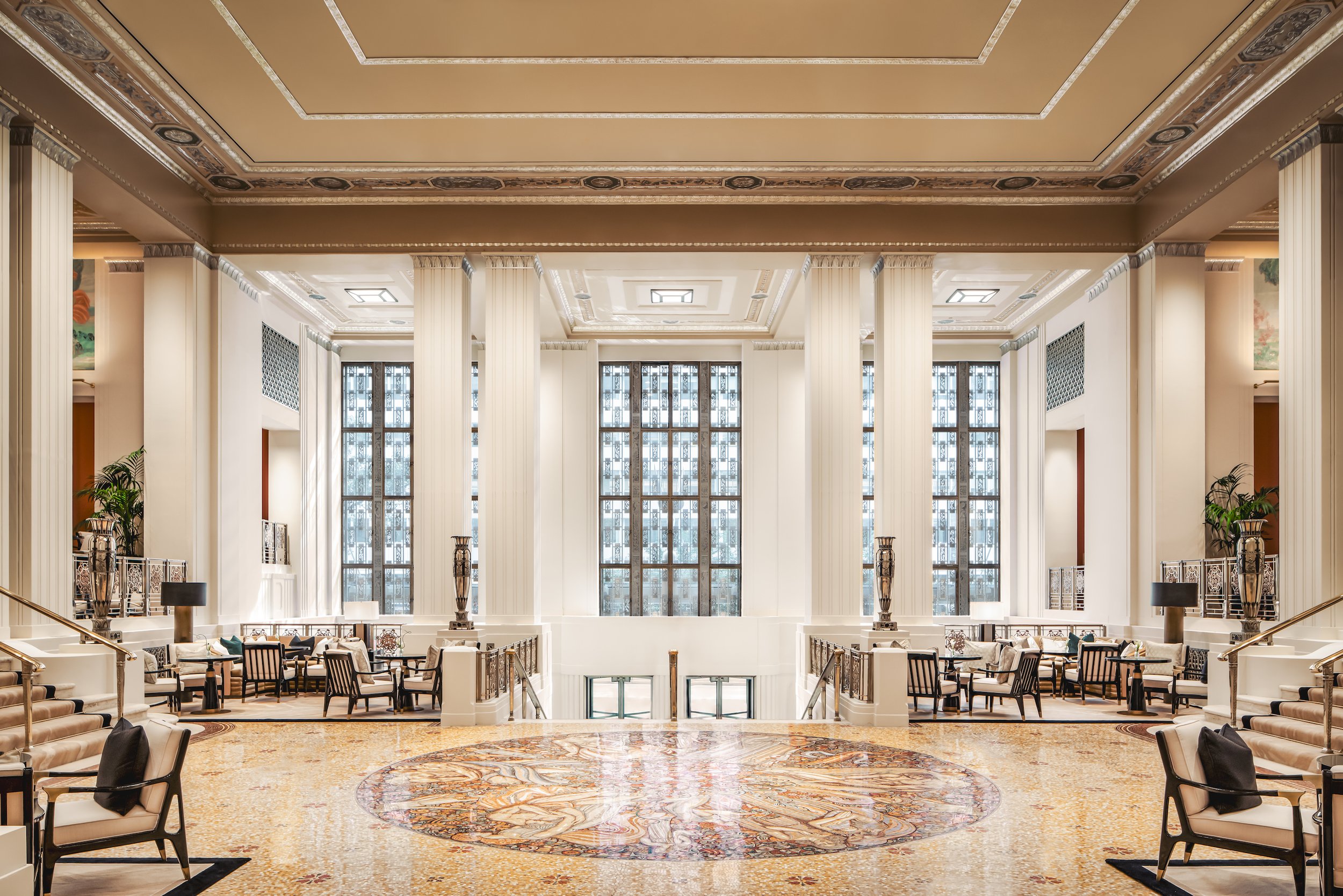
The transformation was extreme: 96% of the hotel's interior was replaced entirely, though landmarked portions were refurbished. The room count dropped from nearly 1,400 to 375 hotel rooms (now starting at 570 square feet), while the upper floors became 375 luxury condominiums. The windows were enlarged to meet revised building codes, and hidden architectural gems were uncovered, including the intricate "Wheel of Life" mosaic.


The Grand Reopening
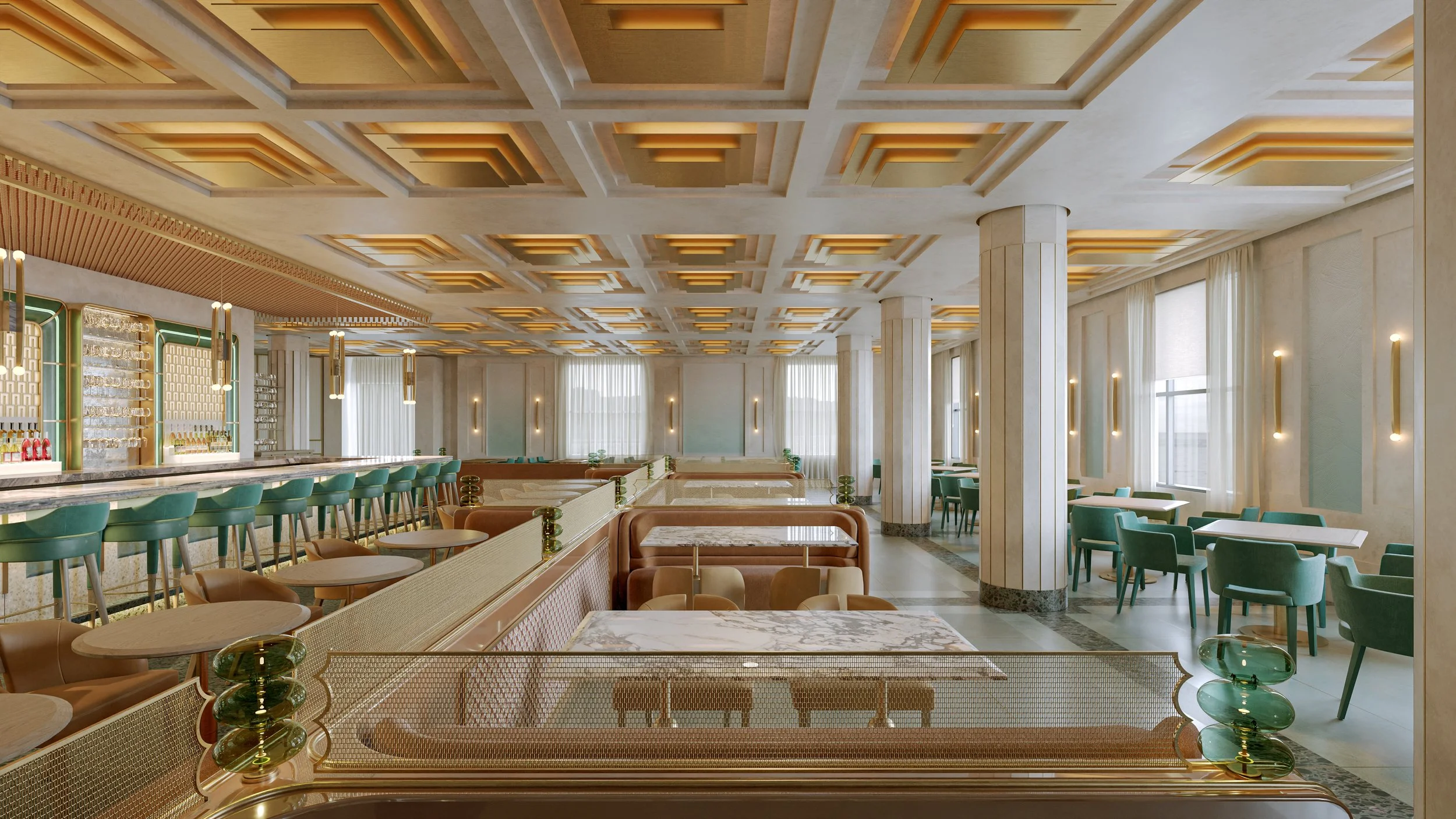
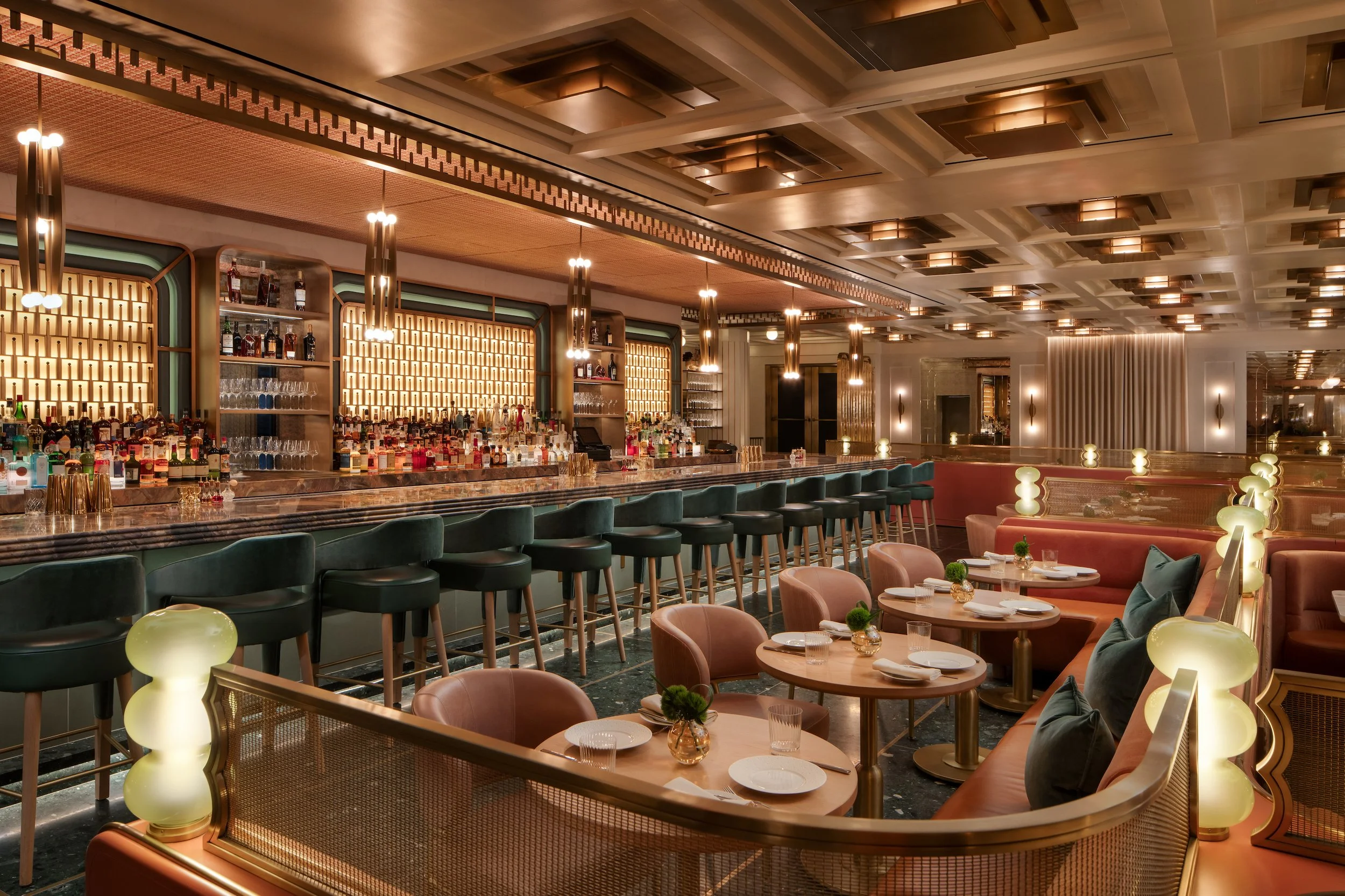
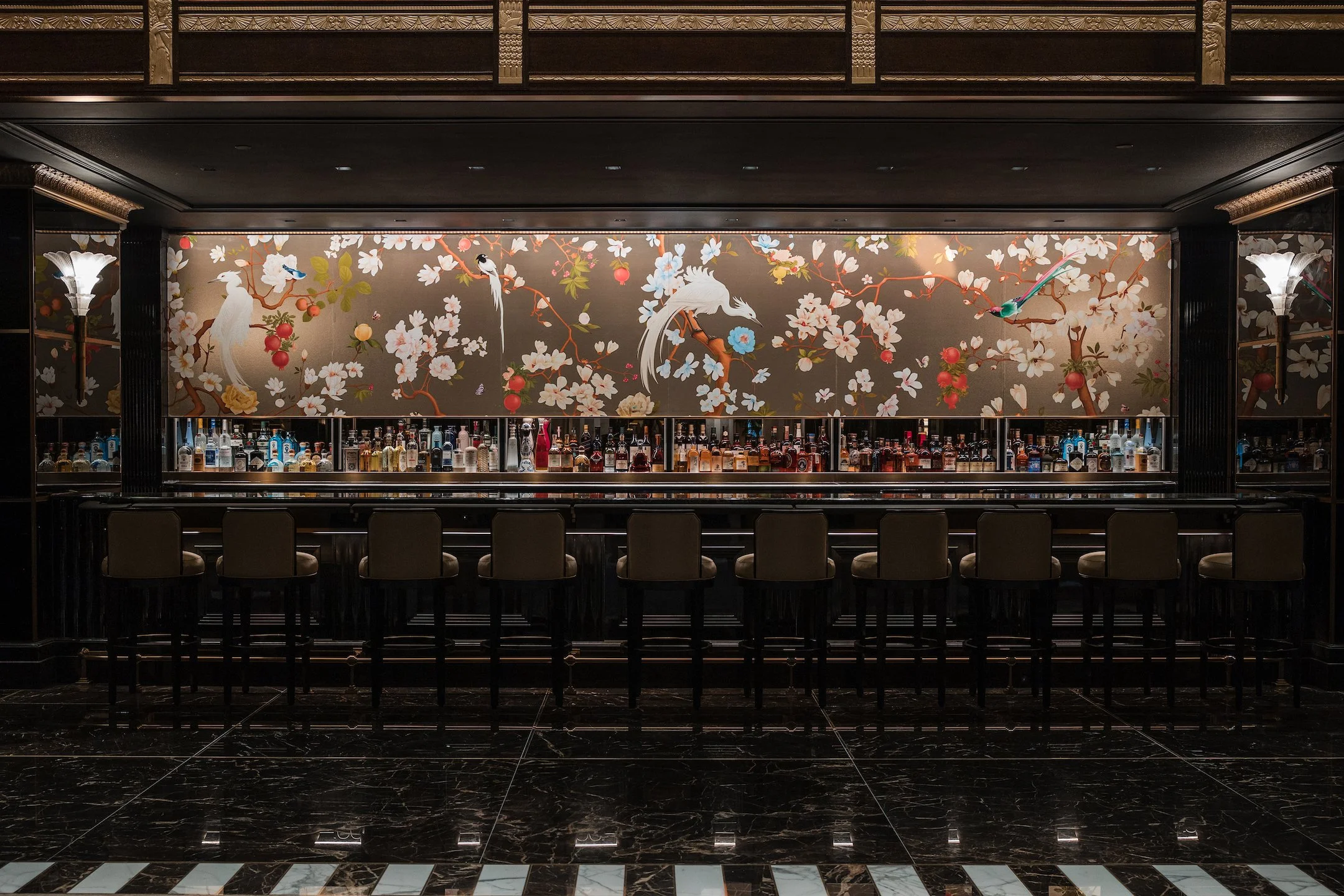
The Waldorf Astoria finally reopened in July 2025 after eight years. The hotel now features three restaurants: Peacock Alley (transformed into a chic lounge and all-day restaurant), Lex Yard (a two-story American brasserie led by Chef Michael Anthony, formerly of Gramercy Tavern), and Yoshoku (offering a six-course kaiseki-inspired menu).
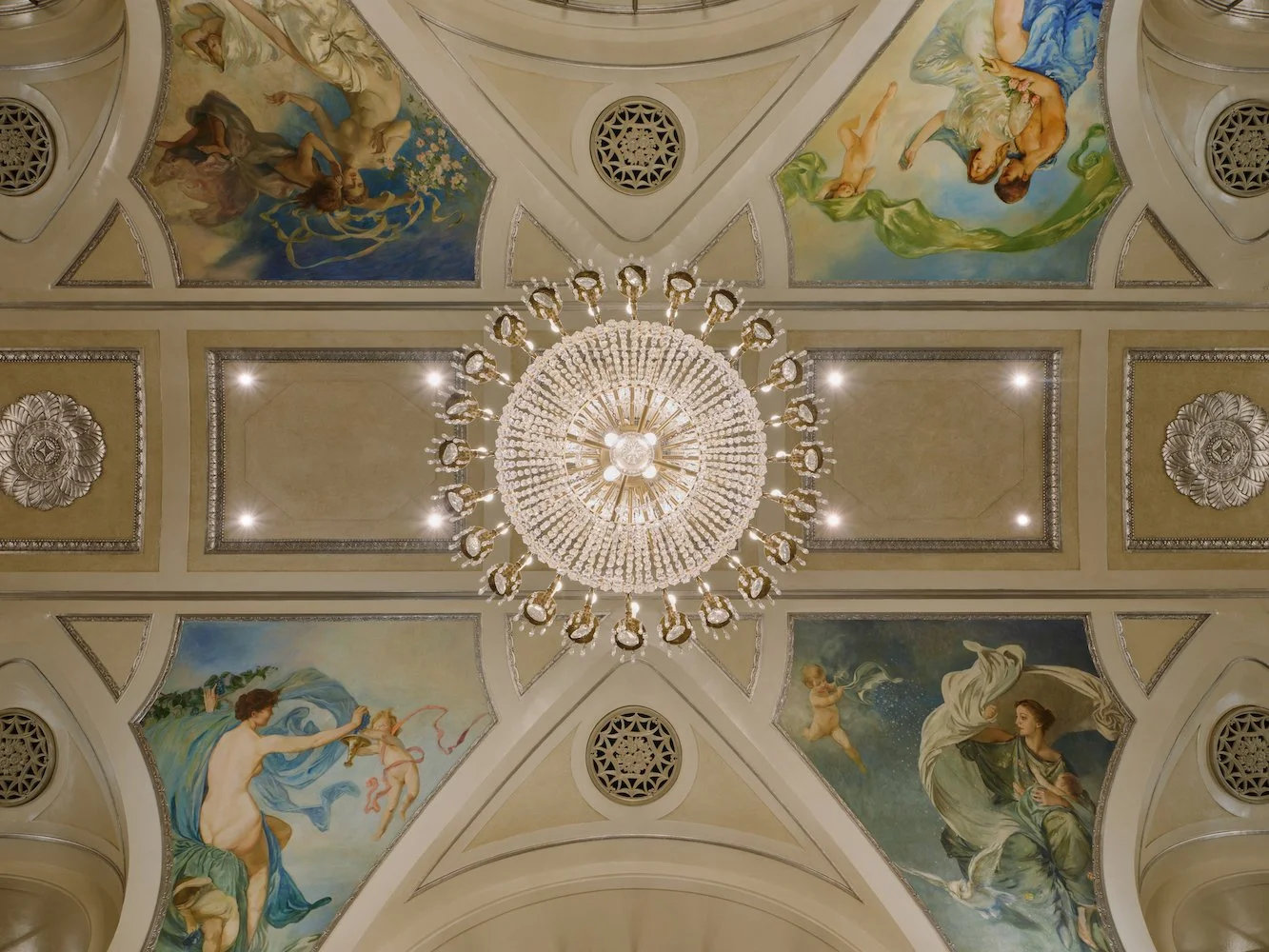
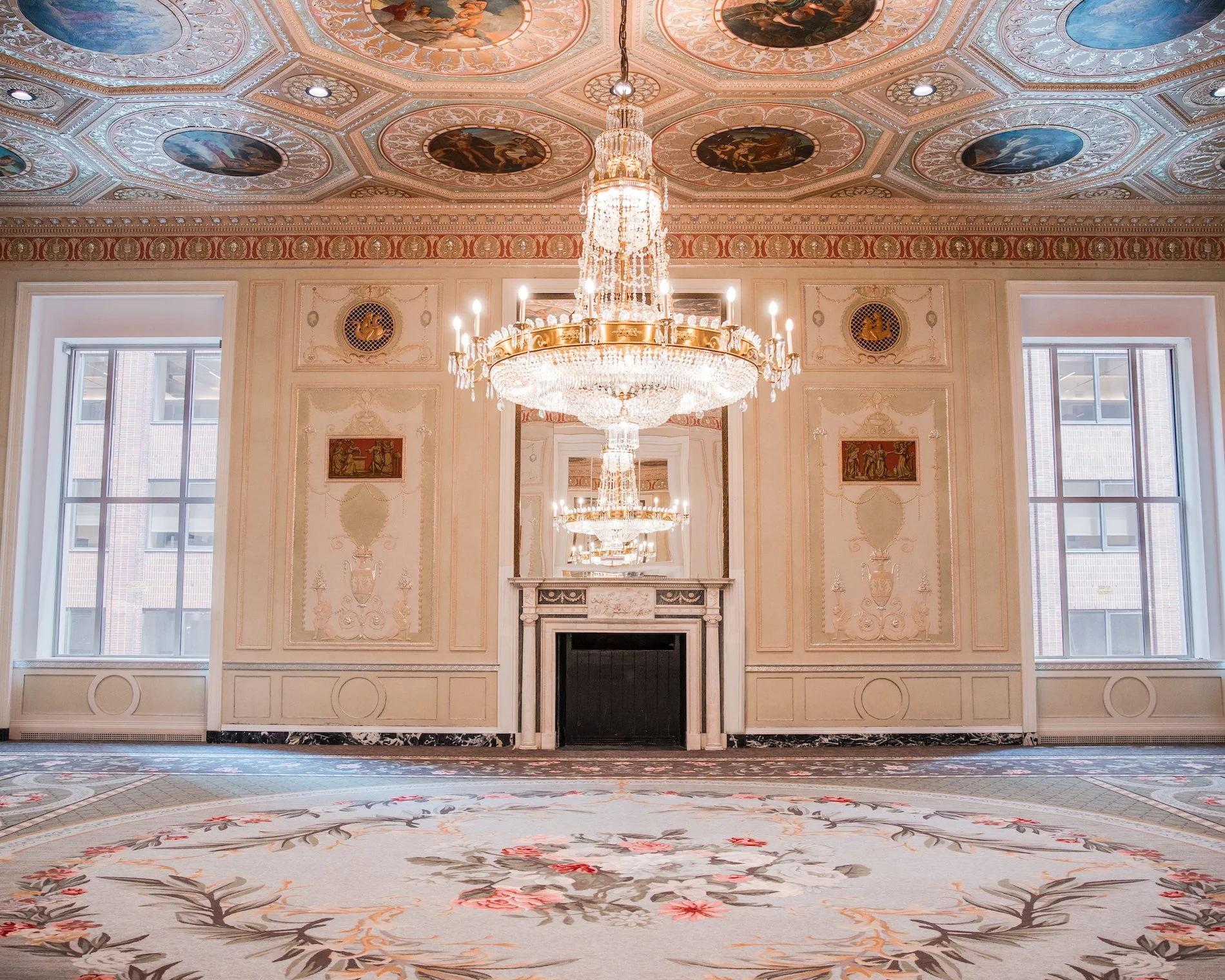
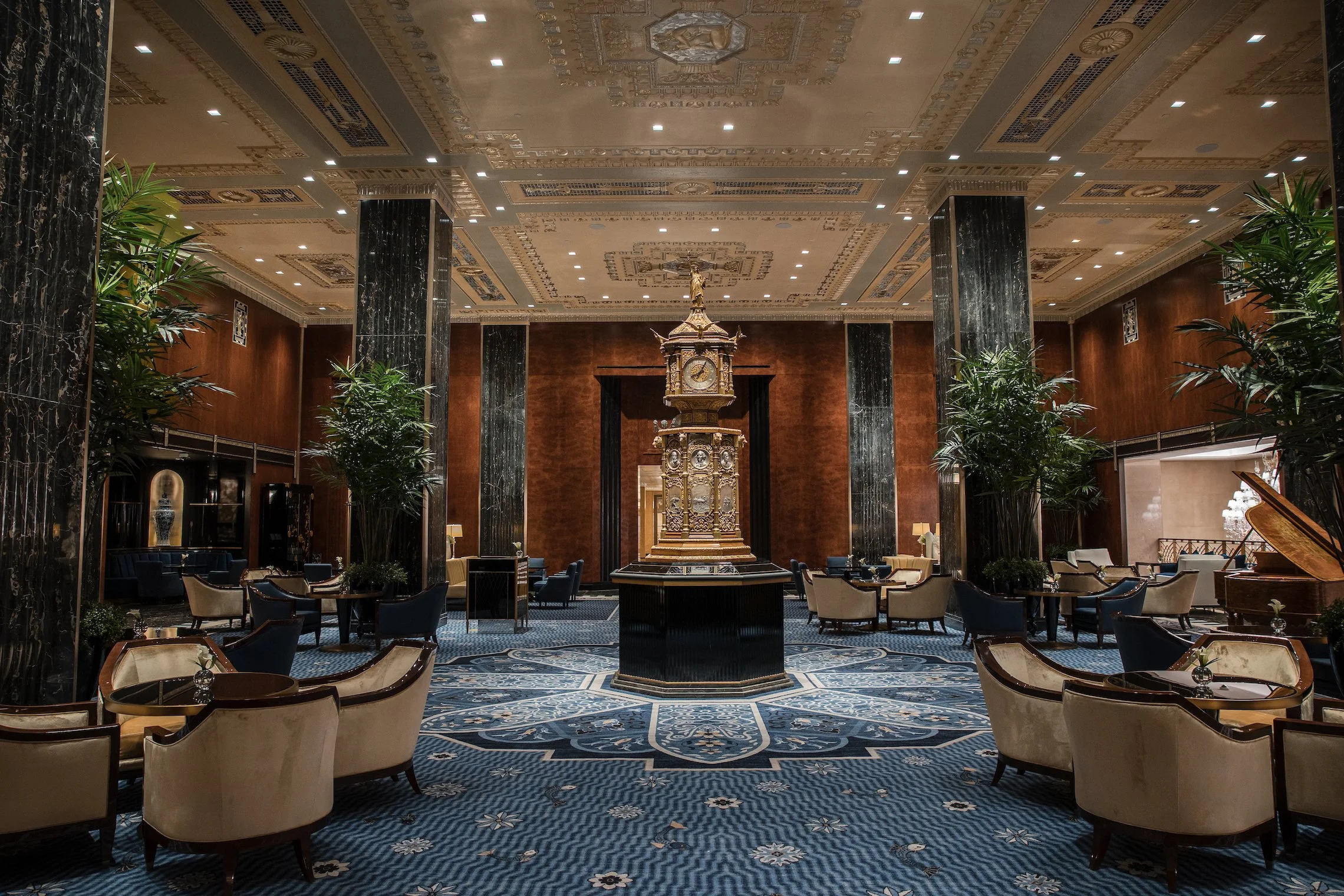
The historic bronze clock from the 1893 World's Columbian Exposition still stands in the lobby. The Spirit of Achievement statue has been carefully preserved. Cole Porter's piano remains on display. The Grand Ballroom has been restored to its Art Deco splendor.
The hotel now includes one of the largest spas in New York City, spanning over 30,000 square feet, plus a state-of-the-art fitness center. There are 43,000 square feet of event space across 17 hosting spaces, some brand new and others reimagined versions of their former selves.
The 375 private residences atop the hotel, designed by Jean-Louis Deniot, feature interiors with sweeping city views. Residents have full access to hotel facilities plus 50,000 square feet of exclusive amenities, including a wellness center overlooking Park Avenue and an art collection curated by Swiss collector Simon de Pury. There's even a Presidential Library featuring a curated collection of books and artifacts celebrating the hotel's connection to American presidents.
The reopening marks the completion of one of the most ambitious hotel renovations in history, blending preservation with modern luxury. As managing director Luigi Romaniello put it, the Waldorf Astoria has always been the place to be in New York City. After eight years of silence, the grande dame is back—ready for her next century of making history.