
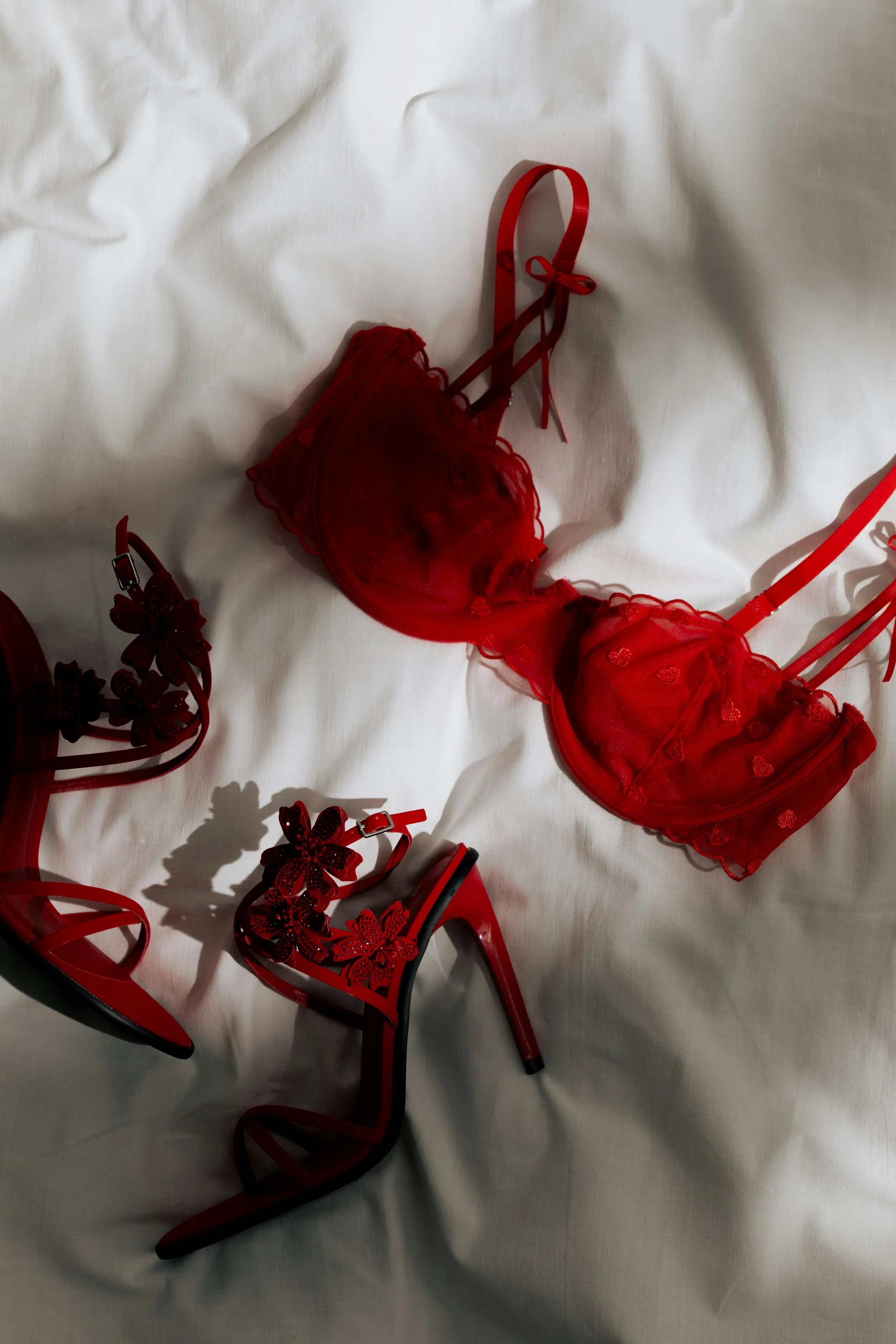
What It Takes to Get a Lingerie Collection Made at 50 Pieces
About once a week, a lingerie factory gets an email with a photo of a sketch, taken on a phone, and a question about what 50 pieces will cost. The honest answer takes longer than the email suggests. A bra carries more parts than most first-time designers expect, and every part has a supplier, a minimum and a lead time behind it.
The bra is not a small T-shirt
Count the components on a basic bra. Band elastic. Cup shells. Wire or wireless support. Strap elastic, hooks, sliders, a care label. Moulded foam if you want a smooth cup. Each one comes from a different supplier, and suppliers sell in rolls, boxes or minimums of their own. A factory that quotes in a day is pricing from how similar styles have run before. Good enough for a ballpark. Not good enough for a purchase order. A number built on a phone photo is a guess with a deadline attached.
What the tech pack has to carry
A tech pack is the document the factory prices from, so the useful ones are specific. Flat sketches with measurements. Seam and stitch placement. Fabric and trim specs with a colour reference. A full size grading. Labels, hangtags, packaging. A reference sample, even a worn one you want to improve, beats three paragraphs of description.
Ask for a tech pack template before you start filling it in. Keep one file that both sides treat as the record, something like final_v2_REAL.pdf, because the version that gets cut is usually not the one anyone remembers sending.
Fabric decides the minimum
Most first collections end up in one of four fabric families. Cotton for everyday briefs and basic bralettes. Modal for premium basics and sleepwear, softer than cotton and better at holding stretch through washing. Microfibre for smooth moulded cups and bodysuits. Stretch lace or power mesh when texture is the point.
The fabric decides more than the look. Elastic recovery is what keeps a band from going slack after ten washes, so ask whether the factory tests recovery before cutting and ask to see the results at sampling. Mills sell in rolls, and a colour that has to be dyed to order carries a higher minimum than a stock shade. That one choice can move a first order from 50 pieces to 300.
Grade the set, not the bra
Bra and brief sets have to be graded together. When the bra comes from one supplier and the brief from another, the mismatch shows up at the larger sizes, which is where a launch either holds up or falls apart. Ask who does the grading and on what system. A factory with its own CAD setup can move a block in days between fit rounds, and during sampling that speed matters more than any promise about capacity.
The sample round
A fit sample from a factory built for small runs usually takes seven to ten days. Wear it, wash it, wear it again. Check band tension, cup volume, where the strap sits, and whether the label scratches. If the sample fee comes back as credit against bulk, the round costs time and not money. KnitUnderwear, a Jiangsu-based lingerie manufacturer that runs made-to-order programs from 50 pieces per style and colour, credits the sample fee in full against bulk. Ask any factory what happens to the sample fee and get the answer in writing. Keep the approved sample. It becomes the reference for every argument once bulk arrives.
Where 50 pieces comes from
Small-run minimums are set by dye lots, cutting, elastic and machine setup. Fifty pieces per style and colour is a workable floor, and most factories let you spread sizes freely inside that colour, so your 50 units can cover XS to 3XL. A run spread across the size range says more about fit than 50 mediums ever will. If a quote comes in under 50 pieces, ask what changed. Usually it is a stock fabric or a simpler construction.
Three routes into production
OEM builds from your tech pack and your pattern. ODM starts from a block the factory already owns and alters it, which is normally quicker because fit and construction are proven. Private label sits close to ODM, with your labels and colourways on a style already in production. The three prices are not comparable, so name the route on the quote. For a first collection, a factory that can show you its pattern library is often faster to a sample than one building every panel from scratch. Most factories, ours included early on, will take an order on almost any terms if you push hard enough. Getting the route named in writing saves the argument later.
Money, paperwork and timing
Expect a deposit before production and the balance after inspection. Thirty percent, then seventy after an AQL report, is a common split, and the report should reach you before the shipment does, packing photos included. An NDA before spec review is normal in private label work. Incoterms change who pays freight and who clears customs, so compare quotes on the same basis. FOB Shanghai and DDP are different numbers, and one will look cheaper until freight lands on it. Bulk usually runs 30 to 45 days after sample sign-off. Shipping takes its own time after that.
Plan the launch backwards
Add the stages up before you announce a date. Twelve to sixteen weeks from an approved tech pack to stock in hand is realistic: a week or two on fabric and price, seven to ten days for the fit sample, a second round if the fit moves, 30 to 45 days of bulk, then shipping and customs. Photography and wholesale appointments need finished samples, so the selling calendar starts at the sample date. Brands that count from the bulk delivery date tend to launch late.
Questions worth asking first
Before the deposit, ask who grades the patterns, where the fabric comes from, what happens if bulk does not match the approved sample, who runs final inspection, and how the sample fee is handled. Ask for the AQL report as a file with the defect counts, not a line in an email that says passed. Ask for one reference from a brand about your size. Answers with numbers in them are a better sign than answers with adjectives.
The first 50-piece order is mostly a test of whether the factory answers the same question the same way twice. If it does, the second order gets easier. If it does not, you have learned that for the price of a sample.