
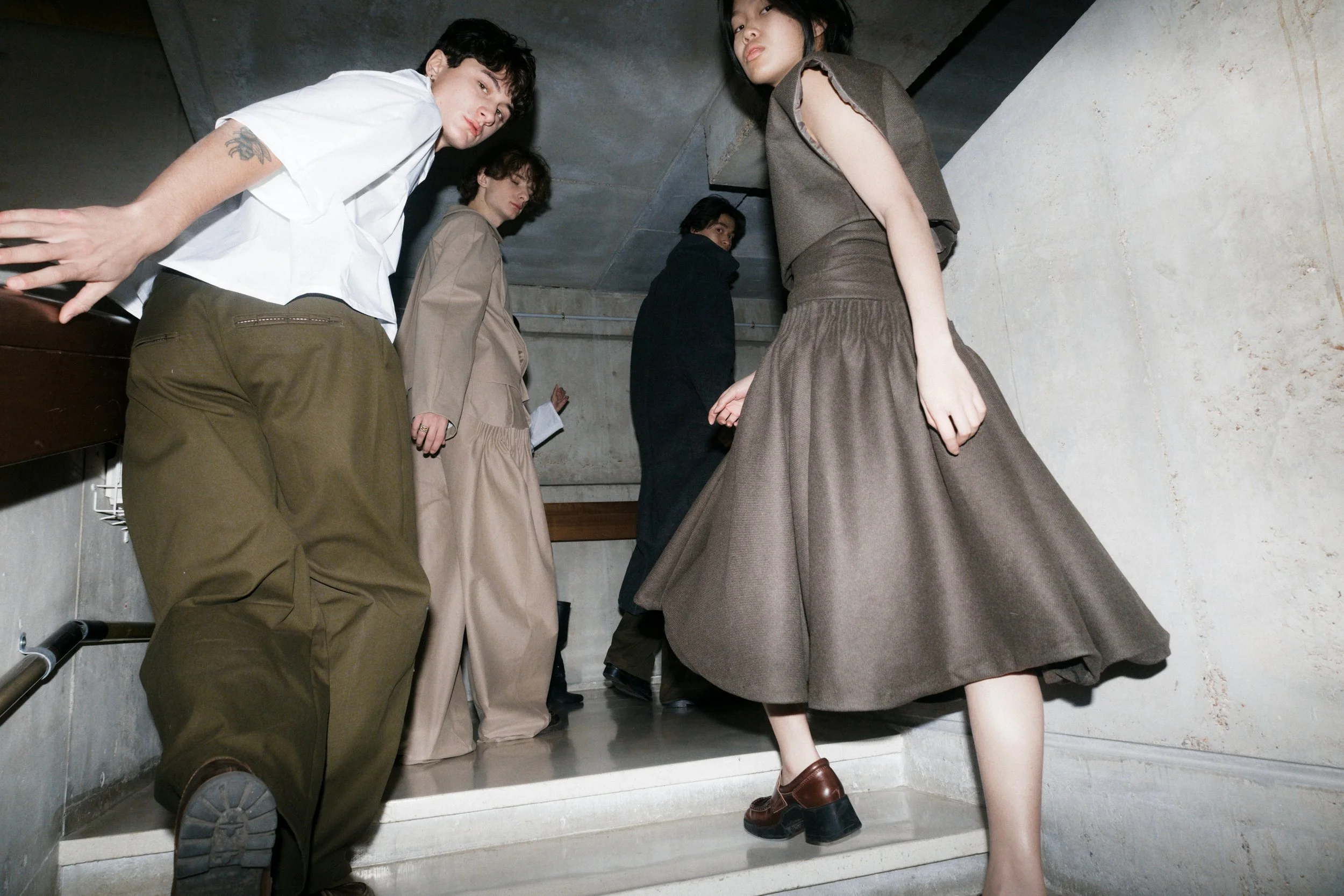
5 Best Cut and Sew Manufacturers for Independent Fashion Brands
All five cut and sew manufacturers below operate in Los Angeles and work with independent brands at startup-level quantities. Minimums start at 10 pieces per style and run up to 100. The right choice depends on your first-run quantity, your garment category, and whether you need decoration and fabric production handled in the same building.
Start with your first-run quantity
Minimum order quantity is the first filter. It rules options in or out before quality, price or turnaround matter.
Your first run
10 to 49 pieces - The Evans Group
50 to 99 pieces -The Evans Group, Affix Appare
Full Speed 100 and in LA Apparel both work on a low-MOQ model without publishing a figure, so ask for their number directly.
More than 100 pieces, all above.
Which one fits your situation
You need runway-standard samples and small-batch domestic production. The Evans Group. Domestic runs start at 10 pieces per style.
You need custom and bulk apparel with embroidery and printing in-house. Apparel Factory.
You need low minimums, fast turnaround and a wide supplier network. Full Speed 100.
You are a startup placing a first order. Affix Apparel, with minimums as low as 50 pieces.
You need private label production with in-house fabric. in LA Apparel.
The Evans Group
What they do
The Evans Group is a vertically integrated design, development and manufacturing house in the Arts District of downtown Los Angeles. The company takes a collection from sketch through pattern making, sample development, and full cut-and-sew production. Domestic runs start at 10 pieces per style, with international options available for larger volumes. Since 2005, the company has worked with nearly 4,000 designer brands.
What sets them apart
The Evans Group handles construction that most production floors will not touch, including delicate silks, complex knits, beading, and couture finishing. Master patternmakers protect design integrity from the first sample through the final production run, so fit and finish do not drift between stages. That combination, runway-level construction at a minimum that does not force a brand into inventory it cannot move, is the hardest thing to find in domestic manufacturing.
Track record
The Evans Group holds verified reviews through its Google Business Profile and appears in the CFDA Production Directory. Clients point consistently to the quality of the patternmaking and the reliability of the sewing teams. Named partnerships include Nike, Rodarte, Moncler and Banana Republic, and the company was handpicked for the CFDA "Made in LA" collection.
Apparel Factory
What they do
Apparel Factory is a Los Angeles manufacturer focused on premium blank and custom apparel. Production runs end to end: pattern design, fabric sourcing, cutting, embroidery, screen printing, digital printing, sewing and quality inspection. The company primarily handles bulk orders of 100 pieces or more, and offers free shipping on qualifying orders within California and nationally.
What sets them apart
Decoration and construction happen under one roof rather than across separate vendors. Having embroidery, digital printing and cut and sew production in a single facility cuts handoff errors and keeps lead times tighter than a multi-vendor setup allows. Workwear is a particular strength, with both embroidered and digitally printed customization built into the workflow.
Track record
Public review data is limited, so direct outreach before committing to a production run is worth doing. The breadth of in-house capability points to operational maturity even without a large public review footprint. Request samples and ask about defect rate history before placing bulk orders.
Full Speed 100
What they do
Full Speed 100 is a full-service clothing manufacturer and sourcing company in downtown Los Angeles. Services cover pattern making, sample development, grading, tech packs and finishing. Decoration includes screen printing, direct-to-garment printing, sublimation, embroidery and heat transfers. The company has access to more than 100 fabric and materials suppliers, which gives brands sourcing flexibility without managing those relationships directly.
What sets them apart
A low-MOQ model paired with same-day and rush turnaround options makes Full Speed 100 workable for brands that need to move quickly on a drop or a test run. Cost per unit is higher than a volume producer, and the speed is what you are paying for when a style has to reach market on a date.
Track record
There is no large public review profile, which makes direct vetting important. The company positions itself around transparent pricing and USA-based wages. Brands in early-stage sampling should start with a small test order before scaling up.
Affix Apparel
What they do
Affix Apparel is a Los Angeles custom clothing manufacturer built around the needs of startups and emerging brands. Services include cut and sew manufacturing alongside screen printing, sublimation, embroidery and custom labeling. Minimums start at 50 pieces per style.
What sets them apart
Production runs through a structured four-step process that begins with consultation and moves through sample production into full-scale manufacturing. That structure removes much of the guesswork that slows down first-time clients, so the path from concept to finished garment is clearer than it tends to be elsewhere. A 50-piece minimum keeps the entry point low enough for founders testing the market without overcommitting to inventory.
Track record
Public review data is currently limited, so request samples and ask directly about defect rate and on-time delivery history. The combination of a low minimum and a guided process is rare in the Los Angeles market. A small pilot run is the logical first step before a larger order.
in LA Apparel
What they do
In LA Apparel is a vertically integrated manufacturer with operations across Los Angeles and Orange County, California. The company handles the full production stack: knitting, dyeing, cutting, sewing, decorating and fulfillment. In-house fabric production covers cotton, synthetic, viscose and modal, organic and specialty materials.
What sets them apart
Producing fabric in-house rather than sourcing it externally removes one of the biggest variables in production quality and lead time. Material control from fiber to finished garment is hard to find in domestic manufacturing, and it matters most for brands that need consistency across repeat production runs.
Track record
Public reviews are not widely available through major platforms, so direct engagement with the team is the right path before placing an order. Work with entertainment and media clients suggests production flexibility that translates well into custom fashion manufacturing. Brands that need low minimums paired with fabric-level control should shortlist this one.
How to vet these manufacturers before you order
Four of the five companies here have limited public review data, which is common in contract manufacturing. Run the same checks on each.
Request samples first. A sample tells you more about construction quality than any listing does.
Ask for defect rate history. Any manufacturer worth working with can answer this honestly.
Ask for sample-to-bulk approval rates. This is the number that predicts whether your bulk run will match the sample you approved.
Ask for on-time delivery history. Honest lead times matter more than optimistic ones.
Place a small pilot run. One style at minimum quantity, before any larger order.
What to compare when choosing
Picking a production partner involves more than comparing price lists.
Industry and domain experience. Look for a documented history in your specific garment category. A company that performs well at activewear may not have the right skill for structured womenswear or couture-level finishing.
Features and service. Confirm whether pattern making, sampling, grading and bulk production happen in-house. The fewer handoffs between vendors, the lower the risk of quality drift across a production run.
Pricing structure. Understand the full cost structure before committing. Published starting points, such as the $5,000 minimum at The Evans Group, give you a real benchmark. Watch for manufacturers whose pricing stays opaque until you are already in the process.
Results measurement. Ask about defect rates, sample-to-bulk approval rates and on-time delivery history.
Compliance. Make sure your manufacturer is familiar with OEKO-TEX, WRAP, Fair Trade and CPSC textile regulations, especially if you sell into markets with strict labeling or materials requirements.
What cut and sew production actually involves
Cut and sew manufacturing is different from buying blanks and decorating them. The construction, the fit and the way fabric behaves under a needle all require real skill, and none of it can be faked with a good-looking sample.
Two friction points hit independent brands hardest. The first is a minimum too high for a first run. The second is quality that slips the moment a small sample becomes a bulk order. The right manufacturer keeps cost per unit manageable without pushing you toward shortcuts that hurt the product, holds sample-to-bulk approval rates you can plan around, and gives you honest lead times instead of optimistic ones.
Picking the wrong partner early can cost more than money. It can cost entire seasons.
How this list was built
Public information shaped this entire list. Each manufacturer was assessed using client reviews, directory listings, case studies and details pulled directly from official websites. Only manufacturers with a demonstrated track record in cut and sew production made the final cut.
Initial data collection. The starting point was a broad scan across apparel manufacturing directories, trade resources and business listing platforms. Search results were cross-referenced against CFDA-affiliated resources and regional production directories focused on Los Angeles manufacturing. Case studies, brand mentions and production portfolios were collected where publicly available, to build a longlist reflecting real operational activity rather than web presence.
Shortlisting. Options without verifiable production histories were filtered out. Review patterns were analyzed across Google, industry forums and wherever client feedback appeared publicly. Manufacturers showing inconsistent quality signals, or offering no meaningful client-facing information, did not make it through. Every shortlisted company had a demonstrated record of working with fashion brands through named clients, directory verification or documented production outcomes.
Verification of claims. Stated capabilities were checked against available external evidence. Claims about minimums, turnaround times, fabric handling and service scope were compared against what clients and directory listings reflected. Where a company's site described a capability that no external source confirmed, that was flagged. Companies whose stated services aligned with their real-world track record were prioritized.
Authority and industry contribution. Appearances in trade publications, inclusion in verified production directories such as the CFDA Production Directory, and named partnerships with recognized fashion brands all carried weight. For The Evans Group, being handpicked for the CFDA "Made in LA" collection and holding named relationships with Nike and Rodarte is straightforward to verify and meaningful in context.
Cut and sew specific evidence. The final filter was tied to cut and sew work. Each company was reviewed for dedicated service pages covering pattern making, sample development and production construction. Evidence of garment-category skill, such as delicate fabrics, technical construction and small-batch domestic work, was weighted more heavily than general manufacturing claims. Verified reviews referencing fit accuracy, production consistency and on-time delivery shaped the final ranking more than any single company feature.
Bottom line
The right cut-and-sew manufacturer changes what is possible for an independent brand, and MOQ flexibility, construction skill, and production consistency are worth prioritizing over cost per unit alone. The Evans Group offers runway-level quality at startup-accessible minimums. Apparel Factory handles bulk volume with in-house decoration. Full Speed 100 covers fast turnaround and sourcing breadth. Affix Apparel covers guided production at 50 pieces. In LA Apparel covers vertically integrated fabric control. As demand for transparent, ethical production grows, manufacturers that pair craftsmanship with fair labor practices will continue to lead.