
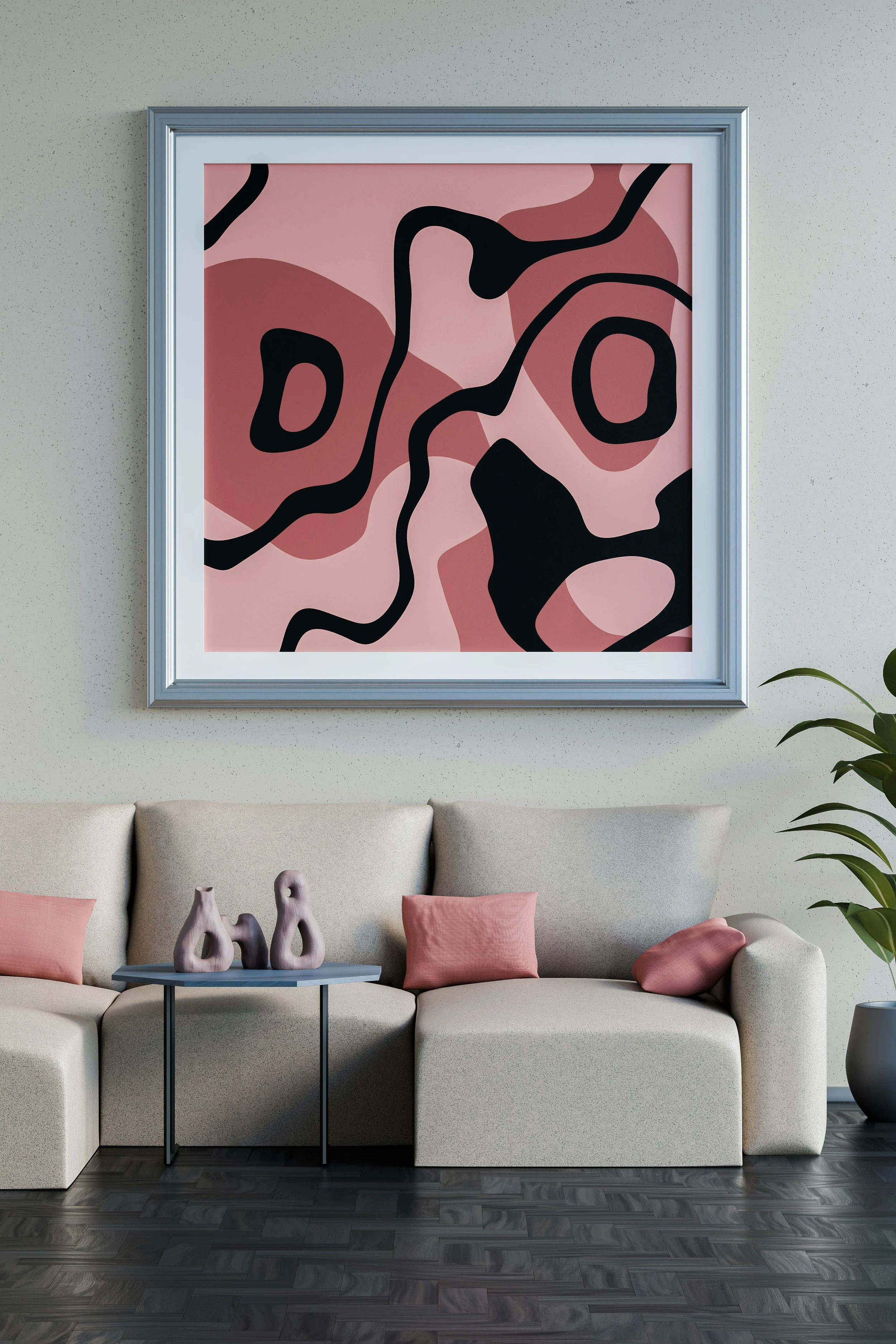
Why Oversized Art Is Redefining the Modern Living Room
The most considered living rooms right now share an unexpected trait: their walls are quieter. Gone are the salon-style clusters of mismatched frames. In their place sits one decisive piece, sized to command the room rather than decorate it.
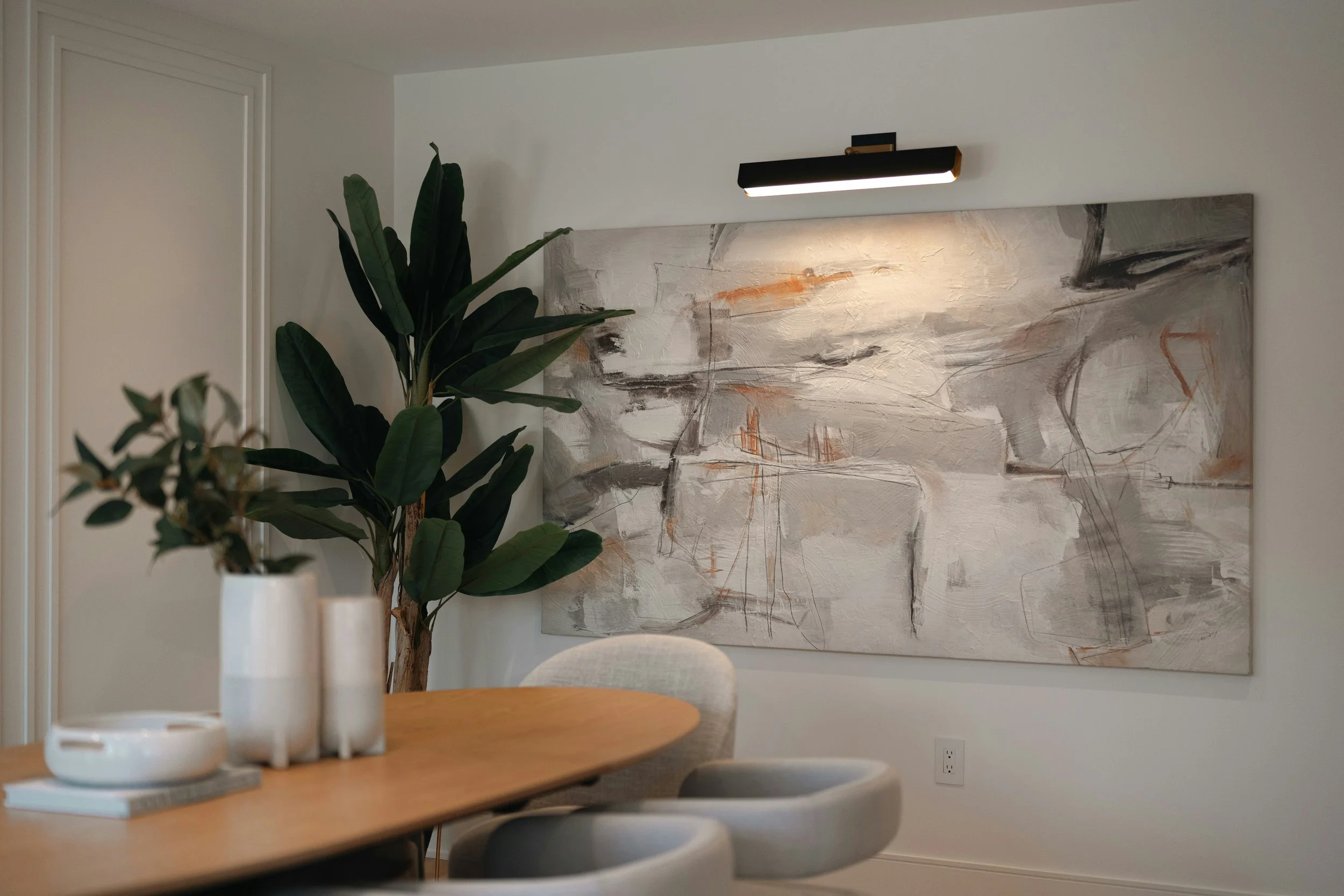
It’s a restrained gesture, and it’s harder than it looks. A wall is the last true blank canvas in most homes, and what you hang there sets the tone for everything in front of it. Scale, more than subject, is what makes a space feel intentional. A modest print can be exquisite and still look lost; a bold canvas can be simple and still look like architecture. Here’s how to think about it.
Why One Large Piece Beats a Crowded Wall
Walk into any open-plan living room with a long sofa and a wall of twelve feet or more, and the problem is usually obvious. A small framed print floats in the middle like an afterthought, and the wall behind it looks bigger and emptier by comparison. Shoppers who start browsing large pictures for living room walls tend to reach the same conclusion quickly: the question isn’t what the art depicts, it’s how much of the wall it claims.
One large piece gives the eye a single place to land. It simplifies the composition, lets furniture breathe, and makes a room read as edited rather than accumulated. The tradeoff is commitment. A gallery wall can be rearranged one frame at a time, while a statement canvas is a single bet. Choose the piece you’d still want to look at in five years, then size it with confidence.
Getting Proportion Right
Proportion is where most rooms succeed or fail. A reliable starting point is to let the artwork span roughly two-thirds to three-quarters of the width of the sofa or console beneath it. Anything much narrower can look lost on the wall; anything significantly wider risks overwhelming the furniture.
For a piece to count as truly oversized, think 40 inches or more on the longest side. Most statement canvases fall between 48 and 60 inches, while a large sectional can accommodate artwork measuring 72 to 90 inches or wider. As Architectural Digest explains in its guide to living room wall decor, artwork above a sofa should generally occupy around 60 to 75 percent of the furniture's width. The goal is to create a visual connection between the two, so the artwork feels like part of the room rather than an isolated addition.
Before you buy, cut a piece of paper or use painter’s tape to mark the dimensions on the wall. Step back and assess the outline from different points in the room, particularly the doorway and your usual seating position. Live with it for a few days. If it feels slightly too big at first, it may be exactly the scale the space needs.
Working With Ceiling Height and Natural Light
Ceilings change the math. In a room with generous height, a tall vertical canvas draws the eye upward and makes the volume feel deliberate rather than empty. Houzz’s advice for tackling tall walls leans the same way: use scale to fill the vertical space instead of leaving a large expanse of bare paint above the furniture.
Lower ceilings call for the opposite move. Go wide rather than tall, with a horizontal canvas or a triptych that stretches along the wall and keeps the room feeling grounded.
Light matters just as much. Textured, layered work catches side light from a window and shifts character through the day, which a flat print never will. If your wall sits opposite a large window, expect glare on glossy surfaces and favor matte finishes or canvas.
Hanging Height and the Role of the Frame
The most common mistake with big art is hanging it too high. Over a sofa, the bottom edge should sit about six to eight inches above the back so the two read as a single unit. Away from furniture, a common gallery convention is to center the work around 57 inches from the floor, a height that suits average eye level.
Frames deserve the same attention as placement. A heavy frame can overwhelm a delicate piece, while a slim one can make a very large canvas look almost weightless. We went through the details of frame weight against piece size in our guide to framing art and photography, and the principle holds even more strongly at oversized dimensions.
Color, Mood, and the Wall Behind the Art
Large abstract work in warm earth tones scales beautifully because it doesn’t depend on fine detail. Up close it’s texture and gesture; from across the room it’s a field of color that sets the mood. Pull one accent from the artwork into the room, perhaps in a cushion, a ceramic or a throw, and the whole space feels connected without looking matched.
The wall itself is part of the composition. Warm whites and deep, muted navies both give oversized pieces room to speak, as we covered in our edit of timeless paint colors. Painting the wall first and hanging art second is almost always the better order.
A Market Moving Toward Statement Pieces
The appetite for design-led walls shows up in the numbers. Grand View Research’s February 2026 report puts the global wall art market at USD 61.0 billion in 2025, rising to an estimated USD 64.2 billion in 2026 and USD 99.1 billion by 2033, a compound annual growth rate of 6.4 percent. That figure covers a broad category, including wallpaper and wall coverings, so it isn’t a measure of oversized canvases alone.
Still, the direction is clear. People are investing in their walls, and increasingly they’re doing it with fewer, larger, more deliberate choices.
The Wall as the Final Piece
Scale is the quiet luxury of interior design. It costs nothing extra to get right and everything to get wrong. Measure the wall, mark the outline, and commit to a size that feels almost too bold.
Then let the wall carry the room. Once one piece is doing the work, everything else, from the sofa to the lighting, can be simpler.