
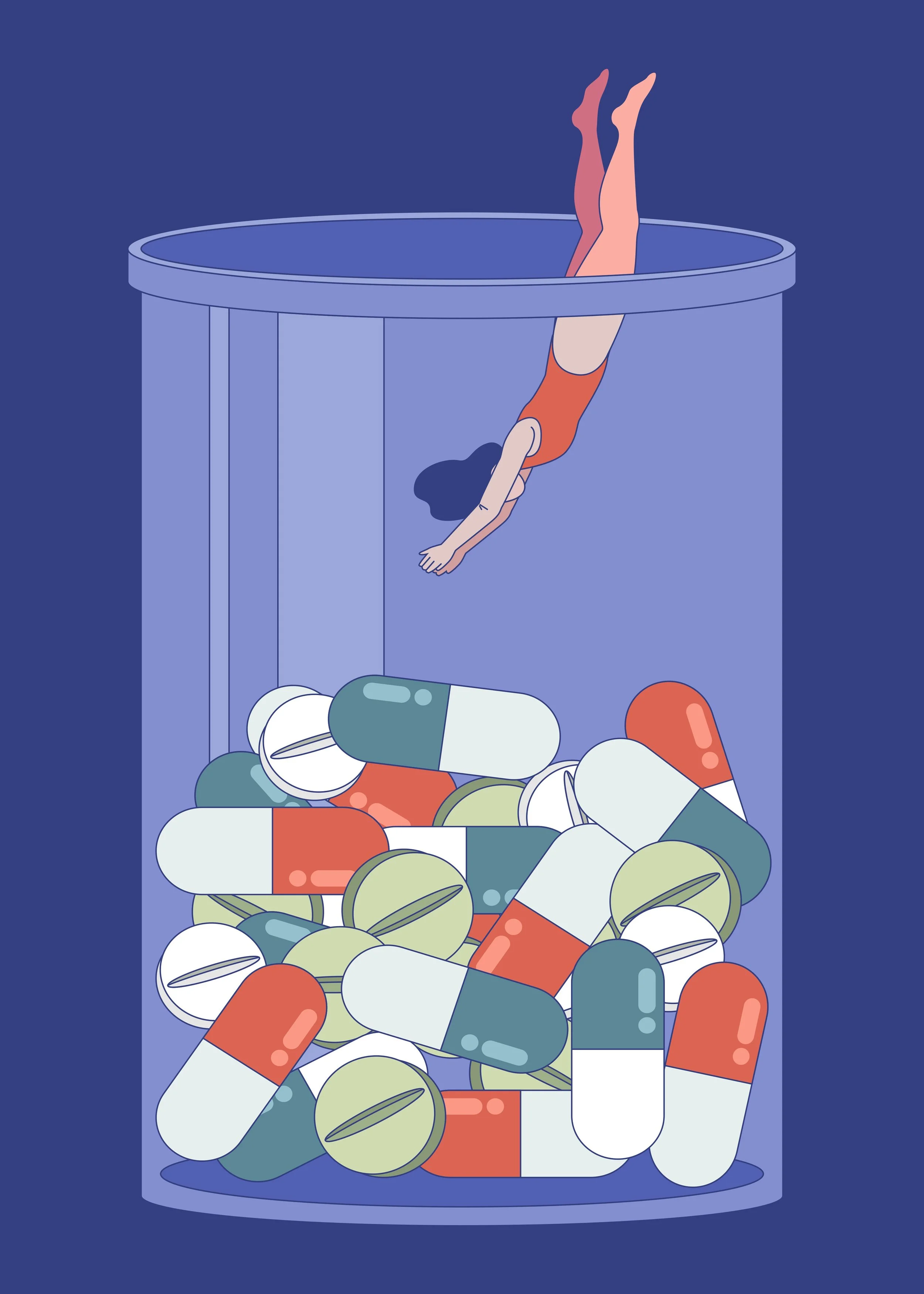
Women and Prescription Drug Addiction: How Dependence Can Begin
Prescription medications can relieve pain, reduce anxiety, improve sleep and treat medical conditions that interfere with everyday life. Yet some medications also carry a risk of physical dependence, problematic use and addiction. For women, the path from appropriate medical treatment to an unhealthy relationship with a prescription drug may be gradual enough that the warning signs are difficult to recognize. Understanding how dependence develops, which medications require greater caution and when to ask for help can make prescription drug use safer without treating every prescription as a cause for alarm.
Dependence Can Develop Gradually
Physical dependence and addiction are related concepts, but they are not interchangeable. Physical dependence means the body has adapted to the presence of a medication. Stopping it suddenly may then produce withdrawal symptoms. A person can become physically dependent while taking certain medications exactly as prescribed.
Addiction involves a different pattern. A person may have difficulty controlling use despite harmful consequences, experience intense cravings or spend increasing amounts of time obtaining, using or recovering from a substance. Recognizing that distinction matters because someone who develops physical dependence after legitimate treatment should not automatically be assumed to have a substance use disorder.
Certain prescription medications require particular attention. Opioids prescribed for pain, benzodiazepines used for anxiety or insomnia and prescription stimulants can carry misuse or dependence risks. Risk varies according to the medication, dose, duration of treatment, personal health history and other factors.
Women May Need Specific Support
Women receive prescription medications for many of the same reasons men do, but their health histories and life circumstances may affect patterns of use. Chronic pain, anxiety, insomnia and other conditions can lead to repeated or long-term prescriptions. Major life events, caregiving demands and co-occurring mental health concerns may further complicate medication use.
Treatment should account for those individual circumstances. When considering a women's rehab in San Antonio, Texas, Denver, Colorado or Los Angeles, California, finding the right women-only facility is important because the quality and appropriateness of care matter more than simply choosing a program based on location. A women-focused environment may offer treatment that addresses trauma, relationships, parenting responsibilities and other issues that can influence recovery.
Women-only treatment is not necessary for every woman, however. Some people do well in mixed-gender programs, outpatient settings or individualized treatment with addiction medicine and mental health professionals. What matters is finding evidence-based care that addresses the substance involved and the person's medical and psychological needs.
For women who have become dependent on a prescription medication, professional evaluation can also determine whether medically supervised withdrawal or a gradual taper is appropriate.
Daily Habits Support Recovery
Treating prescription drug addiction involves more than removing a medication. If a woman begins taking medication for chronic pain, panic attacks or severe insomnia, those concerns do not automatically disappear when medication use changes. Recovery planning needs to address the original problem as well as any substance-related complications that developed afterward.
Counseling, medical care and evidence-based treatment can provide the foundation. Alongside professional care, wellness practices for women that support regular sleep, movement, stress management and healthy social connections may help strengthen day-to-day recovery. These practices are not substitutes for medical or behavioral health treatment, but they can become useful parts of a broader plan.
Women managing chronic pain may need non-opioid medical strategies, physical therapy or other approaches recommended by their health care professionals. Those dealing with anxiety or insomnia may benefit from psychotherapy and treatments that do not carry the same dependence risks.
Recovery also requires realistic expectations. Sleep, mood and physical comfort may take time to stabilize after long-term medication use. A treatment plan that acknowledges this adjustment can help women avoid interpreting temporary discomfort as evidence that recovery is not working.
Warning Signs Deserve Attention
Prescription drug problems are not always obvious. A woman may continue working, parenting and managing daily responsibilities while her medication use becomes increasingly difficult to control. Because the substance originally came from a medical professional, she may also assume that problematic use cannot happen.
Warning signs can include taking more medication than prescribed, running out early, repeatedly requesting early refills or using someone else's prescription. A woman may begin taking medication for reasons beyond its intended purpose, such as using pain medication primarily to relax or taking an anxiety medication whenever uncomfortable emotions arise.
Secrecy can be another sign. Hiding doses, minimizing the amount being taken or becoming defensive when someone expresses concern may indicate that the relationship with the medication has changed.
Combining medications can introduce additional dangers. Opioids and benzodiazepines can both suppress the central nervous system, and combining certain sedating substances, including alcohol, can substantially increase overdose risk. Women should discuss medication combinations with a physician or pharmacist rather than assuming prescribed drugs are automatically safe together.
Treatment Can Protect Long-Term Health
Women who are concerned about prescription medication use do not have to determine on their own whether they have developed dependence or a substance use disorder. A medical professional can review the medication, dosage, length of use, withdrawal risk and any signs of problematic use.
Treatment may involve supervised tapering, medications for opioid use disorder when appropriate, counseling, residential or outpatient care and treatment for co-occurring mental health conditions. The right approach depends on the individual rather than a predetermined formula. Recognizing changes early gives women a chance to seek appropriate care while protecting both their immediate safety and long-term health.