
The Art of Seeing: Cartier's Spring-Summer 2026 Eyewear Collection




Cartier's Spring-Summer 2026 eyewear lineup continues the French maison's 175-year tradition of translating its jewelry and watchmaking DNA into functional accessories. This season's collection demonstrates how the brand's signature motifs—from the Godron's ribbed detailing to the panther's predatory grace—can be reinterpreted across six distinct families of frames.


Material Innovation Meets Heritage
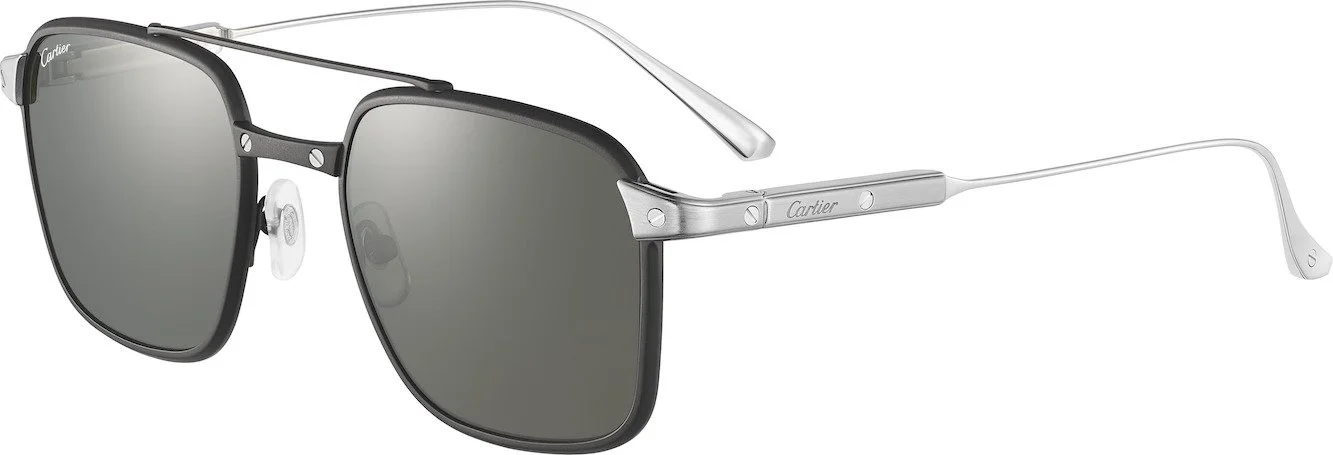
The standout technical achievement this season is the introduction of titanium construction in the Santos de Cartier collection. The lightweight metal, typically reserved for high-performance watch cases, appears here in navigator and squared optical frames. The material choice isn't merely aesthetic—titanium offers superior strength-to-weight ratios compared to traditional acetate or stainless steel frames, providing enhanced comfort for all-day wear while maintaining structural integrity.
The Santos frames retain the watch collection's defining elements: faceted three-dimensional hinge blocks and the iconic exposed screws on both front and temples. This direct translation of watchmaking architecture into eyewear creates a visual continuity across product categories that reinforces Cartier's design language.
The Evolution of Clash
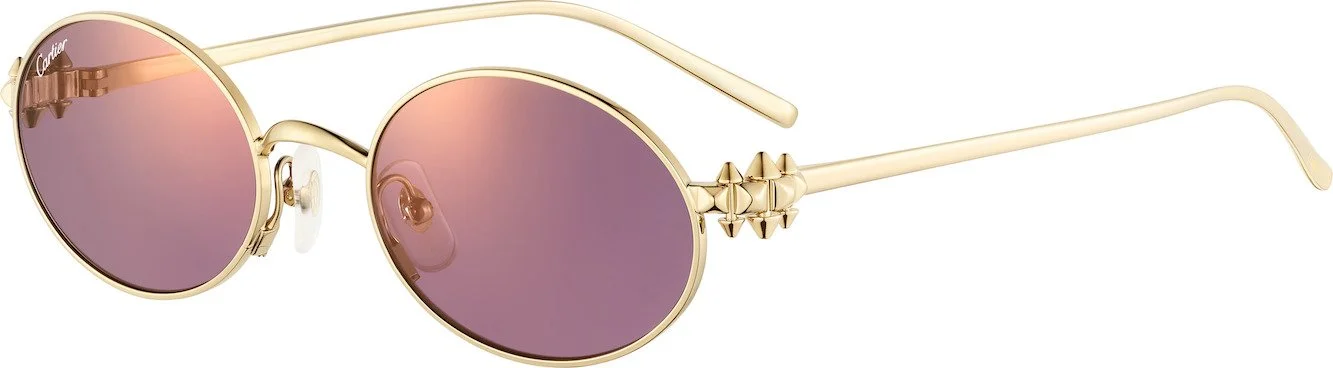
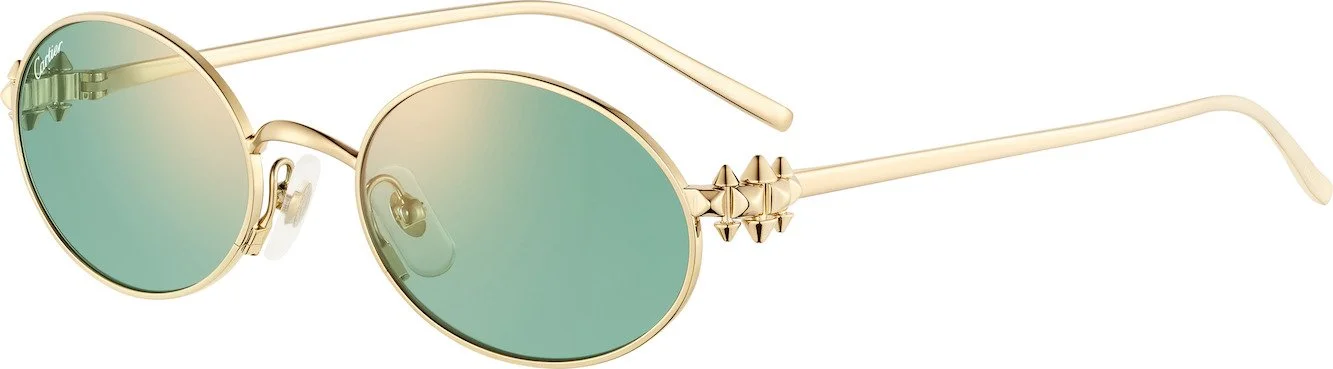
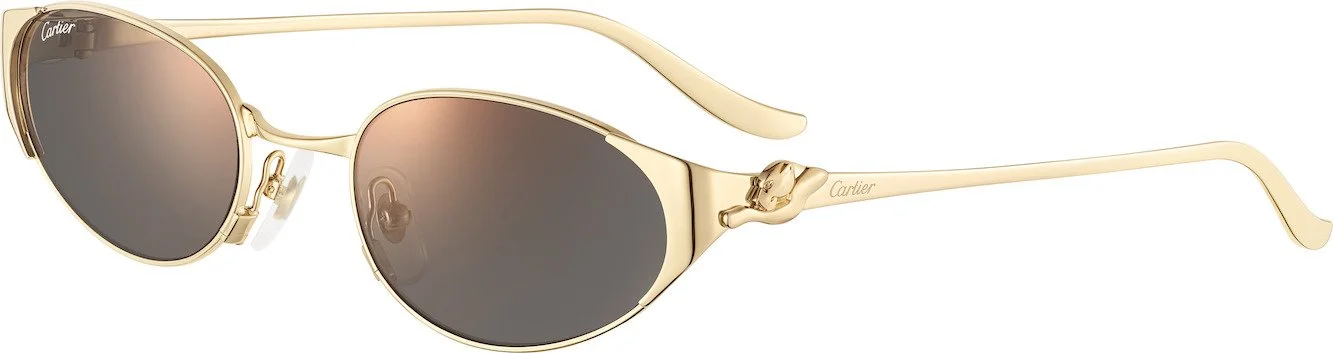
The Clash de Cartier eyewear evolves the collection's central tension between refinement and rebellion through a reimagined Picot stud. Originally a static decorative element borrowed from the jewelry line, the stud now functions as a mobile hinge detail, appearing in graduated sizes across modern ovals, oversized squares, and classic optical frames. This functional reinterpretation adds kinetic energy to the designs while maintaining the collection's avant-garde positioning.
Metal finishes and discreet Cartier signatures on temple tips complete the execution, creating pieces that read as contemporary without abandoning the maison's codes of understated luxury.
Première Expands Its Vocabulary
Première de Cartier broadens its design range by integrating two key motifs—Godron ribbing and the Signature C—across acetate, metal, and wood constructions. The material combinations demonstrate Cartier's technical capabilities: thick beveled lenses paired with transparent acetate cores, new wood varieties matched with tone-on-tone lenses, and vintage-style logo tags that reference the maison's archival designs.
Temple medallions provide finishing details that elevate these pieces beyond simple sunglasses into miniature decorative objects, consistent with Cartier's jewelry-making heritage.
The Panther Takes Shape
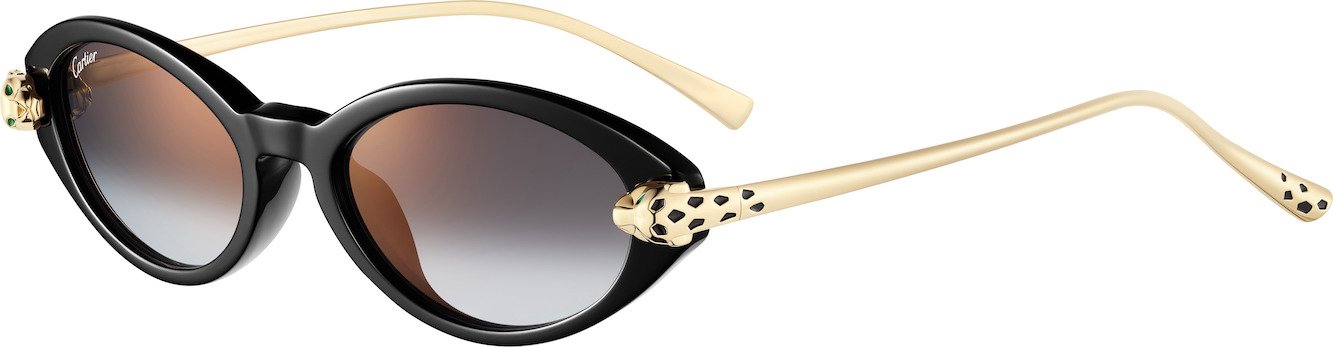
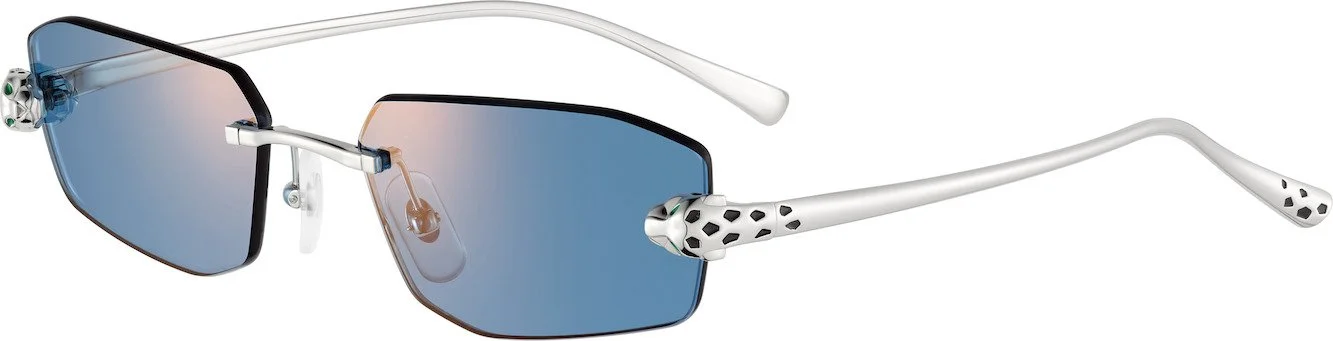
Panthère de Cartier introduces sculptural interpretations of the maison's feline mascot through three-dimensional and relief applications. Metal and combination constructions feature the panther's silhouette wrapping the frame front or extending along the temples, with hand-applied enamel spots and tail-inspired tips adding artisanal detail.
This approach transforms a two-dimensional logo into a three-dimensional design element, creating frames with immediate brand recognition while maintaining wearability.
Refined Minimalism
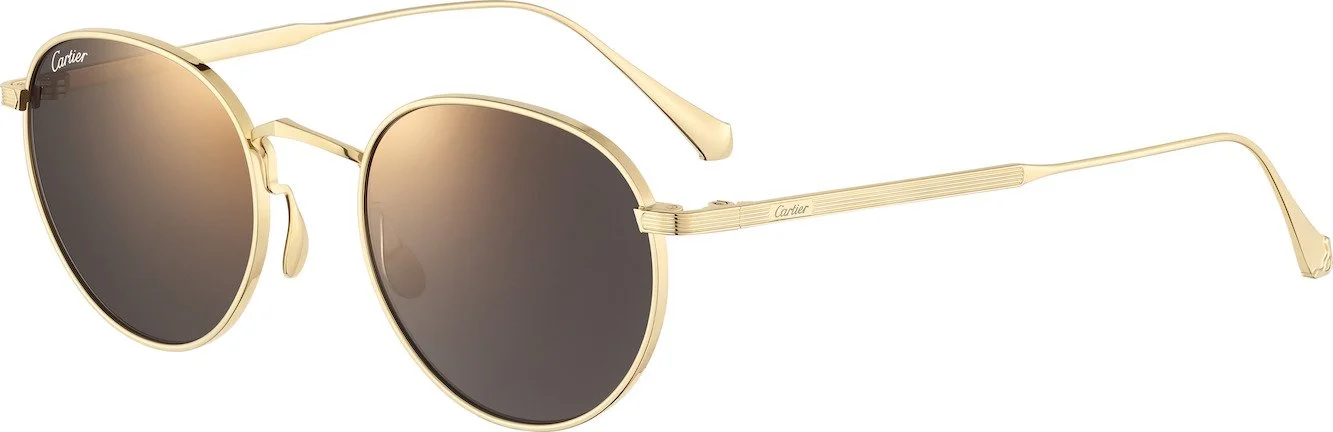
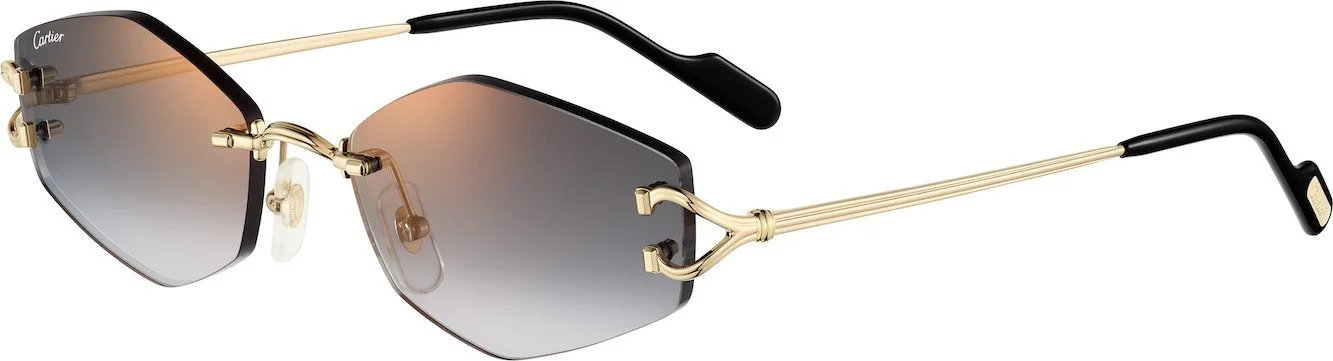
Two collections occupy the quieter end of Cartier's spectrum. Décor C Classique employs rimless metal construction enhanced by Godron motifs and the historic Décor C hinge detail—a geometric pattern that has appeared on Cartier pieces since the 1920s. Acetate tips engraved with the Cartier emblem ensure comfort without compromising the minimal aesthetic.
Signature C de Cartier takes a similarly restrained approach through lightweight titanium full-rim frames. C-shaped bridges, Godron detailing, and subtle engravings reference the maison's leather goods tradition, particularly visible in the temple tip construction. These pieces serve customers seeking Cartier's design codes in more understated executions.
The Collection in Context
Cartier's Spring-Summer 2026 eyewear demonstrates how a luxury house can maintain design consistency across jewelry, watches, and accessories while adapting to each category's functional requirements. The introduction of titanium construction, mobile hinge details, and three-dimensional sculptural elements shows technical progression rather than simple logo application.
The six collection families provide entry points at different aesthetic intensities—from the bold Panthère and Clash lines to the refined Décor C and Signature C offerings—allowing the maison to address varied customer preferences while maintaining a coherent brand identity. Each piece functions as both practical eyewear and a miniature example of Cartier's decorative arts heritage, executed through contemporary manufacturing techniques.