The House That Pharrell Built: Louis Vuitton
Inside DROPHAUS: Pharrell Williams' Architectural Vision for Louis Vuitton FW26
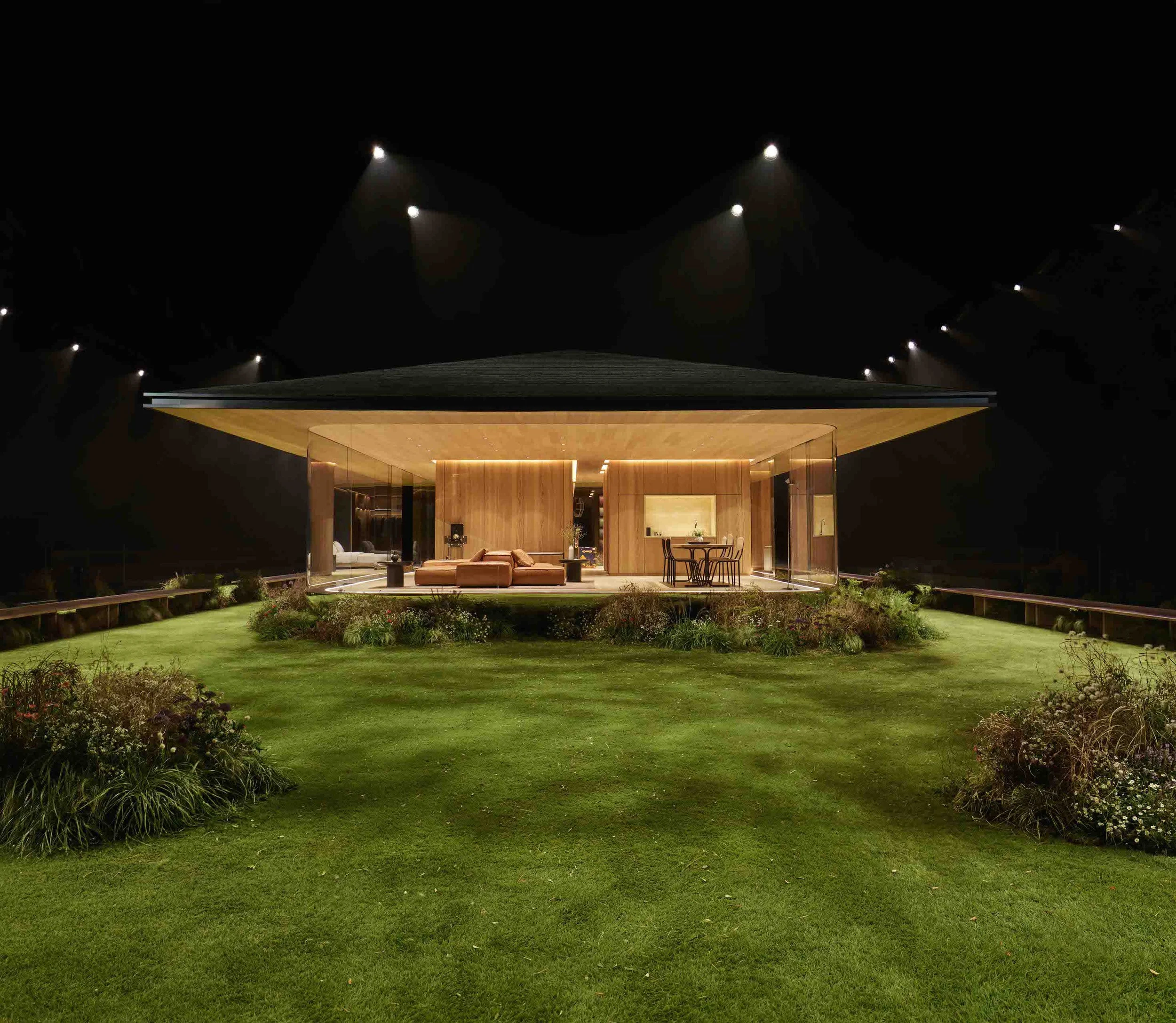
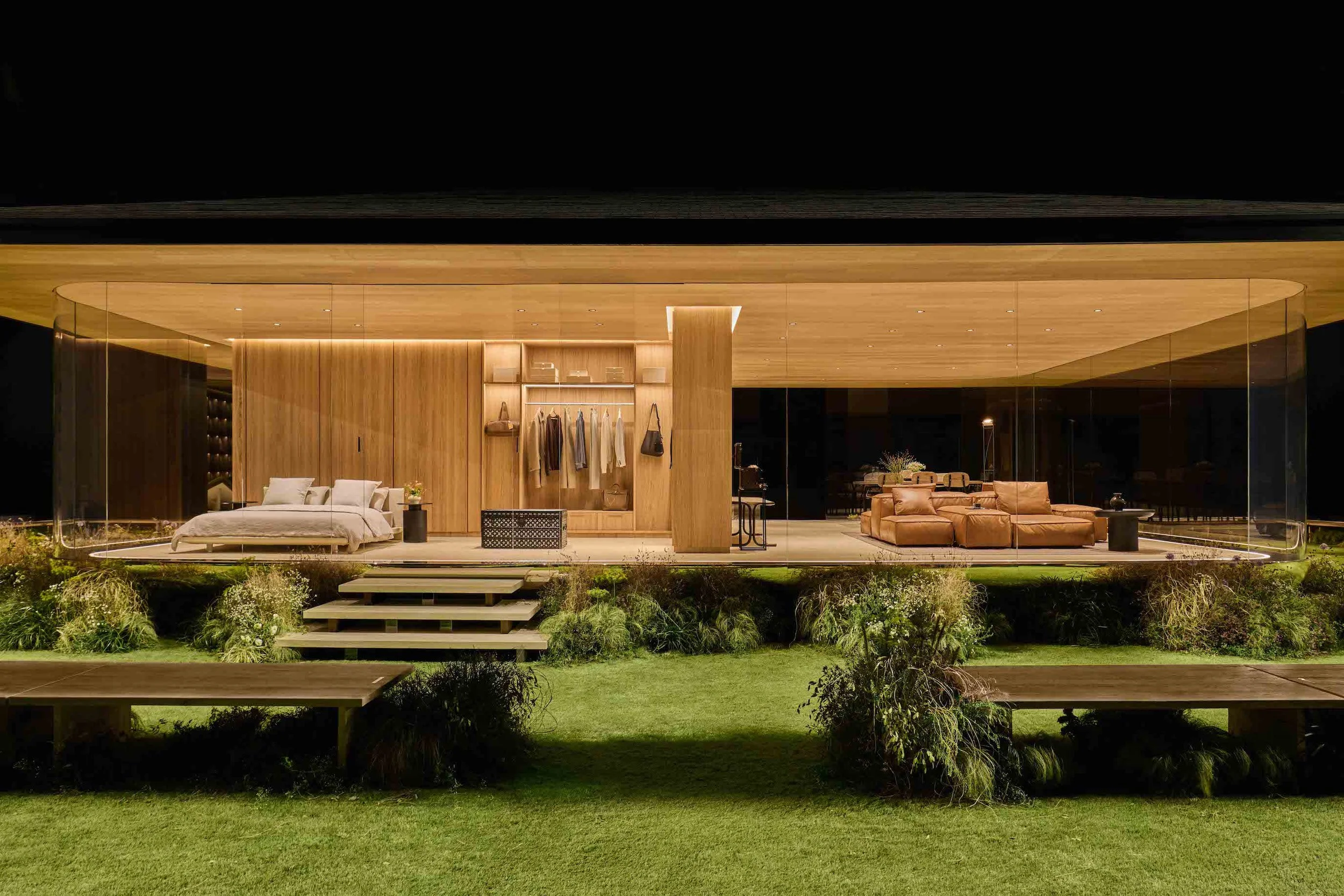
On January 20, 2026, as Paris Fashion Week kicked off, Pharrell Williams transformed the Fondation Louis Vuitton into something more than a runway show. Models didn't just walk—they moved through a complete, glass-walled home called DROPHAUS, a prefabricated structure that Williams created in collaboration with Japanese design firm NOT A HOTEL. It was part fashion presentation, part architectural manifesto.
A Home as Philosophy
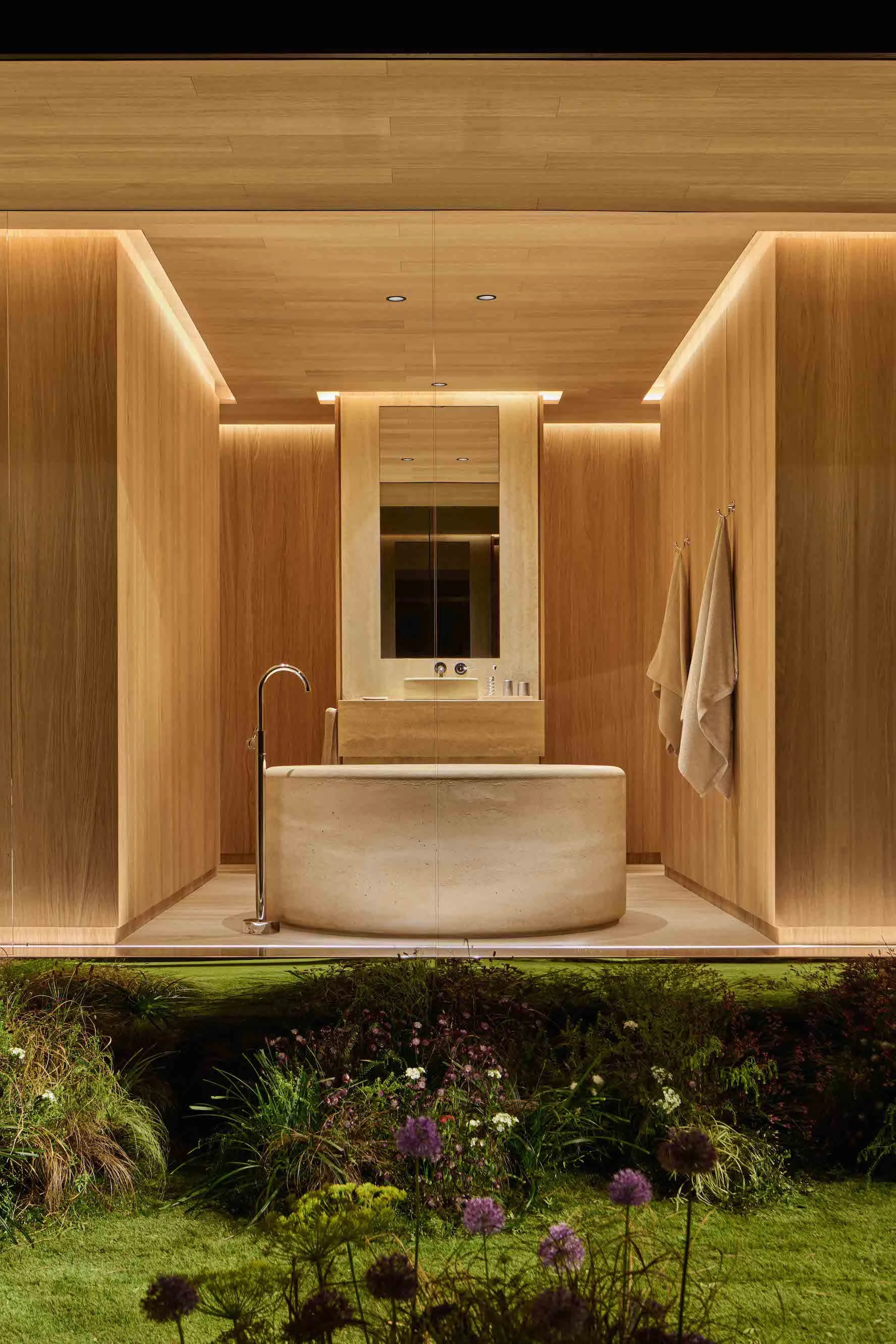
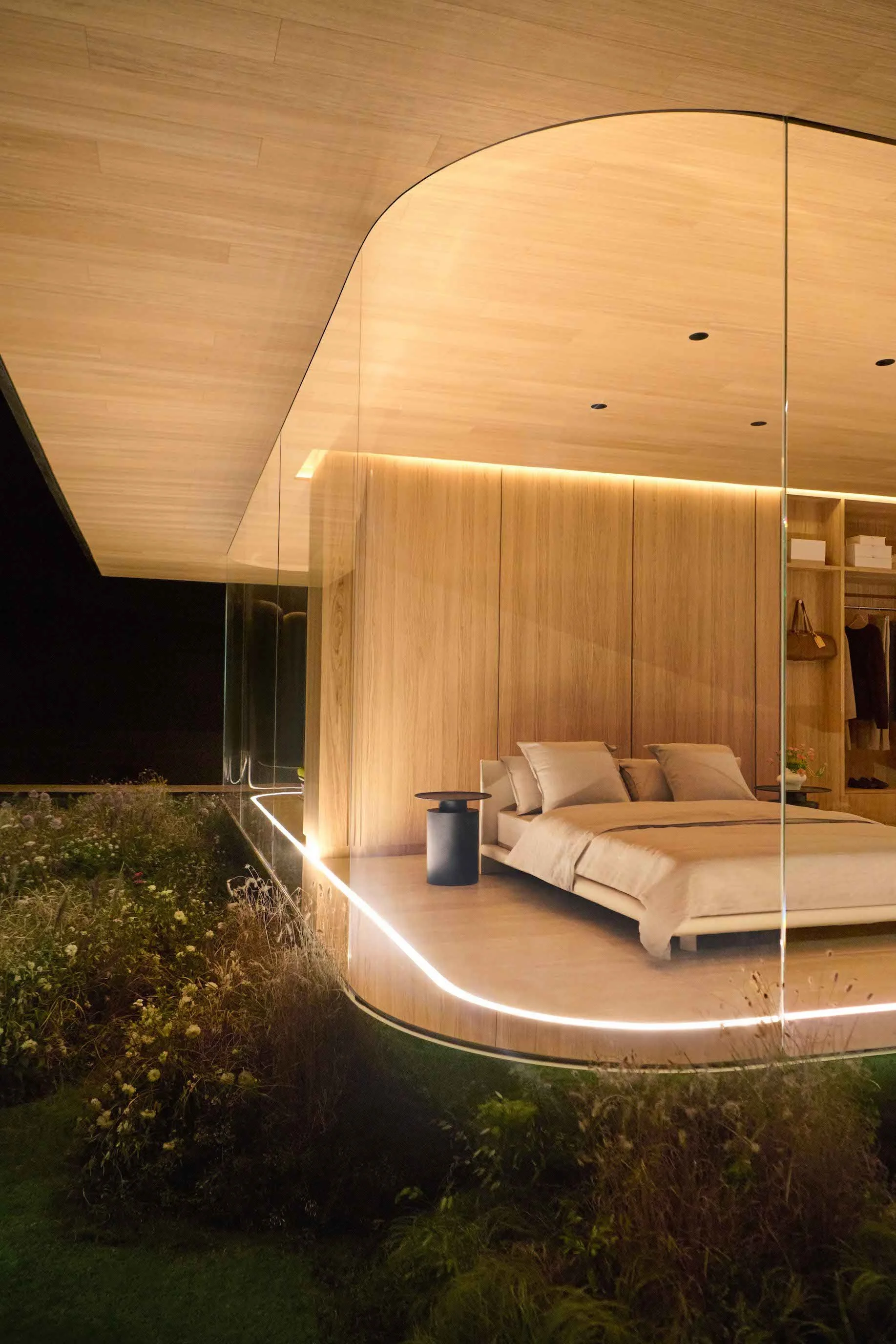
The concept behind DROPHAUS goes beyond aesthetics. This isn't just a stage set—it's a fully realized vision of future living built on function, craftsmanship, and human need. Williams positioned the glass structure at the center of a lush indoor garden filled with wildflowers and greenery, with models navigating paths that wound through the landscape and into the transparent home itself.
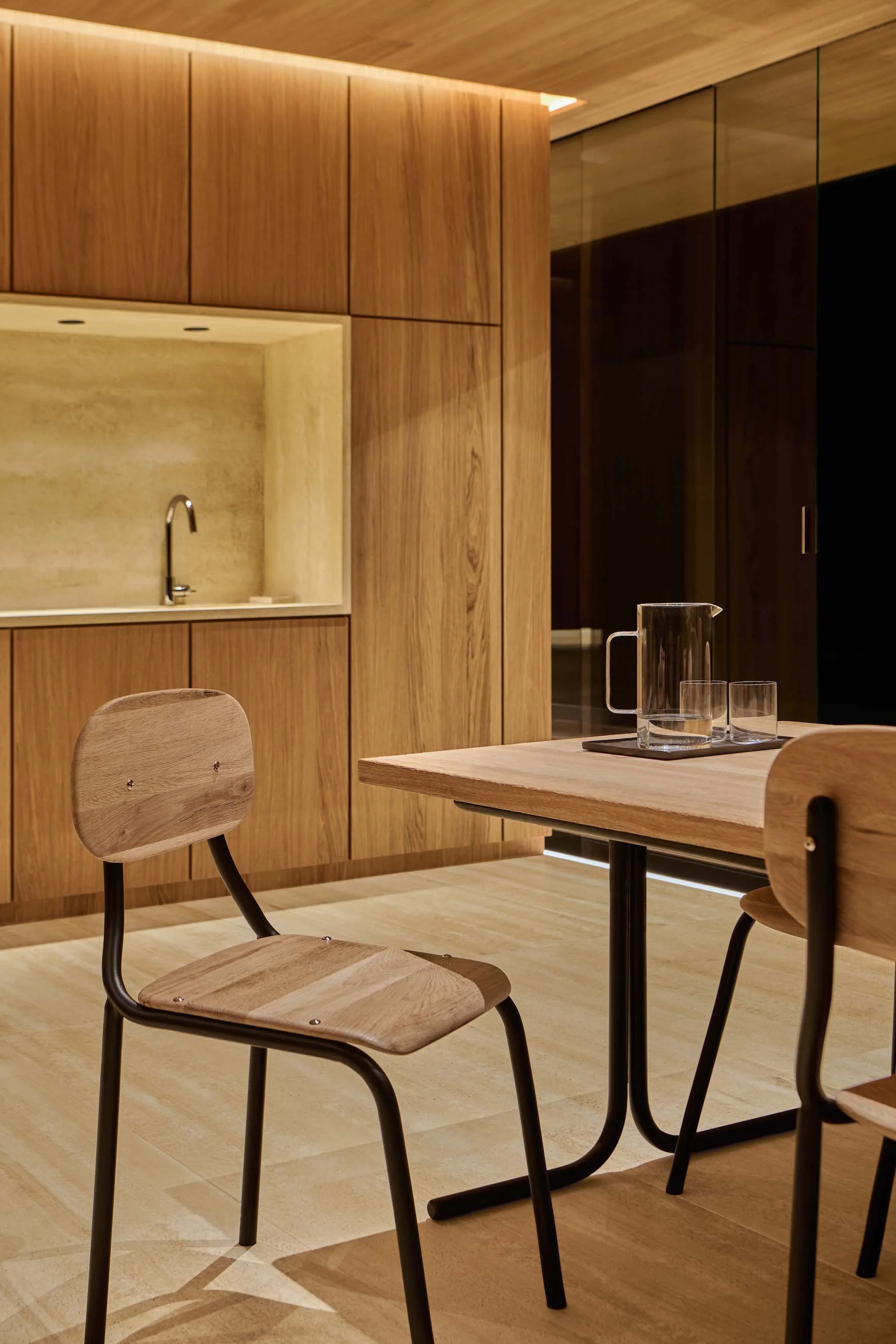
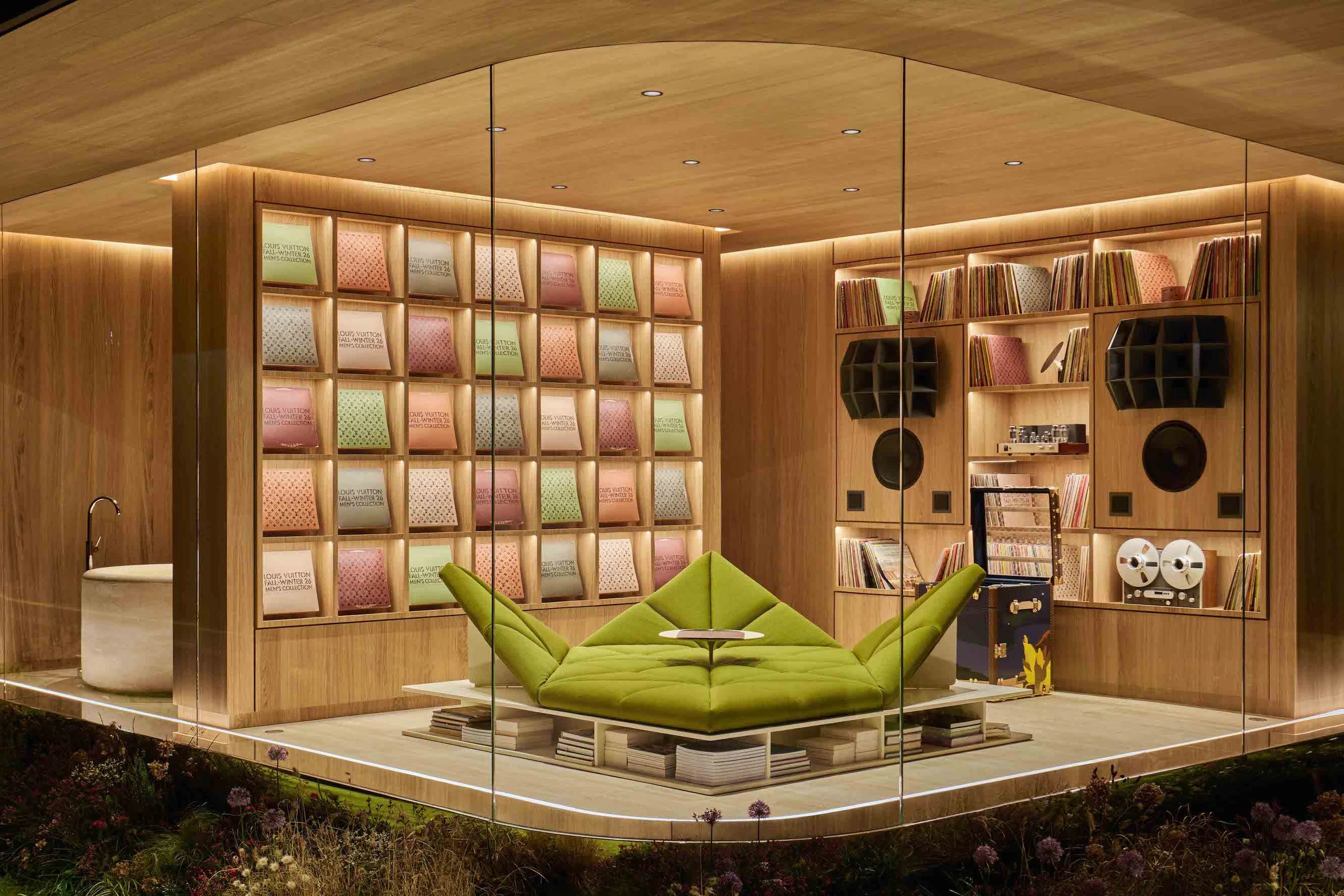
Inside, the space featured a complete interior: bedroom with warm wooden finishes, kitchen, and living area, all furnished with custom pieces from Williams' HOMEWORK collection. These weren't generic props—each furniture piece was designed with what the creative director calls "ten percent imperfection," subtle irregularities that make the space feel lived-in rather than sterile.
The collaboration with NOT A HOTEL is particularly fitting. The Japanese firm specializes in high-end fractional vacation properties across Japan—essentially upscale timeshares—and brought their expertise in prefabricated luxury housing to the project. The result is a modular, mass-reproducible structure that maintains its premium quality, embodying what Louis Vuitton calls "timelessness in architectural form."
Fashion as Infrastructure
Williams' Fall-Winter 2026 collection, presented within DROPHAUS, continues his move toward what he calls "utilitarian elegance." The runway was dominated by earth tones—beige, tan, deep greens, and khaki—with occasional vibrant flashes of tomato red, pink, and green appearing on leather bombers and parkas.
The garments themselves reflect the architectural thinking. Williams developed what Louis Vuitton calls Timeless Textiles: reflective technical yarns woven into classic houndstooths and herringbones, thermo-adaptive waterproof silks, aluminum-bonded fabrics that move with the body, and breathable lightweight materials built for versatility. It's clothing engineered like infrastructure—designed to adapt, protect, and last.
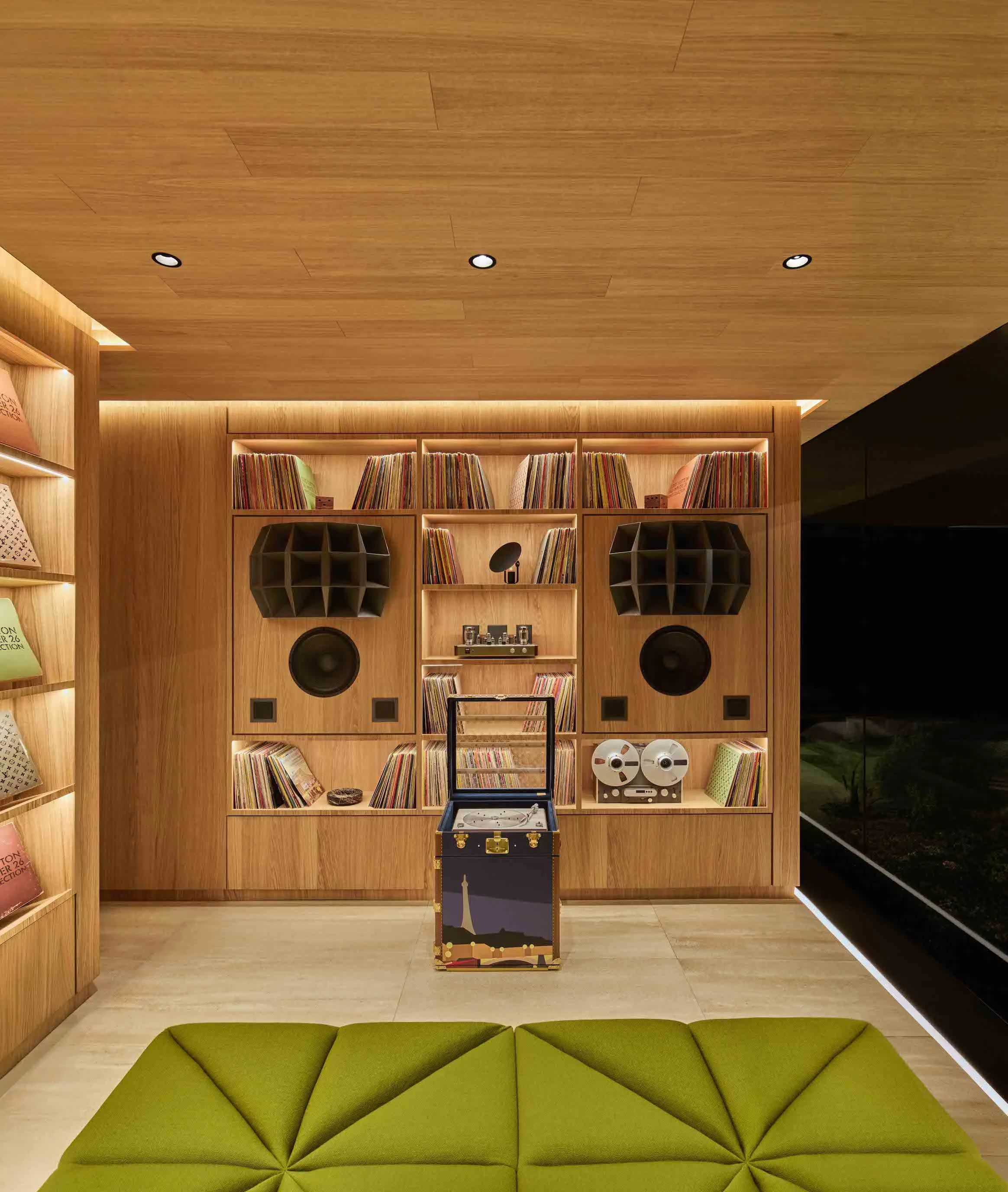
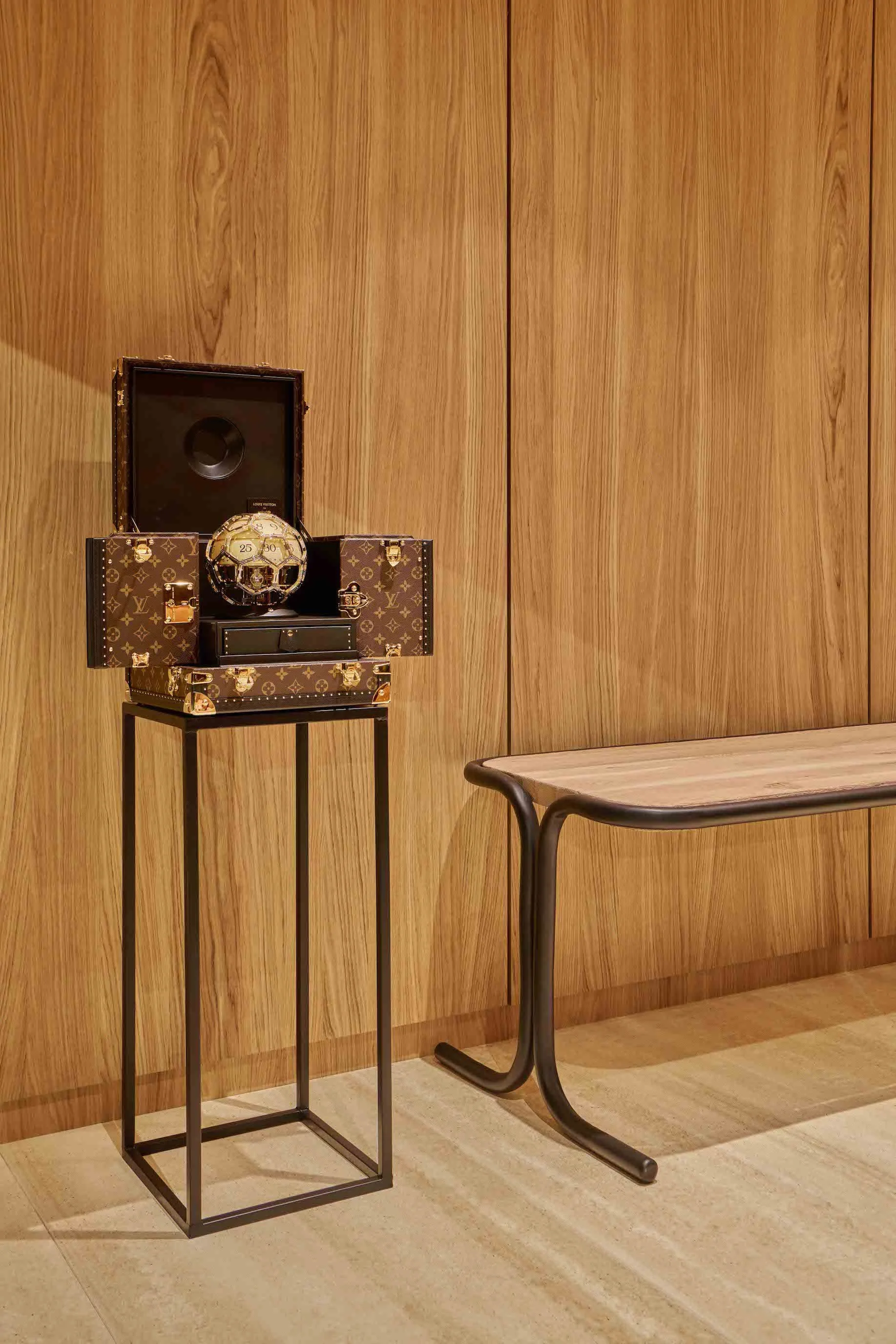
The styling focused on precision-cut trousers and statement outerwear, including opulent crocodile leather bomber jackets. Williams moved away from heavy denim toward double-breasted suits and leather blazers that work for everyday wear. One standout was an Art Nouveau-inspired Louis Vuitton trunk with a stained-glass aesthetic, celebrating the monogram's 130th anniversary while pointing toward future design language.
Sound and Space
Music has become Williams' signature at Louis Vuitton shows, and DROPHAUS was no exception. A live choir and orchestra surrounded the space, while the soundtrack featured four unreleased tracks that Williams produced in-house at Louis Vuitton's Paris headquarters: new music from A$AP Rocky, John Legend, Jackson Wang featuring Pusha T, and Quavo. Bird sounds and soft piano notes filled the air as models moved through the garden, creating an immersive sensory experience.
The guest list read like a who's who of contemporary culture: SZA, Usher, Future, Kai Cenat, Skepta, Chris Brown, and Jackson Wang. Williams closed the show by walking the runway himself in a beige leather bomber and flared khaki pants, saluting his choir and the assembled crowd.
Luxury Reimagined
DROPHAUS represents more than a creative runway concept. Williams is working from what Louis Vuitton calls "an outsider's design mindset"—treating fashion, architecture, and sound as interconnected systems rather than separate disciplines. The house makes a bold statement about luxury's future: it's not just about penthouses and yachts, but about thoughtful, functional design that improves daily life.
There's a mid-century retro-futurism at work here, reminiscent of The Jetsons or classic science fiction that viewed the future with optimism rather than dystopian anxiety. The prefabricated villa concept—luxurious yet reproducible, premium yet practical—suggests a world where high design becomes more accessible without sacrificing quality.
As Williams and Louis Vuitton note, fashion doesn't exist in isolation—it's in constant dialogue with the environments we inhabit. DROPHAUS literalizes that philosophy, creating a space where clothing, furniture, architecture, and music converge into a unified vision of contemporary living. Whether this represents fashion's future or simply one designer's ambitious experiment, it's undeniably compelling: a glass house in a garden, filled with clothes built to last, soundtracked by unreleased music, and open for the world to see.